
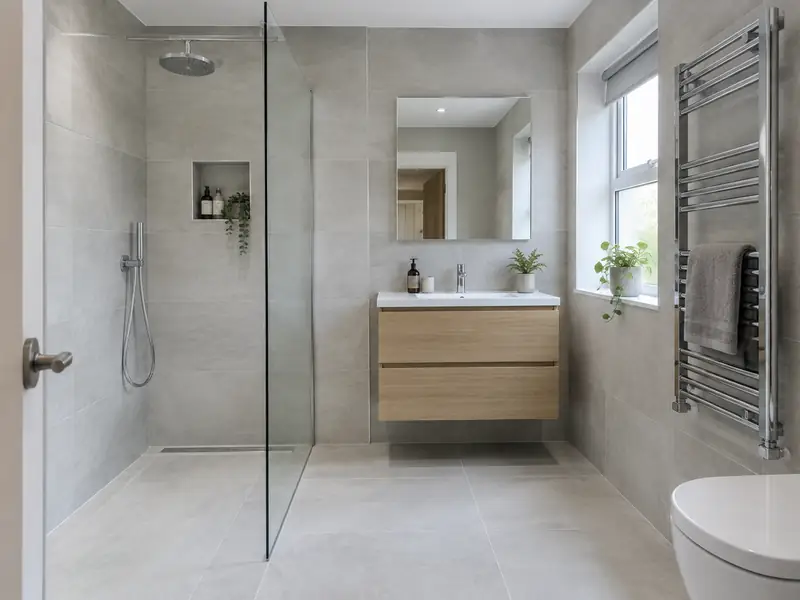
A bathroom installation replaces your old suite with new sanitaryware, a bath or shower, tiling and fittings, including the plumbing, electrics, ventilation and waterproofing needed for a complete, watertight room.
Homeowners in Plymouth usually consider a new bathroom for one of a few reasons: something has worn out, the house no longer suits the way they live, or they are getting it ready to sell. We visit, agree a specification and put a fixed price in writing. Most jobs like this take 1–2 weeks per bathroom, and we work across Devon, including Plymstock, Paignton and Newton Abbot.
- Guide price
- £5,100–£12,000 inc VAT
- Time on site
- 1–2 weeks per bathroom
- Postcodes
- PL1, PL2, PL3 and PL4
- Planning rules
- England
- Local area
- Devon
- Survey
- Free, with a written quote
How much does a new bathroom cost in Plymouth?
To help you plan, we show what a new bathroom typically costs in Plymouth instead of holding figures back for a sales call. The range is £5,100–£12,000 with VAT, using rates in the South West that are about 2% above the national guide. A free survey then fixes your actual price.
| Type of job | What it usually involves | Guide in Plymouth |
|---|---|---|
| Shower room or en-suite | A compact room with a shower, basin and toilet, keeping the existing layout. | £4,100–£8,200 |
| Family bathroom | A full suite with bath and shower, new tiling, lighting and an extractor fan. | £5,100–£12,000 |
| Premium bathroom or wet room | Standalone bath, wet room or walk-in shower, underfloor heating and large-format tiles. | £12,000–£20,500 |
Your price depends mostly on:
- Suite, shower and tap specification
- Moving the toilet, bath or shower to a new position
- Wet room waterproofing and underfloor heating
- Condition of the floor, walls and existing pipework
What’s included?
- Measured survey and layout planning for your room
- Removal and disposal of the old suite and tiles
- New supply and waste pipework, including concealed fittings
- Electrics, lighting and extractor fan by qualified trades, with certificates
- Waterproofing behind showers and in wet areas
- Heated towel rail, silicone sealing and a final clean
Local housing and a new bathroom
Devon is known for cob and thatch cottages, especially in mid and east Devon, alongside granite on Dartmoor and red sandstone around Exeter. Exeter and Plymouth have Georgian and Victorian terraces, Plymouth's centre was largely rebuilt after the war, and seaside towns such as Torquay and Exmouth have rendered villas and newer estates.
Cob and stone homes need breathable lime plaster and render rather than cement. Victorian terraces suit loft rooms and window replacement, while post-war and newer homes often take extensions, rendering and roofline renewal.
That variety is why a guide price for a new bathroom in Plymouth is only a starting point; the survey shows what your particular property needs.
Planning and building rules in Plymouth
Which rules apply depends on where you live. For Plymouth, the answer is England, and the points below reflect that; we verify them with the council before quoting.
Internal work such as a new kitchen, bathroom, flooring, plastering or decorating does not need planning permission in England, unless the house is listed, when listed building consent may be needed even for internal changes.
Some internal work is covered by Building Regulations: new electrical circuits and work in bathrooms (Part P), new drainage, structural changes, extractor ventilation and any new window. Notifiable work is certified by a registered installer or by building control.
Rules change and every property is different, so we check the planning history and constraints for your address before we quote.
The four stages
Survey and measure
First, someone visits your home in Plymouth to see the space, take measurements and note anything that could affect the work, such as access or the condition of what is there. There is no charge for this visit.
Written quote
Next you receive a written quote with a fixed price for the agreed specification. It lists what is included, what is not, and how payments are staged, so you can compare it properly.
Dates and permissions
With the quote agreed, we book the work in and handle preparation: permissions where needed, building control notifications, material orders and access arrangements for your Plymouth property.
On site to finish
The job proceeds in the order set out in the programme, with dust and debris kept under control. Finally we tidy away, inspect the work together and pass the finished project over to you with its paperwork.
How we work
Questions about a new bathroom in Plymouth
How long does it take to fit a bathroom?
Fitting a typical bathroom takes one to two weeks on site. Strip-out and first-fix plumbing and electrics come first, followed by any plastering or boarding, waterproofing, tiling and then the suite, taps and fittings. Wet rooms and rooms with underfloor heating take longer because screeds and waterproofing need time to cure. We give you a day-by-day plan before work starts.
What ventilation does a bathroom need?
A bathroom needs mechanical ventilation, usually an extractor fan, to remove steam and help prevent condensation and mould. Building regulations set minimum extraction rates for new or refitted bathrooms. A fan linked to the light with an overrun timer, or one with a humidity sensor, works well. Ducting should vent outside by the shortest practical route. We include a suitable fan in every bathroom quote.
What happens at the survey?
We visit your home at a time that suits you, look at the area involved, take measurements and check access, condition and any services that might be affected. We talk through what you want from a new bathroom, explain the options and answer questions. There is no charge and no obligation; afterwards we send a written quote.
Is the price fixed?
Yes, for the specification we agree. Your written quote sets out exactly what is included at a fixed price. It only changes if you ask for something different, or if a problem the survey could not reasonably reveal later needs extra work. In either case we explain the change and confirm it in writing before going ahead.
Which tiles are easiest to keep clean?
Large-format porcelain tiles are usually easiest to keep clean, because there are fewer grout lines to collect dirt and porcelain absorbs very little water. Glossy tiles show water marks more than matt ones, while textured floor tiles give better grip. Grout colour matters too: mid-grey hides staining better than white. We can suggest anti-slip ratings and grout options that suit how you use the room.
Near Plymouth
We welcome enquiries from all PL1, PL2, PL3 and PL4 postcodes in Plymouth, plus Plymstock, Paignton and Newton Abbot. Each one gets the same survey at no charge and a written price fixed for the work described.