
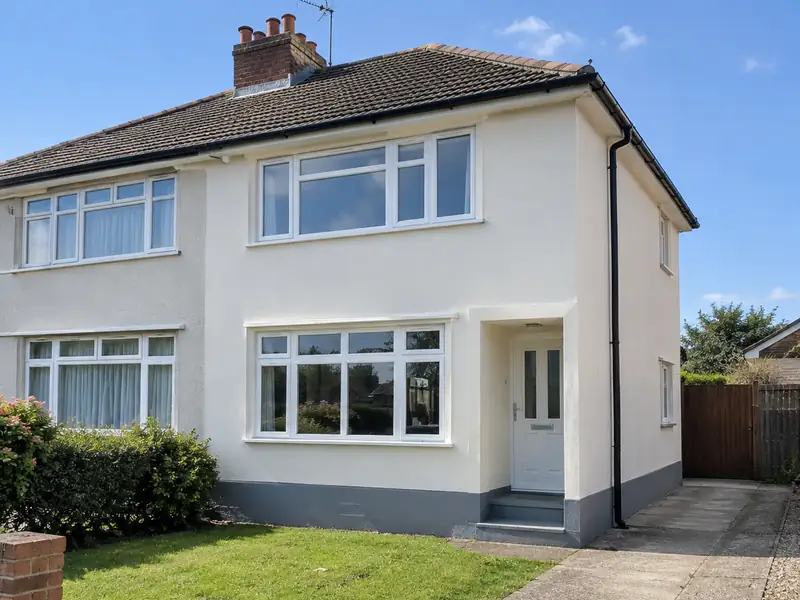
External rendering is applying a protective, weather-resistant coating to the outside walls of a house, using sand and cement, monocouche or thin-coat silicone render, to give a smooth or textured finish that protects the masonry and improves appearance.
We render houses, extensions and garden walls, and replace cracked or blown render on older homes. Our free site survey and written quote looks at the condition of your walls, any existing render or pebbledash, cracks, damp and the details around windows, sills and the damp-proof course. We explain the differences between traditional sand and cement, monocouche and silicone thin-coat systems, including colour, upkeep and cost. Rendering suits anyone wanting to modernise brickwork, cover mismatched extensions or deal with failing render. We erect scaffolding, remove old render where needed, fix beads and mesh, and apply the system in the right number of coats and weather conditions.
What’s included?
- Survey of walls, existing render, cracks and damp-proof course
- Scaffolding erected and removed, with neighbours' access agreed
- Removal of loose or failed render and pebbledash where needed
- Windows, doors and surfaces masked and protected
- Beads at corners, edges and above the damp-proof course
- Mesh reinforcement and base coats to suit the chosen system
- Finish coat in your chosen colour and texture
- Making good around pipes, vents and fixings, and a site clean-up
Which options can you choose from?
How much does external rendering cost?
Most jobs fall between £7,000–£16,000 for rendering a typical 3-bed semi, including scaffolding, including VAT at 20%. The table shows three typical levels of work; the figures are national guides, confirmed in writing after a free site survey.
| Type of job | What it usually involves | Guide price |
|---|---|---|
| Front elevation or small terrace | One elevation or a small terraced house, including scaffolding and preparation. | £3,000–£7,000 |
| Typical semi-detached | All rendered walls of a 3-bed semi in monocouche or silicone, with scaffolding. | £7,000–£16,000 |
| Detached or full strip and re-render | Larger houses, or homes needing old render removed and walls repaired first. | £15,000–£30,000 |
What affects the price?
- Wall area to be rendered and the height of the house
- Render system: sand and cement, monocouche or silicone
- Removing old render or pebbledash and repairing the walls
- Scaffolding, access and protection of neighbouring property
- Detailing around windows, bays, sills and pipes
How do prices vary across the UK?
| Region | Guide price |
|---|---|
| London | £9,100–£21,000 |
| The South East | £7,800–£18,000 |
| The East of England | £7,400–£17,000 |
| The South West | £7,100–£16,500 |
| The West Midlands | £6,900–£15,500 |
| The East Midlands | £6,700–£15,500 |
| The North West | £6,600–£15,000 |
| Yorkshire and the Humber | £6,600–£15,000 |
| The North East | £6,300–£14,500 |
| Wales | £6,400–£14,500 |
| Scotland | £6,700–£15,500 |
| Northern Ireland | £6,000–£14,000 |
Regional figures apply typical labour and material cost differences to the national guide. They are not quotes.
Do you need planning permission for external rendering?
Re-rendering a large part of an external wall can trigger building regulations requirements to improve its insulation, so building control may need to be involved. We check what applies to your home and your UK nation at the survey.
England
In England, re-rendering or cladding a house is often allowed without planning permission, but stone, render, timber, plastic or tile cladding is not permitted development in conservation areas, and listed buildings need consent.
If you render or re-clad more than 25% of an external wall, Building Regulations usually require the wall’s insulation to be improved where that is practical, and building control should be notified.
Wales
In Wales, rendering or cladding may need planning permission in conservation areas, and listed buildings need consent.
Building Regulations in Wales can require insulation upgrades when a large part of an external wall is renovated.
Scotland
In Scotland, changing the external finish of a house in a conservation area or on a listed building needs consent; elsewhere, like-for-like re-rendering is usually treated as repair.
Large-scale re-cladding or external insulation can need a building warrant; like-for-like render repairs normally do not.
Northern Ireland
In Northern Ireland, re-rendering is usually treated as repair, but conservation areas and listed buildings are controlled.
Significant re-cladding or external insulation should be checked with building control under the Building Regulations (Northern Ireland).
Rules change and every property is different, so we check the planning history and constraints for your address before we quote.
How long does it take?
Typical time on site: 1–3 weeks on site, depending on weather. Lead times for materials, drawings and approvals come before that and are set out in your written quote.
How does the job run?
Free site survey
We visit, measure up, look at access and the condition of what’s there, and talk through options and budget with you.
Written quote
You get a written quote with a fixed price for the agreed specification, what’s included, the payment stages and a likely start window.
Plan and prepare
We sort drawings, approvals and materials, agree dates with you and explain what to expect each week before work starts.
Build and hand over
The work is carried out, checked and cleared away. We walk round it with you and pass on certificates and product details.
External rendering: frequently asked questions
How much does it cost to render a house?
Rendering a typical 3-bed semi costs £7,000–£16,000, including scaffolding and preparation. As a guide, allow around £60–£120 per square metre of wall plus fixed costs for scaffolding and set-up. Sand and cement is the lowest-cost system, while silicone thin-coat costs more but needs no painting. Removing old render or pebbledash first adds noticeably to the price. We confirm a fixed figure after the survey.
Which render system should I choose?
The right render depends on your walls and how much upkeep you want. Sand and cement is the lowest-cost option but needs repainting every few years. Monocouche is coloured through, so it needs no painting, and suits block and brick walls. Silicone thin-coat is flexible, water-repellent and stays cleaner, but costs more. Lime render suits older solid walls. We recommend a system after inspecting your walls.
Do I need planning permission to render my house?
Whether rendering needs planning permission depends on how it changes the appearance, your home's location, whether it is listed or in a conservation area, and which UK nation you are in. Rendering over brick may need permission in some places, while replacing existing render like for like often does not. Listed buildings need consent. We check the position before quoting.
Can you render over pebbledash or old render?
Rendering over existing pebbledash or render is sometimes possible if it is firmly bonded, but if it sounds hollow, is cracked or is coming away, it must be removed first. Covering failing render simply hides the problem until the new coat fails too. We tap-test the walls and explain whether removal is needed. Removal adds time and cost but gives a sound base.
What time of year should rendering be done?
Render needs mild, dry conditions to cure properly, so spring to early autumn is ideal. Most render systems should not be applied when frost is likely, in heavy rain or in strong direct sun, which can dry it too quickly and cause cracking. We plan the programme around the forecast and may pause work if the weather turns, which protects the finish.
How do I look after silicone or monocouche render?
Through-coloured render needs little upkeep. Check it once a year for cracks or damage, especially around windows and pipes, and keep gutters clear so water does not run down the walls. If green algae appears on shaded walls, a specialist render cleaner applied with a soft brush or low-pressure wash removes it. Avoid high-pressure jet washing, which can damage the surface.
Will rendering stop damp?
Render protects walls from driving rain, so it can help where rain penetration is the cause of damp. It will not cure rising damp, condensation or leaks from gutters, and on older solid walls the wrong render can trap moisture and make damp worse. We look for the cause of any damp at the survey and recommend fixing that first.
How long does rendering take?
Rendering a typical semi-detached house takes around one to three weeks. Scaffolding goes up first, then removal of old render, repairs, beads and mesh. Base coats need time to cure before the finish coat. Weather has a big effect, because render should not be applied in rain, frost or strong heat. We give you an expected programme with the quote.