
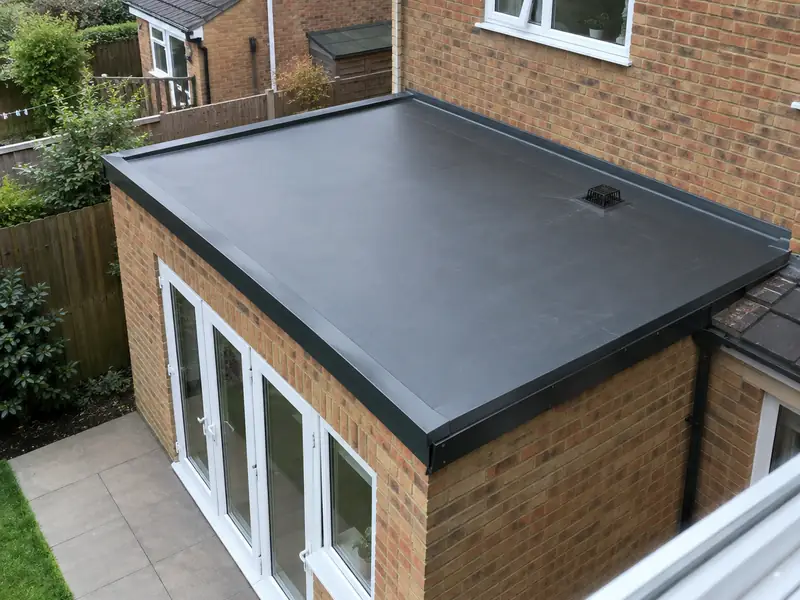
A flat roof replacement strips the old covering from a low-pitched roof and lays a new waterproof system, usually EPDM rubber, GRP fibreglass or torch-on felt, over a sound deck with correct falls, upstands, trims and outlets so rainwater drains away.
We replace flat roofs on extensions, garages, dormers, bay windows and porches. Our free site survey and written quote checks the existing covering, the deck underneath, the falls that move water to the gutter, upstands against walls, and whether the roof is insulated. Flat roof replacement suits roofs with ponding water, blisters, cracks, repeated leaks or soft spots underfoot. We explain the differences between EPDM rubber, GRP fibreglass and torch-on felt, including lifespan, appearance and price. On site we strip the old roof, replace damaged decking, add insulation where agreed, and lay the new system with properly detailed edges, upstands and outlets.
What’s included?
- Survey of the covering, deck, falls, upstands and drainage
- Stripping and disposal of the old roof covering
- Replacement of rotten or soft deck boards
- Insulation upgrade to a warm roof build-up where agreed
- New EPDM, GRP or torch-on felt membrane laid to falls
- Upstands, flashings and drip edges finished neatly
- New trims, outlets and gutter connections
- Rooflights refitted or replaced where required
Which options can you choose from?
How much does a new flat roof cost?
Most jobs fall between £2,000–£4,500 for re-covering a typical 15–25m² extension or garage roof, including VAT at 20%. The table shows three typical levels of work; the figures are national guides, confirmed in writing after a free site survey.
| Type of job | What it usually involves | Guide price |
|---|---|---|
| Small roof (up to 8m²) | A dormer, bay, porch or small garage roof re-covered in EPDM or GRP. | £800–£2,000 |
| Extension or garage (15–25m²) | A typical extension or single garage roof stripped and re-covered. | £2,000–£4,500 |
| Large or new warm roof | Larger roofs, or roofs needing a new deck and insulation build-up. | £4,000–£9,000 |
What affects the price?
- Roof area and access to the roof
- Covering system: EPDM, GRP or torch-on felt
- Condition of the deck and joists underneath
- Insulation upgrades and changes to roof height at edges
- Number of rooflights, pipes and upstands to detail
How do prices vary across the UK?
| Region | Guide price |
|---|---|
| London | £2,600–£5,800 |
| The South East | £2,200–£5,000 |
| The East of England | £2,100–£4,700 |
| The South West | £2,000–£4,600 |
| The West Midlands | £1,950–£4,400 |
| The East Midlands | £1,900–£4,300 |
| The North West | £1,900–£4,300 |
| Yorkshire and the Humber | £1,900–£4,200 |
| The North East | £1,800–£4,000 |
| Wales | £1,850–£4,100 |
| Scotland | £1,900–£4,300 |
| Northern Ireland | £1,700–£3,900 |
Regional figures apply typical labour and material cost differences to the national guide. They are not quotes.
Do you need planning permission for a new flat roof?
Replacing a flat roof covering on a large part of the roof can trigger building regulations requirements to improve insulation, signed off by building control or a registered installer. We check what applies in your UK nation before quoting.
England
Re-roofing a house with similar materials does not usually need planning permission in England. Listed buildings and conservation areas may need consent if the covering changes.
Replacing more than a quarter of a roof’s covering counts as renovation under Building Regulations, so the work is notified and the roof insulation may need upgrading. Bats are protected across the UK; if they roost under roof tiles, soffits or fascias, work stops and a licensed ecologist advises before it restarts.
Wales
Re-roofing with similar materials does not usually need planning permission in Wales, except on listed buildings or where a conservation area restricts materials.
Building Regulations in Wales apply to major re-roofing, including insulation upgrades. Bats are protected across the UK; if they roost under roof tiles, soffits or fascias, work stops and a licensed ecologist advises before it restarts.
Scotland
In Scotland, like-for-like re-roofing does not usually need planning permission, except on listed buildings or in conservation areas.
Like-for-like re-covering does not usually need a building warrant, but structural changes or new roof windows can. Bats are protected across the UK; if they roost under roof tiles, soffits or fascias, work stops and a licensed ecologist advises before it restarts.
Northern Ireland
In Northern Ireland, re-roofing with similar materials does not usually need planning permission outside listed buildings and conservation areas.
Significant re-roofing should be checked with building control under the Building Regulations (Northern Ireland). Bats are protected across the UK; if they roost under roof tiles, soffits or fascias, work stops and a licensed ecologist advises before it restarts.
Rules change and every property is different, so we check the planning history and constraints for your address before we quote.
How long does it take?
Typical time on site: 1–3 days for most roofs. Lead times for materials, drawings and approvals come before that and are set out in your written quote.
How does the job run?
Free site survey
We visit, measure up, look at access and the condition of what’s there, and talk through options and budget with you.
Written quote
You get a written quote with a fixed price for the agreed specification, what’s included, the payment stages and a likely start window.
Plan and prepare
We sort drawings, approvals and materials, agree dates with you and explain what to expect each week before work starts.
Build and hand over
The work is carried out, checked and cleared away. We walk round it with you and pass on certificates and product details.
Flat roofs: frequently asked questions
How much does a new flat roof cost?
Re-covering a typical 15–25m² extension or garage roof costs £2,000–£4,500. As a guide, allow around £75–£170 per square metre plus fixed costs for stripping, waste and access, with torch-on felt at the lower end and GRP or EPDM with new decking or insulation at the top. Small dormer and porch roofs cost less overall but more per square metre. We confirm a fixed price after the survey.
Which is better, EPDM rubber or GRP fibreglass?
EPDM rubber and GRP fibreglass are both reliable modern flat roof systems. EPDM is a single flexible sheet with very few joints, which copes well with movement and suits most extensions and garages. GRP is a hard, seamless finish that copes better with foot traffic and complex shapes, but needs dry weather to apply. Felt costs less but usually lasts less long. We recommend a system after seeing your roof.
Why does water sit on my flat roof?
Ponding water on a flat roof is usually caused by inadequate falls, sagging joists, a deck that has dipped or blocked outlets. Small puddles that dry within a day or two are not always a problem, but standing water speeds up wear and finds any weakness. A new roof can be laid on firring strips or tapered insulation to create proper falls. We check falls during the survey.
How long does a flat roof replacement take?
Replacing a typical extension or garage flat roof usually takes one to three days. Stripping and any deck repairs come first, then insulation where agreed, the new membrane and the trims and outlets. GRP needs dry weather and time to cure, and we plan around the forecast. Larger roofs or roofs with many rooflights take longer. We confirm timing with your quote.
Should I insulate my flat roof when it is replaced?
Replacing a flat roof is the most cost-effective time to add insulation, because the covering is already off. A warm roof, with insulation laid above the deck, keeps the structure warm and reduces condensation risk. Building regulations may require insulation when a large part of the roof is renewed. It raises the roof height slightly, which affects trims and upstands.
How long does a flat roof last?
A well-installed EPDM or GRP flat roof can last 25 years or more, while torch-on felt systems typically last around 15–25 years, depending on quality and exposure. Lifespan depends on correct falls, good detailing at edges and upstands, and keeping outlets clear. Foot traffic, ponding and poor ventilation shorten it. Annual checks help catch small problems early.
Can you repair my flat roof instead of replacing it?
A flat roof can often be repaired if the damage is limited to a small split, a failed joint or a loose upstand and the rest of the covering is sound. If the deck is soft, the covering is blistered or cracked across the roof, or leaks keep returning, replacement is usually better value. We assess the whole roof and give you an honest recommendation.
Is a flat roof suitable for a roof terrace?
A flat roof can only be used as a terrace if it is designed for it, with joists strong enough for people and furniture, a hard-wearing surface, safe edge protection and correct drainage. Using a standard extension roof as a terrace can damage it and may need planning permission and building regulations approval. We can advise on what a conversion would involve.