
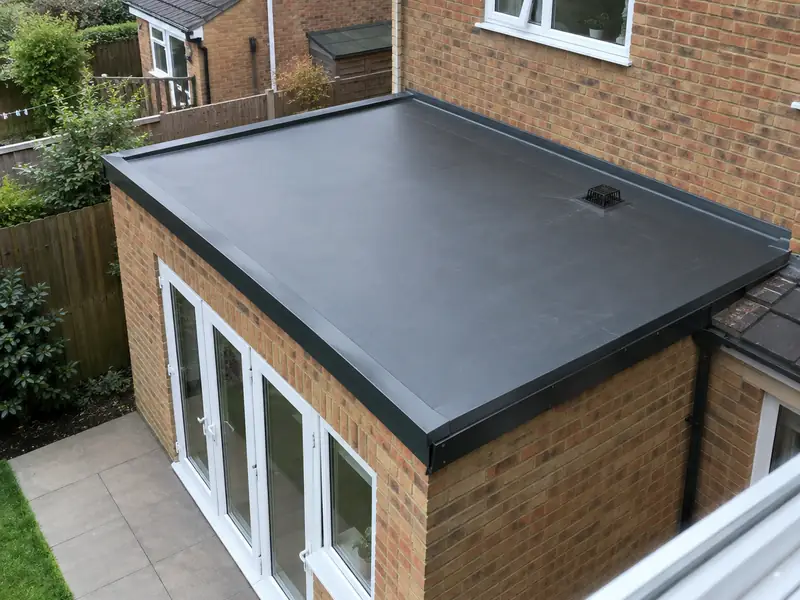
A flat roof replacement strips the old covering from a low-pitched roof and lays a new waterproof system, usually EPDM rubber, GRP fibreglass or torch-on felt, over a sound deck with correct falls, upstands, trims and outlets so rainwater drains away.
Lincolnshire is part of our UK-wide coverage for a new flat roof. Places we cover include Lincoln, Grimsby, Scunthorpe and Boston, and we travel to smaller communities across the area as well. Since your property is in England, the relevant planning and building rules are the ones set there. In the East Midlands, budget around £1,900–£4,300 with VAT; the figure is confirmed after a survey that costs you nothing.
- Guide price
- £1,900–£4,300 inc VAT
- Time on site
- 1–3 days for most roofs
- Planning rules
- England
- Price level
- About 4% below the national guide
- Towns listed
- 10
- Survey
- Free, with a written quote
How much does a new flat roof cost in Lincolnshire?
The table below shows guide prices for a new flat roof in Lincolnshire. They are based on rates in the East Midlands, which run about 4% below the national guide, giving an overall range of £1,900–£4,300. All figures include VAT and are firmed up after a free site survey.
| Type of job | What it usually involves | Guide in Lincolnshire |
|---|---|---|
| Small roof (up to 8m²) | A dormer, bay, porch or small garage roof re-covered in EPDM or GRP. | £750–£1,900 |
| Extension or garage (15–25m²) | A typical extension or single garage roof stripped and re-covered. | £1,900–£4,300 |
| Large or new warm roof | Larger roofs, or roofs needing a new deck and insulation build-up. | £3,800–£8,600 |
The main things that change the figure:
- Covering system: EPDM, GRP or torch-on felt
- Condition of the deck and joists underneath
- Insulation upgrades and changes to roof height at edges
- Number of rooflights, pipes and upstands to detail
What’s included?
- Survey of the covering, deck, falls, upstands and drainage
- Replacement of rotten or soft deck boards
- Insulation upgrade to a warm roof build-up where agreed
- New EPDM, GRP or torch-on felt membrane laid to falls
- Upstands, flashings and drip edges finished neatly
- Rooflights refitted or replaced where required
Homes in Lincolnshire
Lincoln has limestone buildings on the hill and Victorian brick terraces below, and Stamford is known for its Georgian limestone streets. Red brick and clay pantiles are common across villages, Grimsby and Cleethorpes have Victorian terraces, and the coast from Skegness to Mablethorpe has many bungalows and holiday-era homes.
Bungalows often suit loft conversions and extensions; terraces take rear extensions and window replacement. Pantile roofs may need careful re-roofing, and stone properties call for lime pointing and suitable repairs.
Lincolnshire is flat and open, with cold easterly winds off the North Sea and flood risk on the coast and in the fens.
Planning and building rules in Lincolnshire
For anyone in Lincolnshire, the relevant framework is England's. The summary below is general, so we always contact the council about your address before putting a price in writing.
Re-roofing a house with similar materials does not usually need planning permission in England. Listed buildings and conservation areas may need consent if the covering changes.
Replacing more than a quarter of a roof’s covering counts as renovation under Building Regulations, so the work is notified and the roof insulation may need upgrading. Bats are protected across the UK; if they roost under roof tiles, soffits or fascias, work stops and a licensed ecologist advises before it restarts.
Rules change and every property is different, so we check the planning history and constraints for your address before we quote.
From survey to handover
Free site survey
We begin by looking at the job in person. During the free survey we discuss options, materials and budget for a new flat roof, and photograph or measure anything the quote needs to reflect.
Quote in writing
After the survey we send a quote for a new flat roof that fixes the price for the scope we've agreed. If you want to change materials or scope, we revise it in writing before anything is booked.
Dates and permissions
Next comes planning the work itself. We set a start date that suits you, line up the right trades, and make sure any approvals for a new flat roof are in place before the first day on site.
The work itself
On site, the agreed plan is followed and any change is put in writing first. At completion we do a final clean, go through the snagging list with you and leave you with the relevant documents.
How we work
Frequently asked questions
Can I stay at home during the work?
In most cases, yes. Most people can live at home throughout, and we plan the work to keep disruption down by protecting floors, agreeing working hours and keeping access routes clear. Bigger jobs affecting kitchens, bathrooms or heating may mean a short spell with reduced facilities, and we talk this through with you at the survey.
Is a flat roof suitable for a roof terrace?
A flat roof can only be used as a terrace if it is designed for it, with joists strong enough for people and furniture, a hard-wearing surface, safe edge protection and correct drainage. Using a standard extension roof as a terrace can damage it and may need planning permission and building regulations approval. We can advise on what a conversion would involve.
Why does water sit on my flat roof?
Ponding water on a flat roof is usually caused by inadequate falls, sagging joists, a deck that has dipped or blocked outlets. Small puddles that dry within a day or two are not always a problem, but standing water speeds up wear and finds any weakness. A new roof can be laid on firring strips or tapered insulation to create proper falls. We check falls during the survey.
Which is better, EPDM rubber or GRP fibreglass?
EPDM rubber and GRP fibreglass are both reliable modern flat roof systems. EPDM is a single flexible sheet with very few joints, which copes well with movement and suits most extensions and garages. GRP is a hard, seamless finish that copes better with foot traffic and complex shapes, but needs dry weather to apply. Felt costs less but usually lasts less long. We recommend a system after seeing your roof.
Who do I deal with during the job?
One point of contact manages your project from survey to handover. They schedule the trades working under our contract, keep you updated on progress, and are the person to call with any question. You don't need to coordinate builders, electricians or decorators separately, because that is part of what we do.
Towns in Lincolnshire
Homes in all of the following Lincolnshire towns can get a written quote for a new flat roof. Open a town page to see prices and the postcodes we cover.