
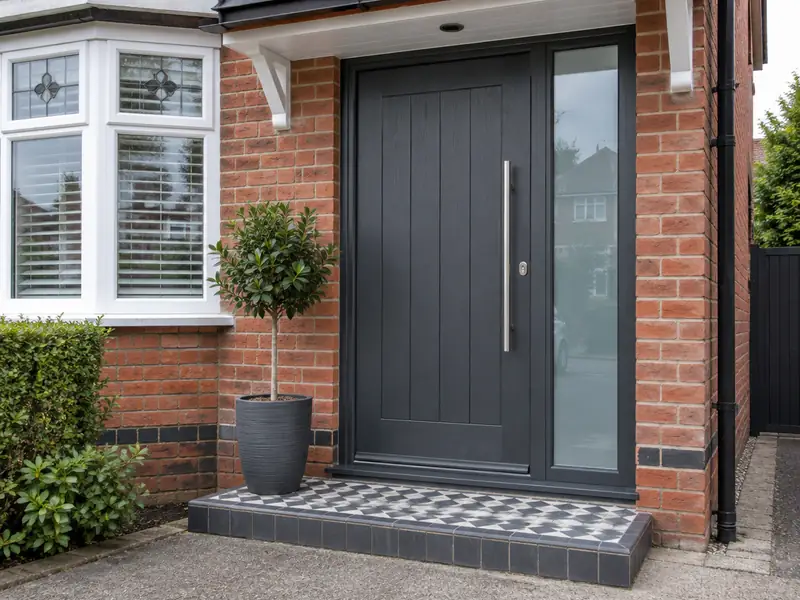
A replacement front or back door is a new door and frame, usually composite, uPVC or aluminium, made to fit your existing opening and fitted with multi-point locks and weather seals to improve security, warmth and kerb appeal.
We supply and fit front doors, back doors, stable doors and doors with side panels for houses and flats across the UK. Our free site survey and written quote starts with measuring the opening and checking the frame, threshold and surrounding brickwork. We talk through materials, colours, glass designs, letterplates and locks, and explain how each choice affects security, warmth and price. A new door suits you if your current one sticks, lets in draughts, feels insecure or simply looks tired. Most doors are made to order, then fitted in a single visit with the old door removed, the new frame sealed and the inside trims finished neatly.
What’s included?
- Measured survey of the opening, threshold and frame condition
- Made-to-measure door and frame in your chosen colour and design
- Multi-point locking with anti-snap cylinders and matching handles
- Glazing panels, side panels or fanlights where specified
- Removal and disposal of the old door and frame
- Low threshold options for level or easier access
- Weather seals, sealant and internal trims finished neatly
- Building regulations paperwork where a glazed door needs it
Which options can you choose from?
How much does a new front or back door cost?
Most jobs fall between £1,000–£3,500 for one supplied and fitted uPVC or composite front door, including VAT at 20%. The table shows three typical levels of work; the figures are national guides, confirmed in writing after a free site survey.
| Type of job | What it usually involves | Guide price |
|---|---|---|
| uPVC back door | A standard uPVC back or side door with a half-glazed panel and multi-point lock. | £800–£1,500 |
| Composite front door | A made-to-measure composite door in your chosen colour, glass design and hardware. | £1,200–£2,500 |
| Aluminium or door with side panels | A premium aluminium door, or a composite door with one or two side panels. | £2,500–£5,000 |
What affects the price?
- Door material: uPVC, composite or aluminium
- Side panels, fanlights and the amount of glass
- Lock, cylinder and hardware specification
- Colour, including different colours inside and out
- Condition of the opening, threshold and surrounding brickwork
How do prices vary across the UK?
| Region | Guide price |
|---|---|
| London | £1,300–£4,600 |
| The South East | £1,100–£3,900 |
| The East of England | £1,050–£3,700 |
| The South West | £1,000–£3,600 |
| The West Midlands | £1,000–£3,400 |
| The East Midlands | £950–£3,400 |
| The North West | £950–£3,300 |
| Yorkshire and the Humber | £950–£3,300 |
| The North East | £900–£3,200 |
| Wales | £900–£3,200 |
| Scotland | £950–£3,400 |
| Northern Ireland | £850–£3,000 |
Regional figures apply typical labour and material cost differences to the national guide. They are not quotes.
Do you need planning permission for a new front or back door?
A replacement external door with significant glazing must meet building regulations for energy efficiency and safety glass, and is either self-certified by a registered installer or signed off by building control where required. We confirm which applies before work starts.
England
Replacing windows and doors on a house is usually permitted development in England when the new ones look broadly similar to the old. Flats, listed buildings and homes covered by an Article 4 direction can need consent, and conservation areas may limit materials or styles.
Replacement windows and external doors must meet Building Regulations for energy efficiency, ventilation and, on upper floors, escape. The work is either self-certified by an installer registered with a competent person scheme or signed off by building control.
Wales
In Wales, replacing windows and doors on a house usually needs no planning permission if the new ones are similar in appearance. Listed buildings, flats and some conservation areas are controlled, so the council should be asked first.
Building Regulations in Wales apply to replacement windows and doors, covering energy performance, ventilation and escape routes. A registered competent person can self-certify the work, or building control inspects it.
Scotland
In Scotland, replacing windows and doors on a house generally needs no planning permission when the style is similar, but listed buildings and conservation areas are closely controlled and often need consent for any change of material or pattern.
A building warrant is not usually needed for like-for-like replacement windows, but the new units must still meet the Scottish building standards, including energy performance and, where relevant, escape from upper floors.
Northern Ireland
In Northern Ireland, like-for-like replacement windows and doors on a house rarely need planning permission. Listed buildings and conservation areas are the main exceptions, so check with the council before changing style or material.
The Building Regulations (Northern Ireland) apply to replacement windows, so the work needs building control approval or sign-off through an approved competent person route.
Rules change and every property is different, so we check the planning history and constraints for your address before we quote.
How long does it take?
Typical time on site: Usually half a day to one day per door. Lead times for materials, drawings and approvals come before that and are set out in your written quote.
How does the job run?
Free site survey
We visit, measure up, look at access and the condition of what’s there, and talk through options and budget with you.
Written quote
You get a written quote with a fixed price for the agreed specification, what’s included, the payment stages and a likely start window.
Plan and prepare
We sort drawings, approvals and materials, agree dates with you and explain what to expect each week before work starts.
Build and hand over
The work is carried out, checked and cleared away. We walk round it with you and pass on certificates and product details.
Front and back doors: frequently asked questions
How much does a new front door cost?
A new front door costs £1,000–£3,500 supplied and fitted, depending on the material, the amount of glass and whether you want side panels. A uPVC back door sits at the lower end, a composite front door in the middle, and aluminium doors or doors with side panels at the top. Locks, letterplates and dual colours also affect the figure. We confirm a fixed price in writing after measuring your opening.
What is the difference between a composite and a uPVC door?
A composite door has a tough outer skin over a solid insulated core, so it feels heavier and more solid than uPVC and holds its colour well. A uPVC door is built from reinforced plastic panels and costs less. Both can have multi-point locking and good weather seals. Many people choose composite for the front door and uPVC for back or side doors, where looks matter less.
How secure are modern doors?
Modern external doors are far more secure than older designs because they lock at several points along the frame, not just at the handle. We fit anti-snap cylinders, which resist a common method of forced entry, in reinforced frames. Laminated or toughened glass panels add further protection. For extra peace of mind you can add a door chain, a viewer or a smart lock, which we can include in your quote.
Do I need permission to change my front door?
Planning permission is not usually needed to replace a front door, but it depends on the style and size of the change, your home's location, whether it is listed or in a conservation area, and which UK nation you are in. Listed homes generally need consent for any change, and some conservation areas control colours and styles. Flat entrance doors in shared buildings must also meet fire rules. We check before quoting.
How long will my home be open while the door is fitted?
Fitting a new door usually takes half a day to a full day, and your home is only open for the short time between taking out the old frame and fixing the new one. We keep the opening covered if there is any delay, and we never leave a doorway insecure overnight. Once the frame is fixed, we hang the door, adjust the locks, seal around the frame and finish the trims.
Can I have a low threshold for wheelchair or pushchair access?
A low threshold is a flat or very shallow sill that makes a doorway easier to cross with a wheelchair, walking frame or pushchair. Most composite, uPVC and aluminium doors can be supplied with one. The outside ground level and drainage need checking, because a low threshold must still keep rainwater out. We look at this during the survey and suggest a channel drain or small ramp if needed.
How long does it take to make a new door?
Made-to-measure doors usually take a few weeks to manufacture after the survey and your order are confirmed. Bespoke colours, special glass designs and aluminium doors can take longer. Once the door arrives, we arrange a fitting date that suits you. We give you a realistic lead time with your written quote, and we keep you updated if the manufacturer's dates change.
How do I look after a composite or uPVC door?
Looking after a composite or uPVC door is mostly a matter of regular cleaning with warm soapy water and a soft cloth. Avoid solvents and abrasive pads, which can dull the finish. Once or twice a year, lightly oil the lock mechanism and the moving parts along the edge of the door, and check the seals. If the door starts to catch, the hinges can usually be adjusted easily.