
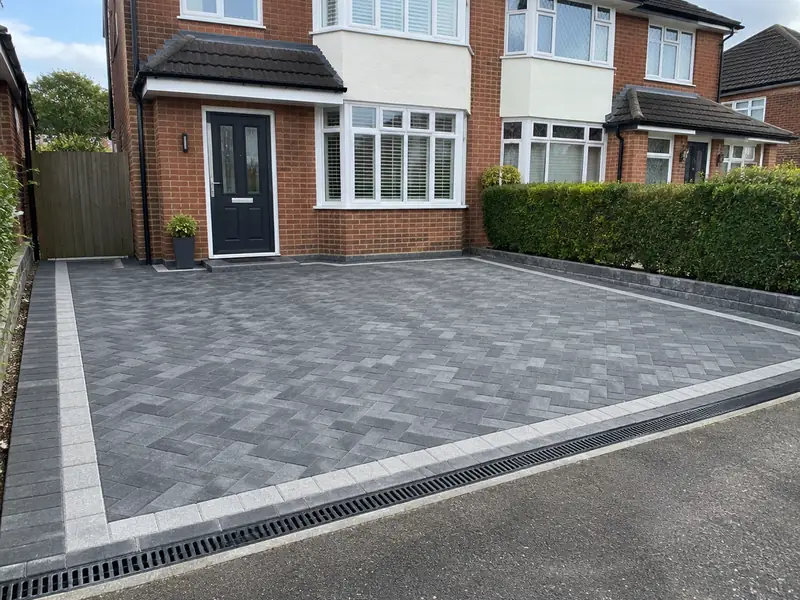
A new driveway is a hard-wearing surface for parking, such as block paving, resin bound gravel, tarmac or gravel, laid on an excavated and compacted sub-base with edging and drainage designed to carry vehicle loads and handle rainwater.
We lay new driveways and replace failing ones in block paving, resin bound gravel, tarmac, gravel and concrete. Our free site survey and written quote measures the area, checks levels against the house and pavement, looks at existing drains, manholes and soakaways, and notes whether a dropped kerb is needed. We explain how each surface handles drainage, upkeep and cost, and whether planning rules affect your choice. A new driveway suits homes with cracked or sunken paving, front gardens you want to turn into parking, or drives that flood. We dig out, lay a compacted sub-base, fit edging and drainage, then lay and finish the surface.
What’s included?
- Survey of levels, drainage, manholes and access
- Excavation and removal of the old surface and soil
- Weed membrane and compacted MOT Type 1 sub-base
- Edging kerbs or restraints to hold the surface in place
- Drainage channels or soakaway where needed
- Manhole covers raised or replaced to new levels
- New surface laid, compacted and finished
- Site cleared and waste removed
Which options can you choose from?
How much does a new driveway cost?
Most jobs fall between £4,000–£9,000 for a typical 40–50m² block paved or resin bound driveway, including groundworks, including VAT at 20%. The table shows three typical levels of work; the figures are national guides, confirmed in writing after a free site survey.
| Type of job | What it usually involves | Guide price |
|---|---|---|
| Gravel or tarmac | A typical 40–50m² drive in gravel on a grid, or tarmac with block edging. | £2,000–£5,000 |
| Block paving or resin bound | A typical 40–50m² drive with sub-base, edging and drainage. | £4,000–£9,000 |
| Large or premium driveway | Larger drives, natural stone, walls, steps or a new dropped kerb. | £8,000–£16,000 |
What affects the price?
- Driveway area and the depth of excavation needed
- Surface: gravel, tarmac, block paving, resin or stone
- Drainage, soakaways and changes in level
- Edging, steps, walls and manhole adjustments
- Access for machinery and removal of spoil
How do prices vary across the UK?
| Region | Guide price |
|---|---|
| London | £5,200–£11,500 |
| The South East | £4,500–£10,000 |
| The East of England | £4,200–£9,400 |
| The South West | £4,100–£9,200 |
| The West Midlands | £3,900–£8,800 |
| The East Midlands | £3,800–£8,600 |
| The North West | £3,800–£8,600 |
| Yorkshire and the Humber | £3,800–£8,500 |
| The North East | £3,600–£8,100 |
| Wales | £3,700–£8,300 |
| Scotland | £3,800–£8,600 |
| Northern Ireland | £3,400–£7,700 |
Regional figures apply typical labour and material cost differences to the national guide. They are not quotes.
Do you need planning permission for a new driveway?
Building regulations do not usually apply to driveways, but rainwater must be handled properly, and a new or widened dropped kerb needs consent from your local highways authority before work on the pavement.
England
In England, a new or replacement front-garden surface over 5 m² needs planning permission unless it is permeable or drains to a lawn or border within your property. A new dropped kerb needs consent from the council’s highways team, and access onto a classified road may need planning permission.
Building Regulations do not usually apply to driveways, but drainage must not discharge onto the road or a neighbour’s land.
Wales
In Wales, hard surfaces in front gardens need to be permeable or drain within the property to avoid planning permission. Larger schemes can also need approval from the council’s SuDS Approving Body (SAB), and a dropped kerb needs highways consent.
Building Regulations do not usually apply, but drainage design matters.
Scotland
In Scotland, a hard surface in front of a house is usually permitted development if it is permeable or drains within the property. A dropped kerb or road opening needs consent from the council as roads authority.
A building warrant is not normally needed for a driveway.
Northern Ireland
In Northern Ireland, hard surfaces around a house are often permitted development, but check that surface water drains within your property. A dropped kerb needs consent from DfI Roads.
Building control approval is not normally needed for a driveway.
Rules change and every property is different, so we check the planning history and constraints for your address before we quote.
How long does it take?
Typical time on site: 3–7 days on site. Lead times for materials, drawings and approvals come before that and are set out in your written quote.
How does the job run?
Free site survey
We visit, measure up, look at access and the condition of what’s there, and talk through options and budget with you.
Written quote
You get a written quote with a fixed price for the agreed specification, what’s included, the payment stages and a likely start window.
Plan and prepare
We sort drawings, approvals and materials, agree dates with you and explain what to expect each week before work starts.
Build and hand over
The work is carried out, checked and cleared away. We walk round it with you and pass on certificates and product details.
Driveways: frequently asked questions
How much does a new driveway cost?
A typical 40–50m² block paved or resin bound driveway costs £4,000–£9,000, including excavation, sub-base, edging and drainage. As a guide, allow roughly £70–£150 per square metre plus fixed costs for machinery and waste. Gravel and tarmac cost less, while natural stone, steps and walls cost more. A new dropped kerb is a separate cost. We confirm a fixed price after measuring.
Do I need planning permission for a driveway?
Whether a driveway needs planning permission depends on its size, surface and drainage, your home's location, whether it is listed or in a conservation area, and which UK nation you are in. In England, a new or replacement front driveway over 5m² needs permission unless it uses a permeable surface or drains to a lawn or border. We check the rules and design to suit.
Do I need permission for a dropped kerb?
A dropped kerb lets vehicles cross the pavement onto your drive, and creating or widening one needs consent from your local highways authority. They usually check visibility, the distance from junctions and trees, and whether there is enough space to park off the road. Many councils carry out the kerb work themselves or use approved contractors. We can help with the application.
Which driveway surface is easiest to maintain?
Resin bound gravel is one of the easiest surfaces to maintain, because it is smooth, porous and resists weeds, needing only an occasional sweep and wash. Block paving needs re-sanding joints and occasional weed control. Tarmac needs little upkeep but can soften in heat. Gravel needs raking and topping up. We explain the upkeep of each surface before you choose.
What is a sub-base and why does it matter?
The sub-base is the layer of crushed, compacted stone beneath the driveway surface that spreads the weight of vehicles into the ground. Most driveway failures, such as sinking, rutting and loose blocks, come from a sub-base that is too thin or poorly compacted. We excavate to the right depth for your soil and compact the sub-base in layers before laying the surface.
How long does it take to lay a driveway?
Laying a typical driveway takes around three to seven days, depending on size, surface and ground conditions. Excavation and sub-base usually take the first few days, then edging, drainage and the surface. Resin needs dry weather and time to cure, and you will usually need to keep cars off for a short period afterwards. We confirm timings and access arrangements with your quote.
Can I use my car during the work?
You will not be able to park on the driveway while it is being dug out and laid, so plan to park on the street or nearby for the duration. We keep a safe pedestrian route to your front door where possible. After completion, block paving and tarmac can usually be driven on straight away, while resin and concrete need a short curing period first.
How do you stop a driveway flooding?
A driveway stays dry when rainwater can drain away rather than pooling or running towards the house. Permeable surfaces such as resin bound gravel or permeable block paving let water soak through to the ground. Non-permeable surfaces need falls directing water to a channel drain, soakaway or garden border. We check levels and drainage during the survey and design the falls accordingly.