
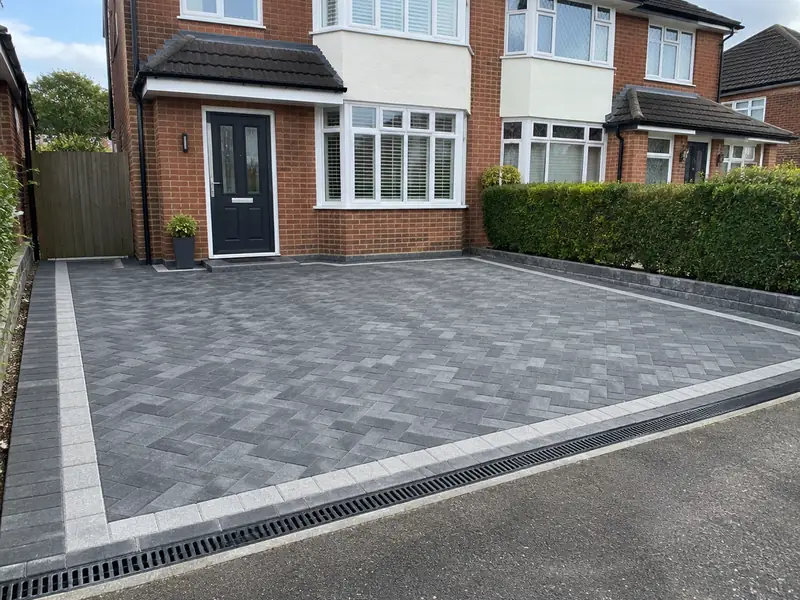
A new driveway is a hard-wearing surface for parking, such as block paving, resin bound gravel, tarmac or gravel, laid on an excavated and compacted sub-base with edging and drainage designed to carry vehicle loads and handle rainwater.
Across Dyfed, people look into a new driveway to replace something worn out, to make the house work better for them, or to get it ready for a sale. We cover Llanelli, Ammanford, Aberystwyth and Carmarthen and the smaller towns around them, working to the rules that apply in Wales. Expect a guide of £3,700–£8,300, VAT included, in Wales, and every quote follows a free visit.
- Guide price
- £3,700–£8,300 inc VAT
- Time on site
- 3–7 days on site
- Planning rules
- Wales
- Price level
- About 8% below the national guide
- Towns listed
- 4
- Survey
- Free, with a written quote
How much does a new driveway cost in Dyfed?
These are guide costs, not quotes. For a new driveway in Dyfed the range is £3,700–£8,300, VAT included, reflecting prices in Wales that are about 8% below the national guide. Once we have visited for a free survey, you get a firm figure for the scope you approve.
| Type of job | What it usually involves | Guide in Dyfed |
|---|---|---|
| Gravel or tarmac | A typical 40–50m² drive in gravel on a grid, or tarmac with block edging. | £1,850–£4,600 |
| Block paving or resin bound | A typical 40–50m² drive with sub-base, edging and drainage. | £3,700–£8,300 |
| Large or premium driveway | Larger drives, natural stone, walls, steps or a new dropped kerb. | £7,400–£14,500 |
Your price depends mostly on:
- Driveway area and the depth of excavation needed
- Surface: gravel, tarmac, block paving, resin or stone
- Edging, steps, walls and manhole adjustments
- Access for machinery and removal of spoil
What’s included?
- Survey of levels, drainage, manholes and access
- Excavation and removal of the old surface and soil
- Drainage channels or soakaway where needed
- Manhole covers raised or replaced to new levels
- New surface laid, compacted and finished
- Site cleared and waste removed
Housing across Dyfed
Dyfed covers Carmarthenshire, Ceredigion and Pembrokeshire. Stone cottages and farmhouses under slate roofs are common, often rendered or colour-washed, as in Tenby's brightly painted terraces. Llanelli has Victorian industrial terraces, Aberystwyth and Carmarthen have Georgian and Victorian centres, and bungalows and newer estates surround most towns.
Stone homes often need lime render, repointing and roof slating repairs. Terraces suit loft conversions and extensions, and rural bungalows commonly take extensions, porches and driveways.
Atlantic weather brings strong winds, driving rain and salt to the coast, so exposure ratings matter when specifying render and pointing.
Do you need permission in Dyfed?
The notes below cover Wales, which is where Dyfed sits. Rules change and every property is different, so we speak to the council before pricing your job.
In Wales, hard surfaces in front gardens need to be permeable or drain within the property to avoid planning permission. Larger schemes can also need approval from the council’s SuDS Approving Body (SAB), and a dropped kerb needs highways consent.
Building Regulations do not usually apply, but drainage design matters.
Rules change and every property is different, so we check the planning history and constraints for your address before we quote.
From survey to handover
We look at the job
First, someone visits your home in Dyfed to see the space, take measurements and note anything that could affect the work, such as access or the condition of what is there. There is no charge for this visit.
Price and scope agreed
Next you receive a written quote with a fixed price for the agreed specification. It lists what is included, what is not, and how payments are staged, so you can compare it properly.
Getting ready
Once you accept, we agree start dates, order materials and deal with any planning, building control or neighbour notices the job needs. You'll know who is coming and when before work begins.
On site to finish
On site, the agreed plan is followed and any change is put in writing first. At completion we do a final clean, go through the snagging list with you and leave you with the relevant documents.
How we work
Questions about a new driveway in Dyfed
Do I need permission for a dropped kerb?
A dropped kerb lets vehicles cross the pavement onto your drive, and creating or widening one needs consent from your local highways authority. They usually check visibility, the distance from junctions and trees, and whether there is enough space to park off the road. Many councils carry out the kerb work themselves or use approved contractors. We can help with the application.
Which driveway surface is easiest to maintain?
Resin bound gravel is one of the easiest surfaces to maintain, because it is smooth, porous and resists weeds, needing only an occasional sweep and wash. Block paving needs re-sanding joints and occasional weed control. Tarmac needs little upkeep but can soften in heat. Gravel needs raking and topping up. We explain the upkeep of each surface before you choose.
How much will a new driveway cost in Dyfed?
As a guide, expect to pay £3,700–£8,300 including VAT for a new driveway in Dyfed. That range is adjusted for Wales, which runs about 8% below the national guide. Where your project lands depends on size, materials, access and the condition of what is already there. We confirm a fixed price in writing after a free survey of your home.
Who do I deal with during the job?
One point of contact manages your project from survey to handover. They schedule the trades working under our contract, keep you updated on progress, and are the person to call with any question. You don't need to coordinate builders, electricians or decorators separately, because that is part of what we do.
How do you stop a driveway flooding?
A driveway stays dry when rainwater can drain away rather than pooling or running towards the house. Permeable surfaces such as resin bound gravel or permeable block paving let water soak through to the ground. Non-permeable surfaces need falls directing water to a channel drain, soakaway or garden border. We check levels and drainage during the survey and design the falls accordingly.
Towns in Dyfed
Find your town below. Every place listed in Dyfed is covered for a new driveway, with the same survey, written quote and fixed-price process.