
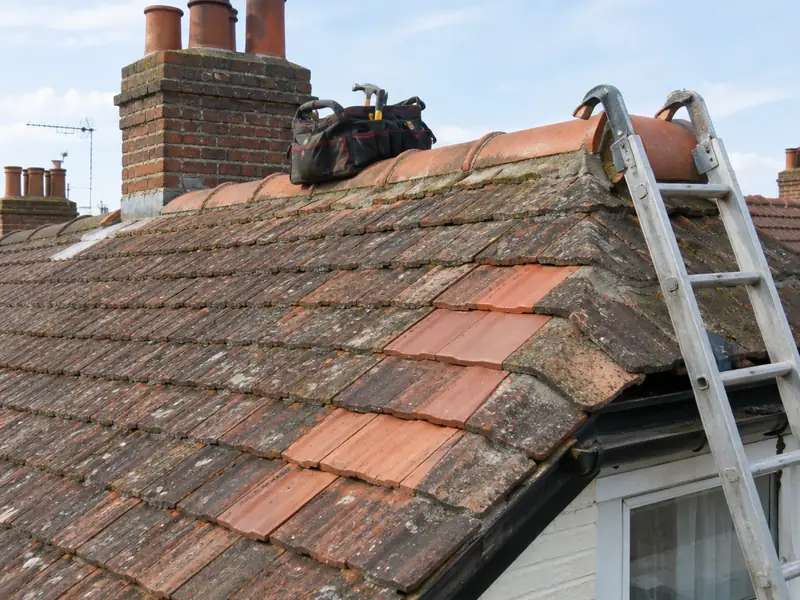
Roof repairs fix specific faults in a pitched or flat roof, such as slipped or cracked tiles, loose ridges, failed flashing, leaking valleys or chimney defects, to stop water getting in without replacing the whole roof.
Cost is usually the first question about roof repairs, so here is the guide for Wales: £300–£1,400 including VAT. We cover the whole of Dyfed, with Llanelli, Ammanford, Aberystwyth and Carmarthen among the main centres. Because each UK nation sets its own rules, we check the requirements in Wales for your property, then put a firm price on paper following a free survey.
- Guide price
- £300–£1,400 inc VAT
- Time on site
- Half a day to 3 days for most repairs
- Planning rules
- Wales
- Price level
- About 8% below the national guide
- Towns listed
- 4
- Survey
- Free, with a written quote
How much do roof repairs cost in Dyfed?
The costs listed here are typical for roof repairs around Dyfed and include VAT. They reflect labour and material costs in Wales, about 8% below the national guide, giving a range of £300–£1,400. Exact pricing depends on your home, so we only fix it once a free site survey is done.
| Type of job | What it usually involves | Guide in Dyfed |
|---|---|---|
| Minor repair | Replacing a handful of slipped or broken tiles from ladders or a roof ladder. | £200–£450 |
| Ridge, flashing or valley repair | Rebedding a ridge run, renewing flashing or relining a short valley. | £350–£1,100 |
| Larger repair with scaffolding | Several faults, chimney work or repairs on high roofs needing scaffolding. | £900–£2,800 |
The main things that change the figure:
- Number and type of faults to repair
- Access: ladders, roof ladders, towers or full scaffolding
- Roof height and steepness
- Matching tiles, slates or lead to the existing roof
What do you get?
- Inspection to trace the source of leaks or damage
- Safe access by ladders, towers or scaffolding as needed
- Replacement of slipped, cracked or missing tiles and slates
- Ridge, hip and verge rebedding or dry-fix conversion
- Lead flashing, valley and chimney junction repairs
- Clearing debris from gutters and the work area
Homes in Dyfed
Dyfed covers Carmarthenshire, Ceredigion and Pembrokeshire. Stone cottages and farmhouses under slate roofs are common, often rendered or colour-washed, as in Tenby's brightly painted terraces. Llanelli has Victorian industrial terraces, Aberystwyth and Carmarthen have Georgian and Victorian centres, and bungalows and newer estates surround most towns.
Stone homes often need lime render, repointing and roof slating repairs. Terraces suit loft conversions and extensions, and rural bungalows commonly take extensions, porches and driveways.
Atlantic weather brings strong winds, driving rain and salt to the coast, so exposure ratings matter when specifying render and pointing.
Planning and building rules in Dyfed
The notes below cover Wales, which is where Dyfed sits. Rules change and every property is different, so we speak to the council before pricing your job.
Re-roofing with similar materials does not usually need planning permission in Wales, except on listed buildings or where a conservation area restricts materials.
Building Regulations in Wales apply to major re-roofing, including insulation upgrades. Bats are protected across the UK; if they roost under roof tiles, soffits or fascias, work stops and a licensed ecologist advises before it restarts.
Rules change and every property is different, so we check the planning history and constraints for your address before we quote.
From survey to handover
We look at the job
First, someone visits your home in Dyfed to see the space, take measurements and note anything that could affect the work, such as access or the condition of what is there. There is no charge for this visit.
Your fixed price
We put everything into a written, fixed-price quote: the specification, what's excluded, staged payments and the expected time on site. Take whatever time you need to decide; there's no pressure to commit.
Getting ready
Before anyone starts, we confirm the programme in writing, check whether consents are required and arrange deliveries. If a skip or scaffolding on the road needs a permit, we apply for it.
On site to finish
On site, the agreed plan is followed and any change is put in writing first. At completion we do a final clean, go through the snagging list with you and leave you with the relevant documents.
How we work
Frequently asked questions
What is dry-fix ridge and is it better than mortar?
Dry-fix ridge systems use screws, clips and weather seals instead of mortar to hold ridge and hip tiles in place. They avoid the cracking and loosening that mortar suffers over time, need less upkeep and are now common on new roofs. Mortar-bedded ridges suit some period or conservation-area roofs. We recommend the method that suits your roof and its location.
Is the price fixed?
Yes, for the specification we agree. Your written quote sets out exactly what is included at a fixed price. It only changes if you ask for something different, or if a problem the survey could not reasonably reveal later needs extra work. In either case we explain the change and confirm it in writing before going ahead.
Is it worth repairing an old roof?
Repairing an old roof is worthwhile when the problem is isolated and the rest of the roof is sound. If tiles are widely porous, battens are rotten or the felt has perished, repeated repairs may cost more over time than a new roof. We look at the overall condition, explain the likely lifespan and give you prices for both where it makes sense.
Can you do an emergency roof repair?
After storm damage, a temporary repair such as sheeting or refixing loose tiles can stop water getting in until a permanent repair can be made. We aim to attend as quickly as possible, but availability depends on weather and demand, especially after widespread storms. In the meantime, catch drips in containers, move valuables and switch off lights near any wet ceiling.
Can you combine roof repairs with other work?
Yes. Because we manage several trades under one contract, we can plan roof repairs alongside other work on your Dyfed home, such as new windows with rendering, or a kitchen refit with an extension. Combining jobs can reduce repeat set-up such as scaffolding, skips and access, and every element is listed and priced in the same written quote.
Towns in Dyfed
Find your town below. Every place listed in Dyfed is covered for roof repairs, with the same survey, written quote and fixed-price process.