
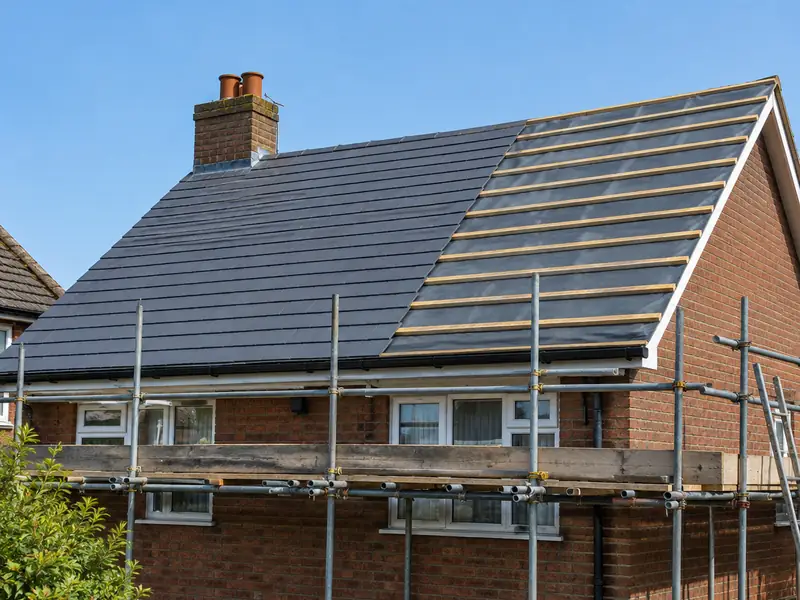
A roof replacement, or re-roof, strips the old tiles or slates, battens and felt from a pitched roof and replaces them with a new breathable membrane, battens and covering, repairing timbers and renewing ridges, valleys and flashings at the same time.
We re-roof terraced, semi-detached, detached and bungalow homes in concrete tile, clay tile and natural slate. Our free site survey and written quote looks at the age and condition of the covering, the timbers you can see from the loft, ridges, valleys, chimneys, flashings and ventilation, and whether repairs could buy more time. Roof replacement suits homes with widespread slipped or porous tiles, sagging or rotten battens, recurring leaks or failed felt. We erect scaffolding, strip the roof in sections so the house is never left open, replace battens and membrane, refit or renew the covering, and finish ridges, valleys and leadwork so the roof is sound for decades to come.
What’s included?
- Survey of the covering, timbers, chimneys and loft ventilation
- Scaffolding with edge protection, erected and removed
- Stripping old tiles or slates, battens and felt in stages
- Repairs or replacement of damaged rafters and fascia boards
- Breathable membrane and new treated battens
- New tiles or slates, or sound originals refitted where suitable
- Ridges, hips and verges dry-fixed or bedded, with new leadwork
- Waste removal by skip and a clean site on completion
Which options can you choose from?
How much does a new roof cost?
Most jobs fall between £7,000–£15,000 for re-roofing a typical 3-bed semi in concrete or clay tiles, including scaffolding, including VAT at 20%. The table shows three typical levels of work; the figures are national guides, confirmed in writing after a free site survey.
| Type of job | What it usually involves | Guide price |
|---|---|---|
| Terraced house or bungalow | A smaller pitched roof re-covered in concrete or clay tiles, including scaffolding. | £5,000–£10,000 |
| Typical semi-detached | A 3-bed semi re-roofed in concrete or clay tiles with new membrane, battens and leadwork. | £7,000–£15,000 |
| Detached or natural slate | Larger or more complex roofs, or any roof finished in natural slate. | £12,000–£25,000 |
What affects the price?
- Roof area, pitch and the number of hips, valleys and dormers
- Covering material: concrete tile, clay tile or natural slate
- Condition of rafters, fascias and other timbers
- Chimneys, leadwork and roof windows to rework
- Scaffolding, access and the height of the house
How do prices vary across the UK?
| Region | Guide price |
|---|---|
| London | £9,100–£19,500 |
| The South East | £7,800–£17,000 |
| The East of England | £7,400–£16,000 |
| The South West | £7,100–£15,500 |
| The West Midlands | £6,900–£14,500 |
| The East Midlands | £6,700–£14,500 |
| The North West | £6,600–£14,000 |
| Yorkshire and the Humber | £6,600–£14,000 |
| The North East | £6,300–£13,500 |
| Wales | £6,400–£14,000 |
| Scotland | £6,700–£14,500 |
| Northern Ireland | £6,000–£13,000 |
Regional figures apply typical labour and material cost differences to the national guide. They are not quotes.
Do you need planning permission for a new roof?
Re-roofing a large part of a roof can fall under building regulations, which may require improved insulation and a check that the structure can carry the new covering. We confirm what applies in your UK nation and arrange sign-off by building control or a registered installer.
England
Re-roofing a house with similar materials does not usually need planning permission in England. Listed buildings and conservation areas may need consent if the covering changes.
Replacing more than a quarter of a roof’s covering counts as renovation under Building Regulations, so the work is notified and the roof insulation may need upgrading. Bats are protected across the UK; if they roost under roof tiles, soffits or fascias, work stops and a licensed ecologist advises before it restarts.
Wales
Re-roofing with similar materials does not usually need planning permission in Wales, except on listed buildings or where a conservation area restricts materials.
Building Regulations in Wales apply to major re-roofing, including insulation upgrades. Bats are protected across the UK; if they roost under roof tiles, soffits or fascias, work stops and a licensed ecologist advises before it restarts.
Scotland
In Scotland, like-for-like re-roofing does not usually need planning permission, except on listed buildings or in conservation areas.
Like-for-like re-covering does not usually need a building warrant, but structural changes or new roof windows can. Bats are protected across the UK; if they roost under roof tiles, soffits or fascias, work stops and a licensed ecologist advises before it restarts.
Northern Ireland
In Northern Ireland, re-roofing with similar materials does not usually need planning permission outside listed buildings and conservation areas.
Significant re-roofing should be checked with building control under the Building Regulations (Northern Ireland). Bats are protected across the UK; if they roost under roof tiles, soffits or fascias, work stops and a licensed ecologist advises before it restarts.
Rules change and every property is different, so we check the planning history and constraints for your address before we quote.
How long does it take?
Typical time on site: 1–2 weeks on site, plus scaffolding time. Lead times for materials, drawings and approvals come before that and are set out in your written quote.
How does the job run?
Free site survey
We visit, measure up, look at access and the condition of what’s there, and talk through options and budget with you.
Written quote
You get a written quote with a fixed price for the agreed specification, what’s included, the payment stages and a likely start window.
Plan and prepare
We sort drawings, approvals and materials, agree dates with you and explain what to expect each week before work starts.
Build and hand over
The work is carried out, checked and cleared away. We walk round it with you and pass on certificates and product details.
Roof replacement: frequently asked questions
How much does a new roof cost?
Re-roofing a typical 3-bed semi costs £7,000–£15,000, including scaffolding, new membrane and battens. As a guide, allow roughly £70–£160 per square metre of roof plus fixed costs for scaffolding and waste. Concrete tiles sit at the lower end and natural slate at the top. Hips, valleys, chimneys and timber repairs add to the price. We confirm a fixed figure after inspecting the roof and loft.
How do I know if I need a new roof or just repairs?
A roof needs replacing when problems are widespread, not isolated. Signs include many slipped, cracked or porous tiles, sagging between rafters, daylight or damp in the loft, perished felt that crumbles to the touch and repeated leaks in different places. A few slipped tiles or a loose ridge can usually be repaired. We inspect from outside and inside the loft and tell you honestly which is needed.
Do I need planning permission to replace my roof?
Planning permission is not usually needed to re-roof in similar materials, but it depends on the change, your home's location, whether it is listed or in a conservation area, and which UK nation you live in. Changing the roof shape, height or covering material can need permission. Listed buildings need consent for re-roofing. We check the position for your home before quoting.
How long does a roof replacement take?
Re-roofing a typical semi-detached house takes around one to two weeks once scaffolding is up, depending on the roof's size, complexity and the weather. Smaller terraced roofs can take a few days. Scaffolding usually goes up a day or two before work starts and comes down once everything is inspected. We give you a programme and keep the roof weathertight overnight.
What happens if it rains during the work?
We strip the roof in sections and only remove as much covering as we can replace or protect the same day. New breathable membrane goes on straight after stripping, which keeps most rain out, and we sheet exposed areas at the end of each day and before forecast showers. If heavy rain or high winds are forecast, we pause work. The house is never left open.
Can my old tiles or slates be reused?
Old tiles or slates can sometimes be reused if they are sound, which can help keep the look of a period house. Many older concrete tiles and some slates are porous, cracked or have failing fixing nibs, so they would not last. Reclaimed slates or tiles can make up shortfalls. We check a sample during the survey and explain the cost difference.
Will my loft insulation and ventilation be improved?
Re-roofing is a good time to improve loft ventilation and insulation. A breathable membrane and eaves or ridge vents keep air moving and reduce condensation in the loft. Building regulations may require insulation upgrades when a large part of the roof is renewed. We check your current insulation and ventilation and include any required improvements in the quote.
How long will a new roof last?
A well-installed roof lasts for decades. Concrete tiles typically last around 50 years or more, clay tiles longer, and natural slate can last a century with proper upkeep. Lifespan depends on the quality of materials, fixings, ventilation and leadwork, and on how exposed the roof is. Keeping gutters clear and fixing slipped tiles quickly helps it reach its full life.