
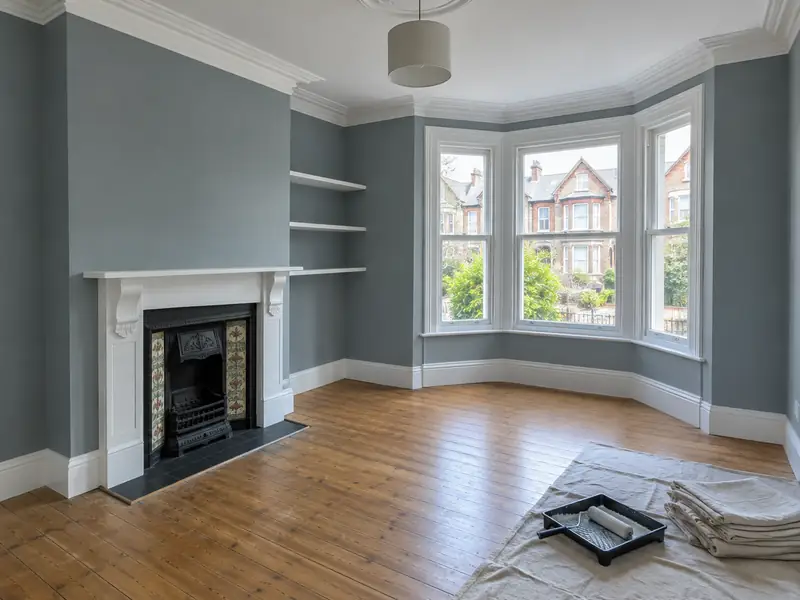
Painting and decorating is preparing and finishing the surfaces of a home, including filling, sanding, priming and painting walls, ceilings and woodwork, hanging wallpaper and painting exterior walls and joinery, to protect them and refresh how rooms look.
We decorate single rooms, whole interiors and house exteriors. Our free site survey and written quote looks at each surface: cracks and holes to fill, flaking paint, stains, bare plaster, woodwork condition and, outside, the state of masonry, render, fascias and window frames. We agree colours, finishes and how many coats are needed, and explain how much preparation each surface requires. Decorating suits anyone moving in, selling, letting, finishing a renovation or simply tired of their current colours. We protect floors and furniture, prepare surfaces properly, then apply paint or paper neatly. We keep rooms usable where we can and leave everything clean at the end.
What’s included?
- Survey of each surface and agreed colours and finishes
- Floors, furniture and fittings protected with dust sheets and masking
- Filling cracks and holes, sanding and spot priming
- Mist coat on new plaster before finishing coats
- Two finishing coats to walls and ceilings as standard
- Woodwork sanded, primed where bare, and painted
- Wallpaper stripped or hung where included
- Furniture replaced, waste removed and a final tidy-up
Which options can you choose from?
How much does painting and decorating cost?
Most jobs fall between £1,200–£3,000 for decorating three average rooms, including walls, ceilings and woodwork, including VAT at 20%. The table shows three typical levels of work; the figures are national guides, confirmed in writing after a free site survey.
| Type of job | What it usually involves | Guide price |
|---|---|---|
| Single room | Walls, ceiling and woodwork in one average bedroom or living room. | £350–£900 |
| House exterior | Masonry and joinery on a typical semi, including access equipment. | £2,500–£6,000 |
| Whole interior of a 3-bed house | Every room, hallway, stairs and landing, including woodwork. | £3,000–£6,500 |
What affects the price?
- Number and size of rooms, including ceiling height
- Amount of preparation, filling and repairs needed
- Whether woodwork, doors and wallpaper are included
- Paint quality, colour changes and number of coats
- Exterior access, scaffolding and the condition of surfaces
How do prices vary across the UK?
| Region | Guide price |
|---|---|
| London | £1,550–£3,900 |
| The South East | £1,350–£3,400 |
| The East of England | £1,250–£3,200 |
| The South West | £1,200–£3,100 |
| The West Midlands | £1,200–£2,900 |
| The East Midlands | £1,150–£2,900 |
| The North West | £1,150–£2,800 |
| Yorkshire and the Humber | £1,150–£2,800 |
| The North East | £1,100–£2,700 |
| Wales | £1,100–£2,800 |
| Scotland | £1,150–£2,900 |
| Northern Ireland | £1,050–£2,600 |
Regional figures apply typical labour and material cost differences to the national guide. They are not quotes.
Do you need planning permission for painting and decorating?
Painting and decorating does not need building regulations approval. Listed buildings may need consent to change exterior colours, and in older homes we prepare old paintwork carefully in case it contains lead.
England
Internal work such as a new kitchen, bathroom, flooring, plastering or decorating does not need planning permission in England, unless the house is listed, when listed building consent may be needed even for internal changes.
Some internal work is covered by Building Regulations: new electrical circuits and work in bathrooms (Part P), new drainage, structural changes, extractor ventilation and any new window. Notifiable work is certified by a registered installer or by building control.
Wales
Internal improvements do not need planning permission in Wales unless the building is listed.
Building Regulations in Wales cover notifiable electrical work, drainage, ventilation and any structural change.
Scotland
Internal improvements do not need planning permission in Scotland unless the building is listed.
Like-for-like kitchen and bathroom replacements do not normally need a building warrant, but structural changes and some drainage or heating alterations do, and electrical work must meet the building standards.
Northern Ireland
Internal improvements do not need planning permission in Northern Ireland unless the building is listed.
The Building Regulations (Northern Ireland) apply to structural work, drainage and ventilation; electrical work should be tested and certified.
Rules change and every property is different, so we check the planning history and constraints for your address before we quote.
How long does it take?
Typical time on site: 1–2 days per room; 3–7 days for a house exterior. Lead times for materials, drawings and approvals come before that and are set out in your written quote.
How does the job run?
Free site survey
We visit, measure up, look at access and the condition of what’s there, and talk through options and budget with you.
Written quote
You get a written quote with a fixed price for the agreed specification, what’s included, the payment stages and a likely start window.
Plan and prepare
We sort drawings, approvals and materials, agree dates with you and explain what to expect each week before work starts.
Build and hand over
The work is carried out, checked and cleared away. We walk round it with you and pass on certificates and product details.
Painting and decorating: frequently asked questions
How much does it cost to decorate a room?
Decorating an average room costs roughly £350–£900, covering walls, ceiling and woodwork, while three rooms typically come to £1,200–£3,000. Large living rooms, high ceilings, stairwells and wallpapering cost more, and so do rooms needing a lot of filling and sanding. Strong colour changes may need an extra coat. We confirm a fixed price for the agreed rooms after the survey.
How long does it take to decorate a room?
Decorating an average room usually takes one to two days, allowing time for preparation, a mist coat or primer where needed and two finishing coats. Hallways, stairs and landings take longer because of the height and the amount of woodwork. Wallpapering adds time for stripping and lining. We give you a schedule so you know which rooms will be out of use and when.
Do I need to move my furniture?
You only need to remove small items, ornaments, pictures and anything fragile. We move larger furniture to the middle of the room and cover it, or into another room where agreed. Please empty bookshelves and cabinets that need moving. Let us know about anything very heavy, valuable or awkward, such as pianos or large wardrobes, so we can plan around it.
Why is preparation so important?
Preparation decides how good the finish looks and how long it lasts. Filling cracks, sanding glossy surfaces, washing greasy areas and priming bare wood all help paint grip and dry evenly. Skipping it leads to visible repairs, peeling and patchy colour. Most of the time on a decorating job goes into preparation, and our quotes always allow for it.
What paint finish should I choose?
Matt emulsion hides imperfections and gives a soft look, which suits ceilings and living rooms. Eggshell or soft sheen finishes are more washable, so they suit kitchens, hallways and children's rooms. For woodwork, satin gives a modern low-shine look, while gloss is harder-wearing and more traditional. Bathrooms benefit from paints made to resist moisture and mould.
When is the right time to paint the outside of a house?
Exterior painting needs dry weather and mild temperatures, so late spring to early autumn is usually the right time. Paint should not be applied to damp surfaces, in rain or frost, or in strong direct sun. Surfaces need time to dry out after rain before work starts. We plan exterior work around the forecast and pause if conditions turn.
How often should exterior woodwork be repainted?
Exterior woodwork, such as timber windows, doors and fascias, usually needs repainting every five to eight years, depending on exposure, paint quality and how well it was prepared. South-facing and coastal elevations wear faster. Look out for flaking, cracking or bare patches, which let water into the timber. Repainting before rot sets in costs far less than replacing joinery.
Can you paint over wallpaper?
Painting over wallpaper is possible if it is firmly stuck, but it often leads to bubbles and visible seams, and makes future stripping harder. In most cases, stripping the paper, filling and lining the walls, or skimming them, gives a better and longer-lasting finish. We check how well the paper is bonded during the survey and explain the options and costs.