
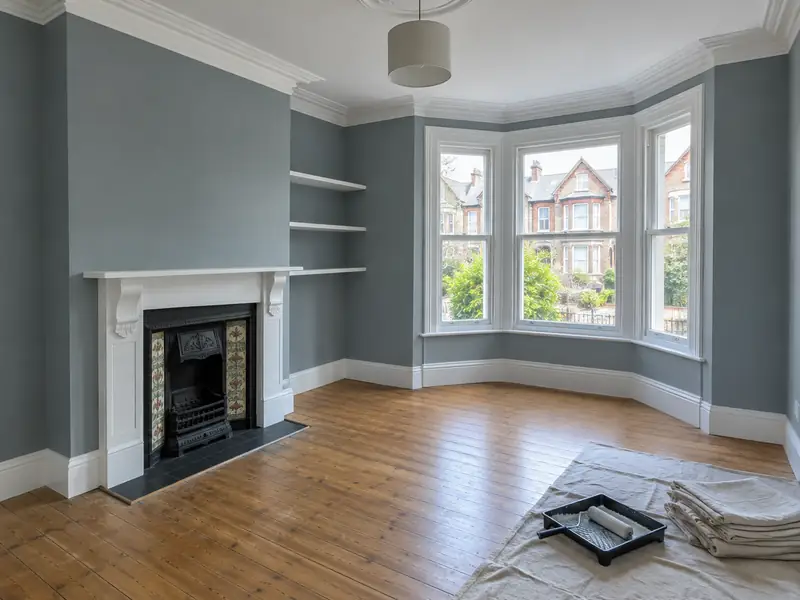
Painting and decorating is preparing and finishing the surfaces of a home, including filling, sanding, priming and painting walls, ceilings and woodwork, hanging wallpaper and painting exterior walls and joinery, to protect them and refresh how rooms look.
From Peterborough, Cambridge, Wisbech and St Neots to the quieter corners of Cambridgeshire, homeowners can book a free survey for painting and decorating. We look at the building, agree the scope, then send a quote in writing that fixes the cost of that scope. Work follows the rules for England, and our published range for the East of England, £1,250–£3,200 with VAT, gives you a sense of budget before we visit.
- Guide price
- £1,250–£3,200 inc VAT
- Time on site
- 1–2 days per room; 3–7 days for a house exterior
- Planning rules
- England
- Price level
- About 5% above the national guide
- Towns listed
- 8
- Survey
- Free, with a written quote
Painting and decorating prices in Cambridgeshire
Here is how the guide price for painting and decorating breaks down in Cambridgeshire. We start from national figures and adjust for the East of England, which comes out about 5% above the national guide. The resulting range, VAT included, is £1,250–£3,200, and a survey, at no cost to you, firms it up.
| Type of job | What it usually involves | Guide in Cambridgeshire |
|---|---|---|
| Single room | Walls, ceiling and woodwork in one average bedroom or living room. | £350–£950 |
| House exterior | Masonry and joinery on a typical semi, including access equipment. | £2,600–£6,300 |
| Whole interior of a 3-bed house | Every room, hallway, stairs and landing, including woodwork. | £3,200–£6,800 |
The main things that change the figure:
- Number and size of rooms, including ceiling height
- Amount of preparation, filling and repairs needed
- Paint quality, colour changes and number of coats
- Exterior access, scaffolding and the condition of surfaces
What’s included?
- Survey of each surface and agreed colours and finishes
- Filling cracks and holes, sanding and spot priming
- Mist coat on new plaster before finishing coats
- Woodwork sanded, primed where bare, and painted
- Wallpaper stripped or hung where included
- Furniture replaced, waste removed and a final tidy-up
Homes in Cambridgeshire
Cambridge has many Victorian terraces in pale gault brick, with Edwardian villas and modern estates around the city. Peterborough expanded as a new town from the 1970s, adding large planned estates, while Ely, Huntingdon, St Neots and the Fenland market towns keep Georgian and Victorian centres. Limestone appears in villages near the Northamptonshire border.
Narrow terraces commonly suit loft conversions and kitchen extensions. Newer estate homes often need garage conversions, porches and landscaping, and older brick and stone buildings may call for lime-based repointing and carefully specified windows.
This is one of the driest parts of the UK, but open fenland is windy and peat or clay ground can shrink, affecting foundations.
Do you need permission in Cambridgeshire?
Because Cambridgeshire falls under England's rules, the guidance below is the version relevant to you. Before sending a price, we check your property's position with the council.
Internal work such as a new kitchen, bathroom, flooring, plastering or decorating does not need planning permission in England, unless the house is listed, when listed building consent may be needed even for internal changes.
Some internal work is covered by Building Regulations: new electrical circuits and work in bathrooms (Part P), new drainage, structural changes, extractor ventilation and any new window. Notifiable work is certified by a registered installer or by building control.
Rules change and every property is different, so we check the planning history and constraints for your address before we quote.
From survey to handover
Survey and measure
First, someone visits your home in Cambridgeshire to see the space, take measurements and note anything that could affect the work, such as access or the condition of what is there. There is no charge for this visit.
Price and scope agreed
We turn the survey notes into a written quote. The price is fixed for the specification we agree, and the document sets out materials, scope and payment stages in plain language.
Plan and prepare
Preparation matters as much as the build. We agree access, parking and working hours with you, order materials in good time, and confirm any permissions so the job isn't held up once it starts.
Finish and handover
Work goes ahead as scheduled and you deal with one contact throughout. When the last trade leaves, we clear and clean the site, talk you through what has been done and pass on any certificates and care instructions.
How we work
Frequently asked questions
What happens at the survey?
We visit your home at a time that suits you, look at the area involved, take measurements and check access, condition and any services that might be affected. We talk through what you want from painting and decorating, explain the options and answer questions. There is no charge and no obligation; afterwards we send a written quote.
When is the right time to paint the outside of a house?
Exterior painting needs dry weather and mild temperatures, so late spring to early autumn is usually the right time. Paint should not be applied to damp surfaces, in rain or frost, or in strong direct sun. Surfaces need time to dry out after rain before work starts. We plan exterior work around the forecast and pause if conditions turn.
How long does it take to decorate a room?
Decorating an average room usually takes one to two days, allowing time for preparation, a mist coat or primer where needed and two finishing coats. Hallways, stairs and landings take longer because of the height and the amount of woodwork. Wallpapering adds time for stripping and lining. We give you a schedule so you know which rooms will be out of use and when.
Do I need to move my furniture?
You only need to remove small items, ornaments, pictures and anything fragile. We move larger furniture to the middle of the room and cover it, or into another room where agreed. Please empty bookshelves and cabinets that need moving. Let us know about anything very heavy, valuable or awkward, such as pianos or large wardrobes, so we can plan around it.
Do I need planning permission in Cambridgeshire?
It depends on the work, the size of the project, your property type and whether the building is listed or in a conservation area. Cambridgeshire is in England, so England's rules apply. Many smaller jobs need no planning application, but some still need building control approval. We check what applies to your address before quoting.
Towns in Cambridgeshire
Choose your town from the list to see how we price and plan painting and decorating in your part of Cambridgeshire, including typical time on site.