
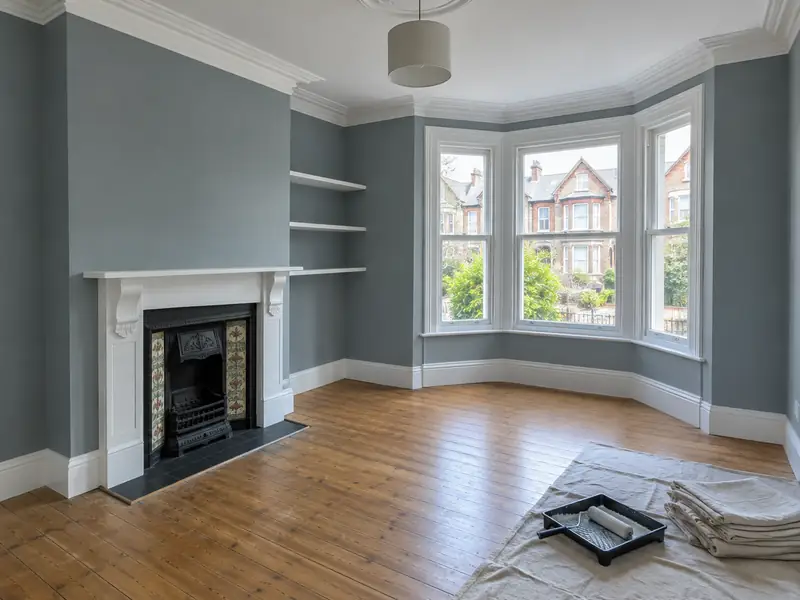
Painting and decorating is preparing and finishing the surfaces of a home, including filling, sanding, priming and painting walls, ceilings and woodwork, hanging wallpaper and painting exterior walls and joinery, to protect them and refresh how rooms look.
From a first conversation about painting and decorating to the day the site is cleared, homeowners in March deal with us directly. We come out to measure up at no cost, explain the choices in plain terms and send a written quote. For context, comparable work in the East of England usually falls within £1,250–£3,200 including VAT, and it is available across PE15.
- Guide price
- £1,250–£3,200 inc VAT
- Time on site
- 1–2 days per room; 3–7 days for a house exterior
- Postcodes
- PE15
- Planning rules
- England
- Local area
- Cambridgeshire
- Survey
- Free, with a written quote
What should you budget for painting and decorating in March?
What should you budget for painting and decorating in March? Use the figures below as a starting point. Prices in the East of England sit about 5% above the national guide, so the range here is £1,250–£3,200 including VAT. Your fixed price comes in writing once we've surveyed the property, at no charge.
| Type of job | What it usually involves | Guide in March |
|---|---|---|
| Single room | Walls, ceiling and woodwork in one average bedroom or living room. | £350–£950 |
| House exterior | Masonry and joinery on a typical semi, including access equipment. | £2,600–£6,300 |
| Whole interior of a 3-bed house | Every room, hallway, stairs and landing, including woodwork. | £3,200–£6,800 |
What moves the price up or down:
- Number and size of rooms, including ceiling height
- Whether woodwork, doors and wallpaper are included
- Paint quality, colour changes and number of coats
- Exterior access, scaffolding and the condition of surfaces
What do you get?
- Survey of each surface and agreed colours and finishes
- Mist coat on new plaster before finishing coats
- Two finishing coats to walls and ceilings as standard
- Woodwork sanded, primed where bare, and painted
- Wallpaper stripped or hung where included
- Furniture replaced, waste removed and a final tidy-up
Building in March
Cambridge has many Victorian terraces in pale gault brick, with Edwardian villas and modern estates around the city. Peterborough expanded as a new town from the 1970s, adding large planned estates, while Ely, Huntingdon, St Neots and the Fenland market towns keep Georgian and Victorian centres. Limestone appears in villages near the Northamptonshire border.
Narrow terraces commonly suit loft conversions and kitchen extensions. Newer estate homes often need garage conversions, porches and landscaping, and older brick and stone buildings may call for lime-based repointing and carefully specified windows.
None of this holds for every street in March, which is why we look at your actual house before pricing painting and decorating rather than assuming from its age alone.
Do you need permission in March?
Homes in March come under the regulations for England, summarised below. We don't rely on general rules alone: we confirm the position for your address with the council before a quote goes out.
Internal work such as a new kitchen, bathroom, flooring, plastering or decorating does not need planning permission in England, unless the house is listed, when listed building consent may be needed even for internal changes.
Some internal work is covered by Building Regulations: new electrical circuits and work in bathrooms (Part P), new drainage, structural changes, extractor ventilation and any new window. Notifiable work is certified by a registered installer or by building control.
Rules change and every property is different, so we check the planning history and constraints for your address before we quote.
The four stages
A visit to your home
First, someone visits your home in March to see the space, take measurements and note anything that could affect the work, such as access or the condition of what is there. There is no charge for this visit.
Quote in writing
Next you receive a written quote with a fixed price for the agreed specification. It lists what is included, what is not, and how payments are staged, so you can compare it properly.
Booking the work
Next comes planning the work itself. We set a start date that suits you, line up the right trades, and make sure any approvals for painting and decorating are in place before the first day on site.
The work itself
The work is carried out to the agreed specification, with floors and furniture protected and the site kept tidy. At the end we clean up, walk through the finished job with you and hand over any certificates.
What you can expect from us
Common questions
How often should exterior woodwork be repainted?
Exterior woodwork, such as timber windows, doors and fascias, usually needs repainting every five to eight years, depending on exposure, paint quality and how well it was prepared. South-facing and coastal elevations wear faster. Look out for flaking, cracking or bare patches, which let water into the timber. Repainting before rot sets in costs far less than replacing joinery.
Do I need planning permission in March?
It depends on the work, the size of the project, your property type and whether the building is listed or in a conservation area. March is in England, so England's rules apply. Many smaller jobs need no planning application, but some still need building control approval. We check what applies to your address before quoting.
Why is preparation so important?
Preparation decides how good the finish looks and how long it lasts. Filling cracks, sanding glossy surfaces, washing greasy areas and priming bare wood all help paint grip and dry evenly. Skipping it leads to visible repairs, peeling and patchy colour. Most of the time on a decorating job goes into preparation, and our quotes always allow for it.
What paint finish should I choose?
Matt emulsion hides imperfections and gives a soft look, which suits ceilings and living rooms. Eggshell or soft sheen finishes are more washable, so they suit kitchens, hallways and children's rooms. For woodwork, satin gives a modern low-shine look, while gloss is harder-wearing and more traditional. Bathrooms benefit from paints made to resist moisture and mould.
Can you combine painting and decorating with other work?
Yes. Because we manage several trades under one contract, we can plan painting and decorating alongside other work on your March home, such as new windows with rendering, or a kitchen refit with an extension. Combining jobs can reduce repeat set-up such as scaffolding, skips and access, and every element is listed and priced in the same written quote.
Nearby towns
We cover every part of March, including PE15, and nearby Wisbech, Ely and Peterborough. Wherever you are within that patch, the survey is free and the quote comes to you in writing.