
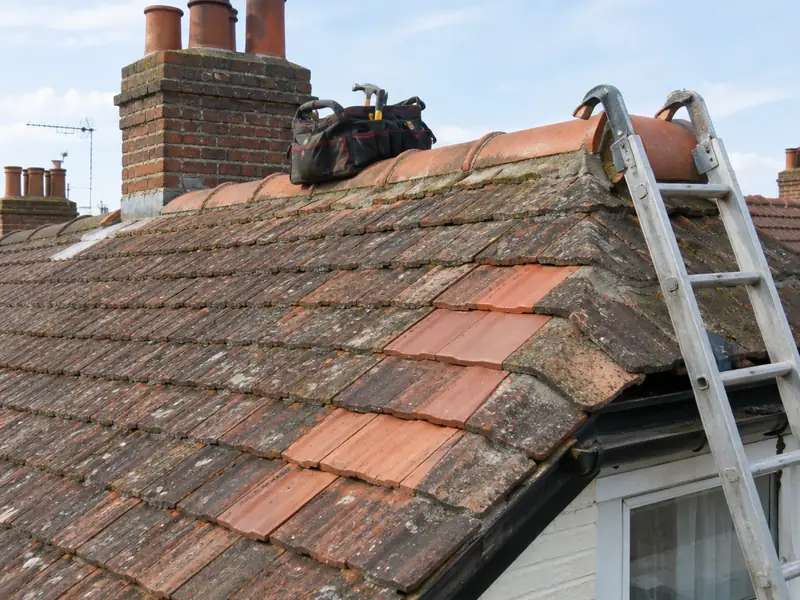
Roof repairs fix specific faults in a pitched or flat roof, such as slipped or cracked tiles, loose ridges, failed flashing, leaking valleys or chimney defects, to stop water getting in without replacing the whole roof.
We repair pitched and flat roofs, from a few slipped tiles to leaking valleys, failed flashing and loose ridges. Our free site survey and written quote starts with finding the source of the problem, which is not always directly above the damp patch. We look at the roof from the ground and, where safe, from ladders or the loft, and photograph what we find. Roof repairs suit homes with a sound roof overall but a specific fault, such as a leak after a storm. We explain what has failed, how we will fix it and what access is needed, then carry out the repair with matching materials and leave the area tidy.
What’s included?
- Inspection to trace the source of leaks or damage
- Photos of the problem areas and a clear written explanation
- Safe access by ladders, towers or scaffolding as needed
- Replacement of slipped, cracked or missing tiles and slates
- Ridge, hip and verge rebedding or dry-fix conversion
- Lead flashing, valley and chimney junction repairs
- Temporary weatherproofing where a full repair must wait
- Clearing debris from gutters and the work area
Which options can you choose from?
How much do roof repairs cost?
Most jobs fall between £300–£1,500 for a typical repair such as replacing slipped tiles, rebedding a ridge or renewing flashing, including VAT at 20%. The table shows three typical levels of work; the figures are national guides, confirmed in writing after a free site survey.
| Type of job | What it usually involves | Guide price |
|---|---|---|
| Minor repair | Replacing a handful of slipped or broken tiles from ladders or a roof ladder. | £200–£500 |
| Ridge, flashing or valley repair | Rebedding a ridge run, renewing flashing or relining a short valley. | £400–£1,200 |
| Larger repair with scaffolding | Several faults, chimney work or repairs on high roofs needing scaffolding. | £1,000–£3,000 |
What affects the price?
- Number and type of faults to repair
- Access: ladders, roof ladders, towers or full scaffolding
- Roof height and steepness
- Matching tiles, slates or lead to the existing roof
- Hidden damage to battens, felt or timbers found during repair
How do prices vary across the UK?
| Region | Guide price |
|---|---|
| London | £400–£1,950 |
| The South East | £350–£1,700 |
| The East of England | £300–£1,600 |
| The South West | £300–£1,550 |
| The West Midlands | £300–£1,450 |
| The East Midlands | £300–£1,450 |
| The North West | £300–£1,400 |
| Yorkshire and the Humber | £300–£1,400 |
| The North East | £250–£1,350 |
| Wales | £300–£1,400 |
| Scotland | £300–£1,450 |
| Northern Ireland | £250–£1,300 |
Regional figures apply typical labour and material cost differences to the national guide. They are not quotes.
Do you need planning permission for roof repairs?
Small like-for-like roof repairs do not usually need building regulations approval. Larger areas of re-covering, or changes to the structure or covering material, may need it, and we check what applies before quoting.
England
Re-roofing a house with similar materials does not usually need planning permission in England. Listed buildings and conservation areas may need consent if the covering changes.
Replacing more than a quarter of a roof’s covering counts as renovation under Building Regulations, so the work is notified and the roof insulation may need upgrading. Bats are protected across the UK; if they roost under roof tiles, soffits or fascias, work stops and a licensed ecologist advises before it restarts.
Wales
Re-roofing with similar materials does not usually need planning permission in Wales, except on listed buildings or where a conservation area restricts materials.
Building Regulations in Wales apply to major re-roofing, including insulation upgrades. Bats are protected across the UK; if they roost under roof tiles, soffits or fascias, work stops and a licensed ecologist advises before it restarts.
Scotland
In Scotland, like-for-like re-roofing does not usually need planning permission, except on listed buildings or in conservation areas.
Like-for-like re-covering does not usually need a building warrant, but structural changes or new roof windows can. Bats are protected across the UK; if they roost under roof tiles, soffits or fascias, work stops and a licensed ecologist advises before it restarts.
Northern Ireland
In Northern Ireland, re-roofing with similar materials does not usually need planning permission outside listed buildings and conservation areas.
Significant re-roofing should be checked with building control under the Building Regulations (Northern Ireland). Bats are protected across the UK; if they roost under roof tiles, soffits or fascias, work stops and a licensed ecologist advises before it restarts.
Rules change and every property is different, so we check the planning history and constraints for your address before we quote.
How long does it take?
Typical time on site: Half a day to 3 days for most repairs. Lead times for materials, drawings and approvals come before that and are set out in your written quote.
How does the job run?
Free site survey
We visit, measure up, look at access and the condition of what’s there, and talk through options and budget with you.
Written quote
You get a written quote with a fixed price for the agreed specification, what’s included, the payment stages and a likely start window.
Plan and prepare
We sort drawings, approvals and materials, agree dates with you and explain what to expect each week before work starts.
Build and hand over
The work is carried out, checked and cleared away. We walk round it with you and pass on certificates and product details.
Roof repairs: frequently asked questions
How much does a roof repair cost?
A typical roof repair, such as replacing slipped tiles, rebedding a ridge or renewing flashing, costs £300–£1,500. Small repairs reachable by ladder sit at the lower end, while jobs needing scaffolding or several repairs cost more. Matching old tiles or slates and hidden damage to battens can also affect the price. We explain what we find and confirm a fixed price before starting.
Why is my roof leaking?
Roof leaks usually come from slipped or cracked tiles, failed flashing around chimneys and walls, leaking valleys, blocked gutters overflowing, or perished felt beneath the tiles. Water can travel along timbers before it drips, so the stain on your ceiling may not be directly under the fault. Condensation in the loft can also look like a leak. We trace the source before recommending a repair.
Do I need scaffolding for a roof repair?
Not every roof repair needs scaffolding. Small repairs on low roofs can often be done safely from ladders and roof ladders, and towers suit some chimney and gable work. Repairs on two-storey roofs, steep slopes, chimneys or large areas usually need scaffolding for safe working, which adds cost. We choose the safest practical access and include it in the written quote.
Can you do an emergency roof repair?
After storm damage, a temporary repair such as sheeting or refixing loose tiles can stop water getting in until a permanent repair can be made. We aim to attend as quickly as possible, but availability depends on weather and demand, especially after widespread storms. In the meantime, catch drips in containers, move valuables and switch off lights near any wet ceiling.
Is it worth repairing an old roof?
Repairing an old roof is worthwhile when the problem is isolated and the rest of the roof is sound. If tiles are widely porous, battens are rotten or the felt has perished, repeated repairs may cost more over time than a new roof. We look at the overall condition, explain the likely lifespan and give you prices for both where it makes sense.
What is dry-fix ridge and is it better than mortar?
Dry-fix ridge systems use screws, clips and weather seals instead of mortar to hold ridge and hip tiles in place. They avoid the cracking and loosening that mortar suffers over time, need less upkeep and are now common on new roofs. Mortar-bedded ridges suit some period or conservation-area roofs. We recommend the method that suits your roof and its location.
Will my home insurance pay for the repair?
Home insurance policies often cover sudden storm damage but usually exclude wear and tear or gradual deterioration. If you think the damage is storm-related, contact your insurer before repairs, apart from urgent temporary work, and take photos. We can provide a written report and photographs describing the damage and cause to help with your claim. The insurer decides what is covered.
How can I spot roof problems early?
Spotting roof problems early saves money. Look from the ground after storms for slipped or missing tiles, cracked ridge mortar or debris in gutters. In the loft, check for daylight, damp patches, stained timbers or wet insulation. Inside, watch for ceiling stains and peeling paint near outside walls. Clearing gutters each autumn prevents overflow damage.