
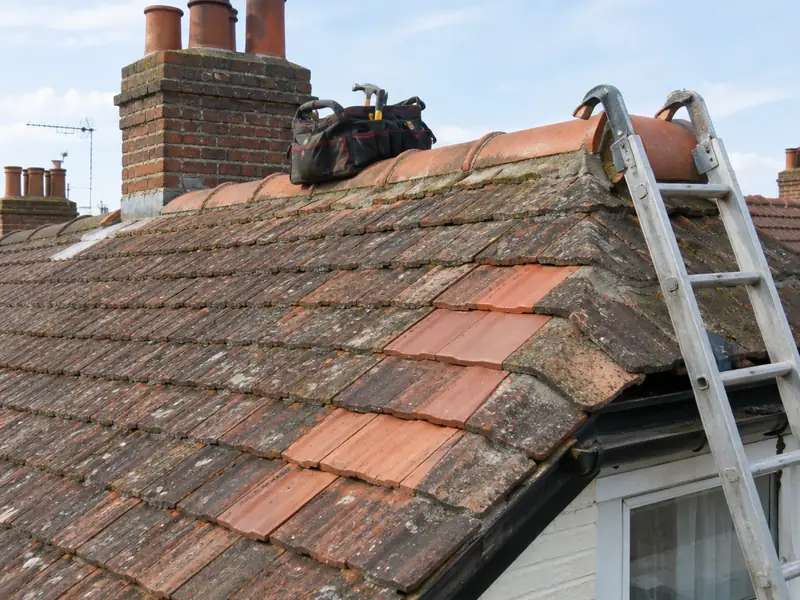
Roof repairs fix specific faults in a pitched or flat roof, such as slipped or cracked tiles, loose ridges, failed flashing, leaking valleys or chimney defects, to stop water getting in without replacing the whole roof.
We offer roof repairs throughout Suffolk, from Ipswich, Lowestoft, Bury St Edmunds and Haverhill to the smaller places in between. Each project starts with a free survey at your home and ends with a written figure, fixed for the work you choose. Because Suffolk is in England, we work to the planning system and building standards used there, and guide prices for the East of England run at £300–£1,600 including VAT.
- Guide price
- £300–£1,600 inc VAT
- Time on site
- Half a day to 3 days for most repairs
- Planning rules
- England
- Price level
- About 5% above the national guide
- Towns listed
- 7
- Survey
- Free, with a written quote
Roof repairs prices in Suffolk
Here is how the guide price for roof repairs breaks down in Suffolk. We start from national figures and adjust for the East of England, which comes out about 5% above the national guide. The resulting range, VAT included, is £300–£1,600, and a survey, at no cost to you, firms it up.
| Type of job | What it usually involves | Guide in Suffolk |
|---|---|---|
| Minor repair | Replacing a handful of slipped or broken tiles from ladders or a roof ladder. | £200–£500 |
| Ridge, flashing or valley repair | Rebedding a ridge run, renewing flashing or relining a short valley. | £400–£1,250 |
| Larger repair with scaffolding | Several faults, chimney work or repairs on high roofs needing scaffolding. | £1,050–£3,200 |
What moves the price up or down:
- Number and type of faults to repair
- Access: ladders, roof ladders, towers or full scaffolding
- Roof height and steepness
- Hidden damage to battens, felt or timbers found during repair
What’s included?
- Photos of the problem areas and a clear written explanation
- Safe access by ladders, towers or scaffolding as needed
- Replacement of slipped, cracked or missing tiles and slates
- Ridge, hip and verge rebedding or dry-fix conversion
- Temporary weatherproofing where a full repair must wait
- Clearing debris from gutters and the work area
Housing across Suffolk
Suffolk villages are full of timber-framed cottages, many limewashed in traditional colours such as Suffolk pink, with pargeting and thatch in places. Flint and pale gault brick are common too. Ipswich has Victorian terraces and interwar estates, Bury St Edmunds has Georgian streets, and Lowestoft and Felixstowe mix Victorian seaside housing with newer estates.
Timber-framed buildings need breathable lime plaster and render, and roof repairs that suit the original materials. Terraces suit loft conversions and rear extensions, while newer homes commonly take garage conversions and porches.
One of the driest counties, but the coast is eroding in places, and clay soils inland can shrink and crack in dry summers.
Planning and building rules in Suffolk
Which rules apply depends on where you live. For Suffolk, the answer is England, and the points below reflect that; we verify them with the council before quoting.
Re-roofing a house with similar materials does not usually need planning permission in England. Listed buildings and conservation areas may need consent if the covering changes.
Replacing more than a quarter of a roof’s covering counts as renovation under Building Regulations, so the work is notified and the roof insulation may need upgrading. Bats are protected across the UK; if they roost under roof tiles, soffits or fascias, work stops and a licensed ecologist advises before it restarts.
Rules change and every property is different, so we check the planning history and constraints for your address before we quote.
From survey to handover
A visit to your home
Book a visit and we'll come to you. The survey covers measurements, the state of what's there now and any obvious constraints, so the price that follows is based on your actual home, not an average.
Written quote
We turn the survey notes into a written quote. The price is fixed for the specification we agree, and the document sets out materials, scope and payment stages in plain language.
Dates and permissions
Next comes planning the work itself. We set a start date that suits you, line up the right trades, and make sure any approvals for roof repairs are in place before the first day on site.
Finish and handover
The job proceeds in the order set out in the programme, with dust and debris kept under control. Finally we tidy away, inspect the work together and pass the finished project over to you with its paperwork.
How we work
Questions about roof repairs in Suffolk
Do I need scaffolding for a roof repair?
Not every roof repair needs scaffolding. Small repairs on low roofs can often be done safely from ladders and roof ladders, and towers suit some chimney and gable work. Repairs on two-storey roofs, steep slopes, chimneys or large areas usually need scaffolding for safe working, which adds cost. We choose the safest practical access and include it in the written quote.
Why is my roof leaking?
Roof leaks usually come from slipped or cracked tiles, failed flashing around chimneys and walls, leaking valleys, blocked gutters overflowing, or perished felt beneath the tiles. Water can travel along timbers before it drips, so the stain on your ceiling may not be directly under the fault. Condensation in the loft can also look like a leak. We trace the source before recommending a repair.
Can you combine roof repairs with other work?
Yes. Because we manage several trades under one contract, we can plan roof repairs alongside other work on your Suffolk home, such as new windows with rendering, or a kitchen refit with an extension. Combining jobs can reduce repeat set-up such as scaffolding, skips and access, and every element is listed and priced in the same written quote.
Can I stay at home during the work?
In most cases, yes. Most people can live at home throughout, and we plan the work to keep disruption down by protecting floors, agreeing working hours and keeping access routes clear. Bigger jobs affecting kitchens, bathrooms or heating may mean a short spell with reduced facilities, and we talk this through with you at the survey.
Is it worth repairing an old roof?
Repairing an old roof is worthwhile when the problem is isolated and the rest of the roof is sound. If tiles are widely porous, battens are rotten or the felt has perished, repeated repairs may cost more over time than a new roof. We look at the overall condition, explain the likely lifespan and give you prices for both where it makes sense.
Towns in Suffolk
Looking for roof repairs somewhere in Suffolk? Start with the towns below; each links to a page with pricing for your region and coverage details.