
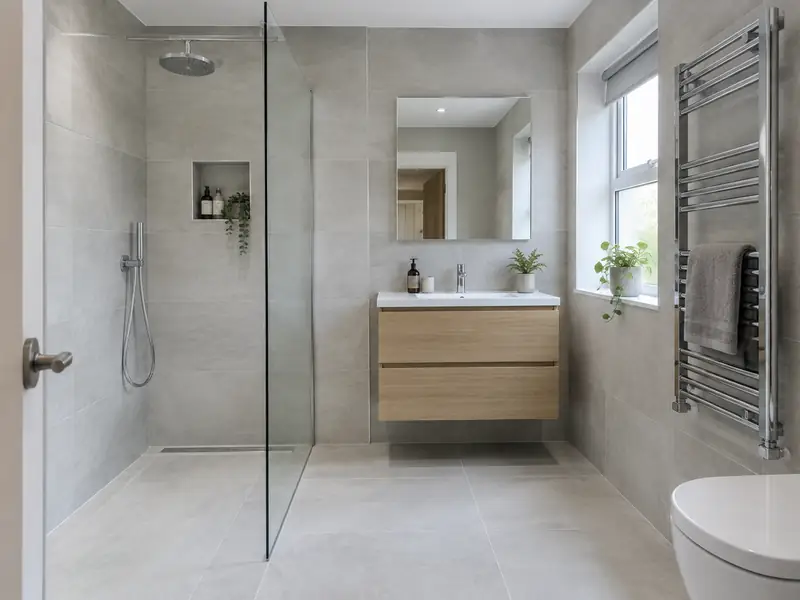
A bathroom installation replaces your old suite with new sanitaryware, a bath or shower, tiling and fittings, including the plumbing, electrics, ventilation and waterproofing needed for a complete, watertight room.
We handle a new bathroom as a managed project across Suffolk: one contract, one contact, and trades working to an agreed specification. Coverage includes Ipswich, Lowestoft, Bury St Edmunds and Haverhill and their surroundings. In England the consent rules have their own details, which we check for you. Typical prices in the East of England fall within £5,200–£12,500, VAT included, and are fixed in writing after a survey.
- Guide price
- £5,200–£12,500 inc VAT
- Time on site
- 1–2 weeks per bathroom
- Planning rules
- England
- Price level
- About 5% above the national guide
- Towns listed
- 7
- Survey
- Free, with a written quote
Bathrooms prices in Suffolk
Every figure below is a guide for a new bathroom in Suffolk, inclusive of VAT. Regional pricing for the East of England works out about 5% above the national guide, and the overall span is £5,200–£12,500. The survey costs you nothing, and after it we commit to a firm price for your specification in writing.
| Type of job | What it usually involves | Guide in Suffolk |
|---|---|---|
| Shower room or en-suite | A compact room with a shower, basin and toilet, keeping the existing layout. | £4,200–£8,400 |
| Family bathroom | A full suite with bath and shower, new tiling, lighting and an extractor fan. | £5,200–£12,500 |
| Premium bathroom or wet room | Standalone bath, wet room or walk-in shower, underfloor heating and large-format tiles. | £12,500–£21,000 |
Your price depends mostly on:
- Suite, shower and tap specification
- Moving the toilet, bath or shower to a new position
- Wet room waterproofing and underfloor heating
- Condition of the floor, walls and existing pipework
What’s included?
- Measured survey and layout planning for your room
- New supply and waste pipework, including concealed fittings
- Waterproofing behind showers and in wet areas
- Wall and floor tiling to your chosen design
- Bath or shower, basin, toilet and taps fitted and tested
- Heated towel rail, silicone sealing and a final clean
Homes in Suffolk
Suffolk villages are full of timber-framed cottages, many limewashed in traditional colours such as Suffolk pink, with pargeting and thatch in places. Flint and pale gault brick are common too. Ipswich has Victorian terraces and interwar estates, Bury St Edmunds has Georgian streets, and Lowestoft and Felixstowe mix Victorian seaside housing with newer estates.
Timber-framed buildings need breathable lime plaster and render, and roof repairs that suit the original materials. Terraces suit loft conversions and rear extensions, while newer homes commonly take garage conversions and porches.
One of the driest counties, but the coast is eroding in places, and clay soils inland can shrink and crack in dry summers.
Do you need permission in Suffolk?
Planning law differs across the UK. For a home in Suffolk, it is the England rules below that count, and we check them with the council ahead of any quote.
Internal work such as a new kitchen, bathroom, flooring, plastering or decorating does not need planning permission in England, unless the house is listed, when listed building consent may be needed even for internal changes.
Some internal work is covered by Building Regulations: new electrical circuits and work in bathrooms (Part P), new drainage, structural changes, extractor ventilation and any new window. Notifiable work is certified by a registered installer or by building control.
Rules change and every property is different, so we check the planning history and constraints for your address before we quote.
The four stages
We look at the job
We arrange a free site survey on a date convenient to you. We measure up, look at the existing structure and access, and discuss your plans for a new bathroom so the price reflects your home.
Quote in writing
Next you receive a written quote with a fixed price for the agreed specification. It lists what is included, what is not, and how payments are staged, so you can compare it properly.
Dates and permissions
Once you accept, we agree start dates, order materials and deal with any planning, building control or neighbour notices the job needs. You'll know who is coming and when before work begins.
Build and hand over
The job proceeds in the order set out in the programme, with dust and debris kept under control. Finally we tidy away, inspect the work together and pass the finished project over to you with its paperwork.
How we work
Frequently asked questions
Which tiles are easiest to keep clean?
Large-format porcelain tiles are usually easiest to keep clean, because there are fewer grout lines to collect dirt and porcelain absorbs very little water. Glossy tiles show water marks more than matt ones, while textured floor tiles give better grip. Grout colour matters too: mid-grey hides staining better than white. We can suggest anti-slip ratings and grout options that suit how you use the room.
Do I need a new boiler for a new shower?
You do not always need a new boiler for a new shower, but your hot water system decides what kind of shower will work well. Combi boilers suit mixer showers directly from the mains. Tank-fed systems may need a pump for good pressure, and electric showers heat their own water. We check your boiler, cylinder and water pressure during the survey and recommend a shower to match.
Can I stay at home during the work?
In most cases, yes. Most people can live at home throughout, and we plan the work to keep disruption down by protecting floors, agreeing working hours and keeping access routes clear. Bigger jobs affecting kitchens, bathrooms or heating may mean a short spell with reduced facilities, and we talk this through with you at the survey.
Will I have to go without a bathroom?
If it is your only bathroom, you will usually be without a shower or bath for most of the fitting time. We aim to keep the toilet working overnight wherever possible, refitting it temporarily at the end of each day during strip-out and first fix. If you have a second bathroom or downstairs toilet, the disruption is much easier. We plan the sequence with you before starting.
Can you combine a new bathroom with other work?
Yes. Because we manage several trades under one contract, we can plan a new bathroom alongside other work on your Suffolk home, such as new windows with rendering, or a kitchen refit with an extension. Combining jobs can reduce repeat set-up such as scaffolding, skips and access, and every element is listed and priced in the same written quote.
Towns in Suffolk
We offer a new bathroom in each of the towns below, all within Suffolk. Select yours for guide prices, postcodes covered and nearby places.