
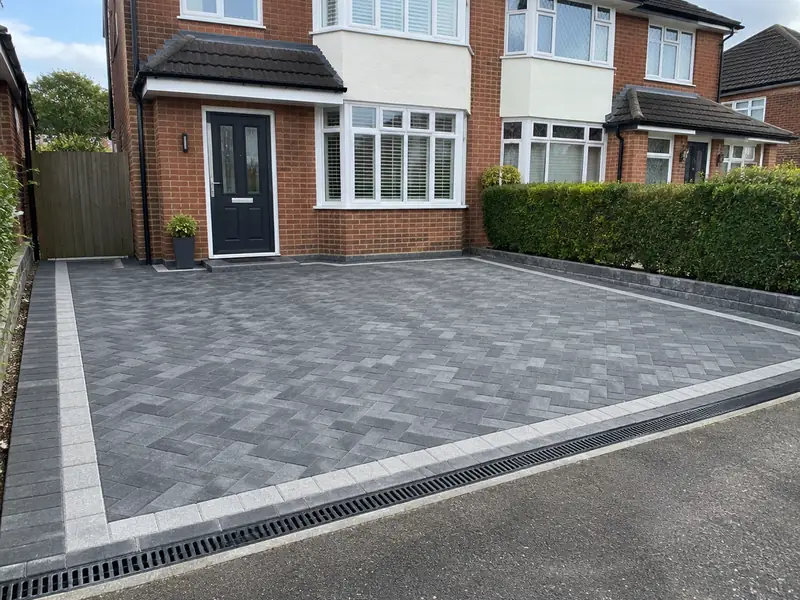
A new driveway is a hard-wearing surface for parking, such as block paving, resin bound gravel, tarmac or gravel, laid on an excavated and compacted sub-base with edging and drainage designed to carry vehicle loads and handle rainwater.
Cost is usually the first question about a new driveway, so here is the guide for the East of England: £4,200–£9,400 including VAT. We cover the whole of Suffolk, with Ipswich, Lowestoft, Bury St Edmunds and Haverhill among the main centres. Because each UK nation sets its own rules, we check the requirements in England for your property, then put a firm price on paper following a free survey.
- Guide price
- £4,200–£9,400 inc VAT
- Time on site
- 3–7 days on site
- Planning rules
- England
- Price level
- About 5% above the national guide
- Towns listed
- 7
- Survey
- Free, with a written quote
How much does a new driveway cost in Suffolk?
The table below shows guide prices for a new driveway in Suffolk. They are based on rates in the East of England, which run about 5% above the national guide, giving an overall range of £4,200–£9,400. All figures include VAT and are firmed up after a free site survey.
| Type of job | What it usually involves | Guide in Suffolk |
|---|---|---|
| Gravel or tarmac | A typical 40–50m² drive in gravel on a grid, or tarmac with block edging. | £2,100–£5,200 |
| Block paving or resin bound | A typical 40–50m² drive with sub-base, edging and drainage. | £4,200–£9,400 |
| Large or premium driveway | Larger drives, natural stone, walls, steps or a new dropped kerb. | £8,400–£17,000 |
What moves the price up or down:
- Driveway area and the depth of excavation needed
- Surface: gravel, tarmac, block paving, resin or stone
- Drainage, soakaways and changes in level
- Edging, steps, walls and manhole adjustments
What’s included?
- Excavation and removal of the old surface and soil
- Weed membrane and compacted MOT Type 1 sub-base
- Edging kerbs or restraints to hold the surface in place
- Manhole covers raised or replaced to new levels
- New surface laid, compacted and finished
- Site cleared and waste removed
Homes in Suffolk
Suffolk villages are full of timber-framed cottages, many limewashed in traditional colours such as Suffolk pink, with pargeting and thatch in places. Flint and pale gault brick are common too. Ipswich has Victorian terraces and interwar estates, Bury St Edmunds has Georgian streets, and Lowestoft and Felixstowe mix Victorian seaside housing with newer estates.
Timber-framed buildings need breathable lime plaster and render, and roof repairs that suit the original materials. Terraces suit loft conversions and rear extensions, while newer homes commonly take garage conversions and porches.
One of the driest counties, but the coast is eroding in places, and clay soils inland can shrink and crack in dry summers.
Planning and building rules in Suffolk
Homes in Suffolk come under the regulations for England, summarised below. We don't rely on general rules alone: we confirm the position for your address with the council before a quote goes out.
In England, a new or replacement front-garden surface over 5 m² needs planning permission unless it is permeable or drains to a lawn or border within your property. A new dropped kerb needs consent from the council’s highways team, and access onto a classified road may need planning permission.
Building Regulations do not usually apply to driveways, but drainage must not discharge onto the road or a neighbour’s land.
Rules change and every property is different, so we check the planning history and constraints for your address before we quote.
How does the job run?
A visit to your home
A free survey comes first. It gives us what we need to price a new driveway properly, including dimensions, existing materials and access for deliveries, and gives you the chance to ask anything you like.
Quote in writing
After the survey we send a quote for a new driveway that fixes the price for the scope we've agreed. If you want to change materials or scope, we revise it in writing before anything is booked.
Booking the work
Preparation matters as much as the build. We agree access, parking and working hours with you, order materials in good time, and confirm any permissions so the job isn't held up once it starts.
On site to finish
During the work we protect the areas around it and tidy up at the end of each day. Once complete, we check the finish, remove our materials and hand over paperwork such as building control sign-off where it applies.
What you can expect from us
Frequently asked questions
How long does it take to lay a driveway?
Laying a typical driveway takes around three to seven days, depending on size, surface and ground conditions. Excavation and sub-base usually take the first few days, then edging, drainage and the surface. Resin needs dry weather and time to cure, and you will usually need to keep cars off for a short period afterwards. We confirm timings and access arrangements with your quote.
Which postcodes in Suffolk do you cover?
We cover IP1, NR32, IP32 and CB9, along with the rest of Suffolk. If your postcode is not listed, get in touch anyway: our coverage is UK-wide, and we can usually arrange a survey wherever you live. Enter your postcode in the guide-price tool or contact form and we will confirm.
Can you combine a new driveway with other work?
Yes. Because we manage several trades under one contract, we can plan a new driveway alongside other work on your Suffolk home, such as new windows with rendering, or a kitchen refit with an extension. Combining jobs can reduce repeat set-up such as scaffolding, skips and access, and every element is listed and priced in the same written quote.
Which driveway surface is easiest to maintain?
Resin bound gravel is one of the easiest surfaces to maintain, because it is smooth, porous and resists weeds, needing only an occasional sweep and wash. Block paving needs re-sanding joints and occasional weed control. Tarmac needs little upkeep but can soften in heat. Gravel needs raking and topping up. We explain the upkeep of each surface before you choose.
What is a sub-base and why does it matter?
The sub-base is the layer of crushed, compacted stone beneath the driveway surface that spreads the weight of vehicles into the ground. Most driveway failures, such as sinking, rutting and loose blocks, come from a sub-base that is too thin or poorly compacted. We excavate to the right depth for your soil and compact the sub-base in layers before laying the surface.
Towns in Suffolk
Homes in all of the following Suffolk towns can get a written quote for a new driveway. Open a town page to see prices and the postcodes we cover.