
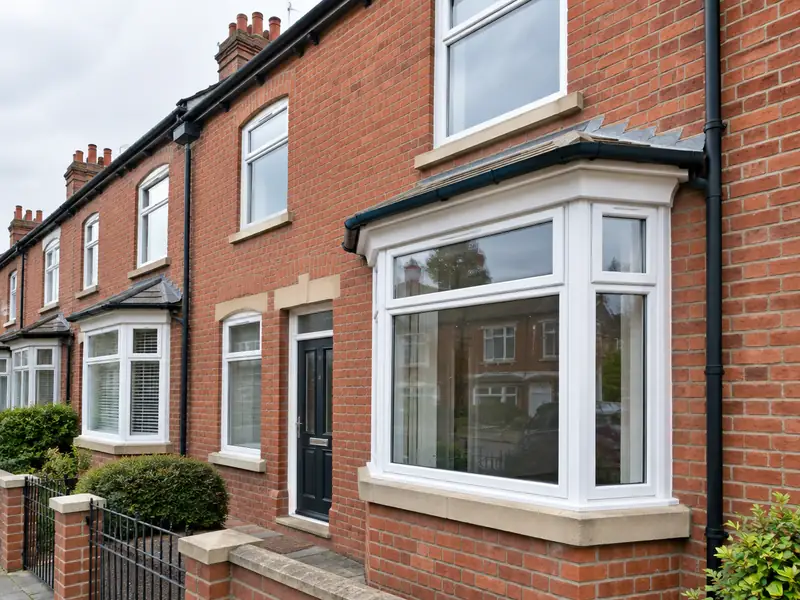
Replacement windows are new frames and sealed double- or triple-glazed units fitted into your existing openings after the old windows are taken out, improving warmth, security and noise reduction while meeting current building regulations.
We replace windows in houses and flats of every age, from single-glazed sash windows to tired 1990s uPVC. Our free site survey and written quote covers every opening: we measure each one, check the condition of sills, lintels and reveals, note which rooms need an escape window or trickle vents, and talk through frame materials, colours and glazing. We then order made-to-measure frames and fit them one at a time, so your home is never left open overnight. Replacement windows suit anyone dealing with draughts, condensation between the panes, sticking hinges or high heating bills, or who simply wants a cleaner look. Prices are confirmed in writing after the survey as a fixed price for the agreed specification.
What’s included?
- Measured survey of every opening, with sizes checked before manufacture
- Made-to-measure frames in your chosen material, colour and style
- Double-glazed units as standard, with triple glazing as an option
- Careful removal and disposal of the old frames and glass
- Fixings, packers, foam and weather seals to suit your wall type
- New internal trims, external cills and neat sealant finishing
- Trickle vents, escape hinges and safety glass where regulations require
- Building regulations sign-off arranged and paperwork handed over
Which options can you choose from?
How much do replacement windows cost?
Most jobs fall between £4,500–£9,000 for 8–10 uPVC or aluminium windows on a typical 3-bed semi, including VAT at 20%. The table shows three typical levels of work; the figures are national guides, confirmed in writing after a free site survey.
| Type of job | What it usually involves | Guide price |
|---|---|---|
| One to three windows | Replacing a few problem windows, such as a bay or a rotten kitchen window, in uPVC. | £700–£3,000 |
| Whole house in uPVC | Eight to ten standard uPVC casement windows on a typical 3-bed semi, fitted and finished. | £4,500–£7,500 |
| Whole house in aluminium or flush sash | Premium frames, colours or period styles across a typical 3-bed home. | £7,500–£14,000 |
What affects the price?
- Number and size of windows, including bays and large picture windows
- Frame material, colour and finish, inside and out
- Glazing type: double, triple, acoustic, obscure or toughened
- Window style, such as sash, flush sash or tilt-and-turn
- Upper-floor access, scaffolding and the condition of reveals and sills
How do prices vary across the UK?
| Region | Guide price |
|---|---|
| London | £5,800–£11,500 |
| The South East | £5,000–£10,000 |
| The East of England | £4,700–£9,400 |
| The South West | £4,600–£9,200 |
| The West Midlands | £4,400–£8,800 |
| The East Midlands | £4,300–£8,600 |
| The North West | £4,300–£8,600 |
| Yorkshire and the Humber | £4,200–£8,500 |
| The North East | £4,000–£8,100 |
| Wales | £4,100–£8,300 |
| Scotland | £4,300–£8,600 |
| Northern Ireland | £3,900–£7,700 |
Regional figures apply typical labour and material cost differences to the national guide. They are not quotes.
Do you need planning permission for replacement windows?
Replacement windows must meet building regulations for energy efficiency, ventilation and fire escape. The work is either self-certified by a registered installer or signed off by building control where required, and we confirm which applies to your home before work starts.
England
Replacing windows and doors on a house is usually permitted development in England when the new ones look broadly similar to the old. Flats, listed buildings and homes covered by an Article 4 direction can need consent, and conservation areas may limit materials or styles.
Replacement windows and external doors must meet Building Regulations for energy efficiency, ventilation and, on upper floors, escape. The work is either self-certified by an installer registered with a competent person scheme or signed off by building control.
Wales
In Wales, replacing windows and doors on a house usually needs no planning permission if the new ones are similar in appearance. Listed buildings, flats and some conservation areas are controlled, so the council should be asked first.
Building Regulations in Wales apply to replacement windows and doors, covering energy performance, ventilation and escape routes. A registered competent person can self-certify the work, or building control inspects it.
Scotland
In Scotland, replacing windows and doors on a house generally needs no planning permission when the style is similar, but listed buildings and conservation areas are closely controlled and often need consent for any change of material or pattern.
A building warrant is not usually needed for like-for-like replacement windows, but the new units must still meet the Scottish building standards, including energy performance and, where relevant, escape from upper floors.
Northern Ireland
In Northern Ireland, like-for-like replacement windows and doors on a house rarely need planning permission. Listed buildings and conservation areas are the main exceptions, so check with the council before changing style or material.
The Building Regulations (Northern Ireland) apply to replacement windows, so the work needs building control approval or sign-off through an approved competent person route.
Rules change and every property is different, so we check the planning history and constraints for your address before we quote.
How long does it take?
Typical time on site: 1–2 days on site for a typical house. Lead times for materials, drawings and approvals come before that and are set out in your written quote.
How does the job run?
Free site survey
We visit, measure up, look at access and the condition of what’s there, and talk through options and budget with you.
Written quote
You get a written quote with a fixed price for the agreed specification, what’s included, the payment stages and a likely start window.
Plan and prepare
We sort drawings, approvals and materials, agree dates with you and explain what to expect each week before work starts.
Build and hand over
The work is carried out, checked and cleared away. We walk round it with you and pass on certificates and product details.
Replacement windows: frequently asked questions
How much do replacement windows cost?
Replacement windows for a typical 3-bed semi cost £4,500–£9,000, depending on the number of windows, frame material and glazing. A single standard uPVC casement usually works out at roughly £500–£950 fitted, while aluminium, flush sash and sliding sash styles cost more. Bays, large panes and upstairs access add to the price. We measure every opening during the survey and give you a fixed price for the agreed specification.
Is triple glazing worth paying extra for?
Triple glazing adds a third pane of glass, which cuts heat loss and outside noise further than standard double glazing. It typically adds around a third to the cost of the glass units and makes opening sashes heavier. It makes most sense on cold or noisy elevations, or in homes being upgraded to a high energy standard. For many houses, modern double glazing with a warm edge spacer gives most of the benefit for less money.
Do I need planning permission for new windows?
Planning permission is not usually needed to replace windows with similar ones, but it depends on the size and style of the change, your home's location, whether it is listed or in a conservation area, and which UK nation you live in. Listed buildings normally need consent for any change, and some conservation areas restrict uPVC or new styles. Flats may also need the building owner's approval. We check the position for your property before quoting.
How long does it take to fit windows in a house?
Fitting replacement windows in a typical 3-bed house usually takes one to two days on site. We take out and fit one window at a time, so each room is weathertight again within an hour or two. Bays, sash windows and homes needing scaffolding take longer. Manufacture comes first: made-to-measure frames typically take a few weeks to arrive after the survey and your order are confirmed.
What happens on the day the windows are fitted?
On fitting day we lay dust sheets, protect floors and furniture near each window, and then remove the old frame carefully to limit damage to plaster. The new frame is fixed, packed, sealed and glazed, and internal trims and external cills are finished. We take away the old windows and clean the glass before leaving. You only need to clear sills and take down curtains and blinds.
Will new windows stop condensation?
New windows reduce condensation on the glass because the inner pane stays warmer, but they do not remove the moisture in the air that causes it. Modern frames are also more airtight, so ventilation matters more after replacement. We fit trickle vents where regulations require them, and we suggest using extractor fans and opening windows regularly. If walls are damp or mouldy, it is worth looking at ventilation and heating at the same time.
Should I choose uPVC or aluminium windows?
uPVC windows are the lower-cost choice, insulate well and need only occasional cleaning, which suits most houses. Aluminium windows have slimmer frames that let in more light and suit modern homes or large openings, but they cost more. Both come in a wide range of colours and finishes. We usually recommend matching the style and proportions of your home's original windows, especially on period properties.
How do I look after new uPVC or aluminium windows?
Caring for new windows is simple: wash frames and glass with warm soapy water a few times a year, avoiding abrasive cleaners and solvents. Clear the drainage slots at the bottom of the frame so rainwater can escape, and put a drop of light oil on hinges and locking points once a year. Check seals and the sealant around the outside every few years, and replace any that have cracked or shrunk.