
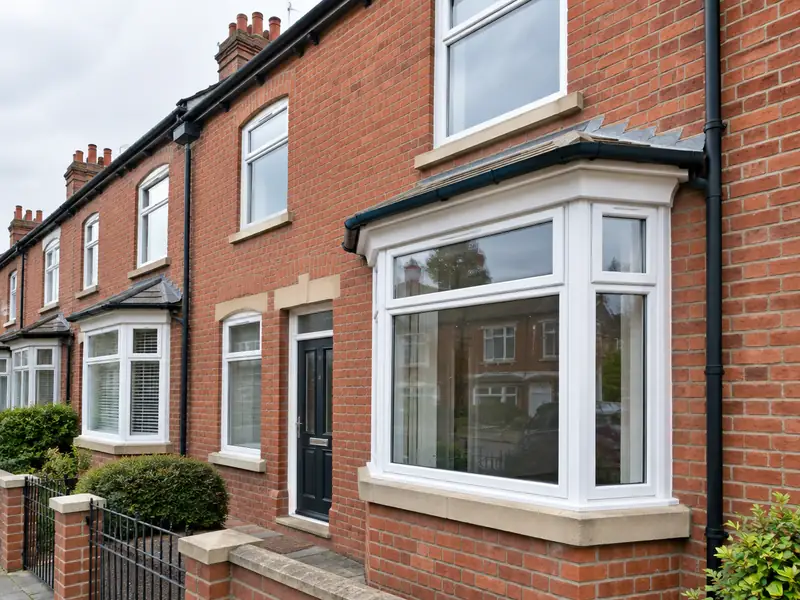
Replacement windows are new frames and sealed double- or triple-glazed units fitted into your existing openings after the old windows are taken out, improving warmth, security and noise reduction while meeting current building regulations.
We handle replacement windows as a managed project across Derbyshire: one contract, one contact, and trades working to an agreed specification. Coverage includes Derby, Chesterfield, Long Eaton and Ilkeston and their surroundings. In England the consent rules have their own details, which we check for you. Typical prices in the East Midlands fall within £4,300–£8,600, VAT included, and are fixed in writing after a survey.
- Guide price
- £4,300–£8,600 inc VAT
- Time on site
- 1–2 days on site for a typical house
- Planning rules
- England
- Price level
- About 4% below the national guide
- Towns listed
- 12
- Survey
- Free, with a written quote
How much do replacement windows cost in Derbyshire?
The costs listed here are typical for replacement windows around Derbyshire and include VAT. They reflect labour and material costs in the East Midlands, about 4% below the national guide, giving a range of £4,300–£8,600. Exact pricing depends on your home, so we only fix it once a free site survey is done.
| Type of job | What it usually involves | Guide in Derbyshire |
|---|---|---|
| One to three windows | Replacing a few problem windows, such as a bay or a rotten kitchen window, in uPVC. | £650–£2,900 |
| Whole house in uPVC | Eight to ten standard uPVC casement windows on a typical 3-bed semi, fitted and finished. | £4,300–£7,200 |
| Whole house in aluminium or flush sash | Premium frames, colours or period styles across a typical 3-bed home. | £7,200–£13,500 |
The main things that change the figure:
- Number and size of windows, including bays and large picture windows
- Glazing type: double, triple, acoustic, obscure or toughened
- Window style, such as sash, flush sash or tilt-and-turn
- Upper-floor access, scaffolding and the condition of reveals and sills
What’s included?
- Measured survey of every opening, with sizes checked before manufacture
- Made-to-measure frames in your chosen material, colour and style
- Double-glazed units as standard, with triple glazing as an option
- Fixings, packers, foam and weather seals to suit your wall type
- Trickle vents, escape hinges and safety glass where regulations require
- Building regulations sign-off arranged and paperwork handed over
Homes in Derbyshire
Derby has wide areas of Victorian red-brick terraces and interwar semis, while Peak District villages use gritstone and limestone under stone-slate or Welsh slate roofs. Former mining towns in the north-east of the county have brick terraces and post-war housing built for mining communities, and modern estates have grown around Derby, Chesterfield and the M1 corridor.
Brick terraces frequently suit loft conversions and rear extensions, and many need repointing. Stone properties in the Peak may call for lime work and planning-sensitive windows, while interwar and estate homes commonly take side extensions and garage conversions.
The High Peak gets heavy rain, snow and frequent frost, while the lower Trent valley is milder; old mine workings can also affect ground conditions in places.
Planning and building rules in Derbyshire
Homes in Derbyshire come under the regulations for England, summarised below. We don't rely on general rules alone: we confirm the position for your address with the council before a quote goes out.
Replacing windows and doors on a house is usually permitted development in England when the new ones look broadly similar to the old. Flats, listed buildings and homes covered by an Article 4 direction can need consent, and conservation areas may limit materials or styles.
Replacement windows and external doors must meet Building Regulations for energy efficiency, ventilation and, on upper floors, escape. The work is either self-certified by an installer registered with a competent person scheme or signed off by building control.
Rules change and every property is different, so we check the planning history and constraints for your address before we quote.
The four stages
A visit to your home
We begin by looking at the job in person. During the free survey we discuss options, materials and budget for replacement windows, and photograph or measure anything the quote needs to reflect.
Your fixed price
We turn the survey notes into a written quote. The price is fixed for the specification we agree, and the document sets out materials, scope and payment stages in plain language.
Getting ready
Preparation matters as much as the build. We agree access, parking and working hours with you, order materials in good time, and confirm any permissions so the job isn't held up once it starts.
Build and hand over
On site, the agreed plan is followed and any change is put in writing first. At completion we do a final clean, go through the snagging list with you and leave you with the relevant documents.
What you can expect from us
Frequently asked questions
Do you cover Derby, Chesterfield and Long Eaton?
Yes. As well as Derbyshire, we cover Derby, Chesterfield and Long Eaton and the rest of Derbyshire. Our coverage is UK-wide, so the process is the same wherever you are: a free site survey, a quote in writing that fixes the price for the agreed scope, and one point of contact while the work is planned and carried out.
How much do replacement windows cost?
Replacement windows for a typical 3-bed semi cost £4,300–£8,600, depending on the number of windows, frame material and glazing. A single standard uPVC casement usually works out at roughly £500–£950 fitted, while aluminium, flush sash and sliding sash styles cost more. Bays, large panes and upstairs access add to the price. We measure every opening during the survey and give you a fixed price for the agreed specification.
How long does it take to fit windows in a house?
Fitting replacement windows in a typical 3-bed house usually takes one to two days on site. We take out and fit one window at a time, so each room is weathertight again within an hour or two. Bays, sash windows and homes needing scaffolding take longer. Manufacture comes first: made-to-measure frames typically take a few weeks to arrive after the survey and your order are confirmed.
Can I stay at home during the work?
In most cases, yes. Most people can live at home throughout, and we plan the work to keep disruption down by protecting floors, agreeing working hours and keeping access routes clear. Bigger jobs affecting kitchens, bathrooms or heating may mean a short spell with reduced facilities, and we talk this through with you at the survey.
Do I need planning permission for new windows?
Planning permission is not usually needed to replace windows with similar ones, but it depends on the size and style of the change, your home's location, whether it is listed or in a conservation area, and which UK nation you live in. Listed buildings normally need consent for any change, and some conservation areas restrict uPVC or new styles. Flats may also need the building owner's approval. We check the position for your property before quoting.
Towns in Derbyshire
Choose your town from the list to see how we price and plan replacement windows in your part of Derbyshire, including typical time on site.