
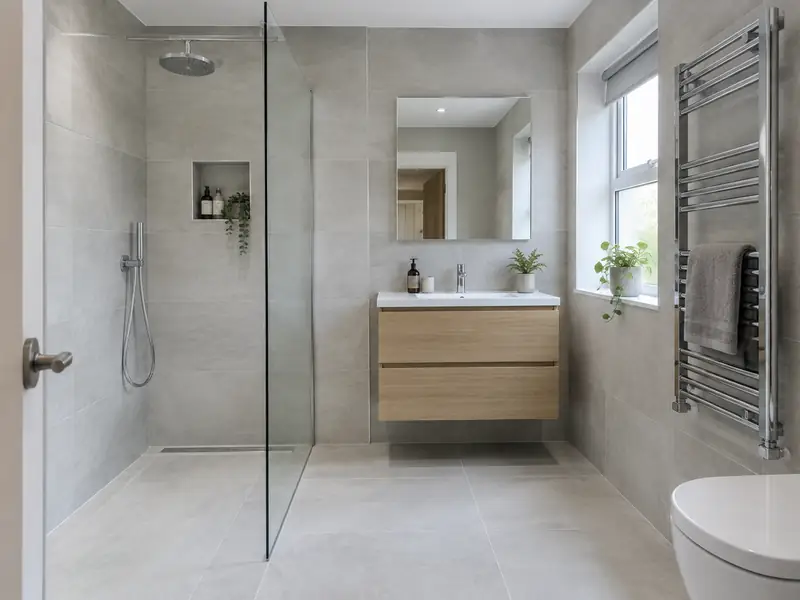
A bathroom installation replaces your old suite with new sanitaryware, a bath or shower, tiling and fittings, including the plumbing, electrics, ventilation and waterproofing needed for a complete, watertight room.
Homes across Derbyshire vary a great deal, so we price a new bathroom only after seeing the property. Our coverage takes in Derby, Chesterfield, Long Eaton and Ilkeston and the surrounding districts. As a guide, expect £4,800–£11,500 including VAT in the East Midlands; the final figure depends on size, materials and access. Any permissions are checked against the rules for England before we quote.
- Guide price
- £4,800–£11,500 inc VAT
- Time on site
- 1–2 weeks per bathroom
- Planning rules
- England
- Price level
- About 4% below the national guide
- Towns listed
- 12
- Survey
- Free, with a written quote
Bathrooms prices in Derbyshire
Every figure below is a guide for a new bathroom in Derbyshire, inclusive of VAT. Regional pricing for the East Midlands works out about 4% below the national guide, and the overall span is £4,800–£11,500. The survey costs you nothing, and after it we commit to a firm price for your specification in writing.
| Type of job | What it usually involves | Guide in Derbyshire |
|---|---|---|
| Shower room or en-suite | A compact room with a shower, basin and toilet, keeping the existing layout. | £3,800–£7,700 |
| Family bathroom | A full suite with bath and shower, new tiling, lighting and an extractor fan. | £4,800–£11,500 |
| Premium bathroom or wet room | Standalone bath, wet room or walk-in shower, underfloor heating and large-format tiles. | £11,500–£19,000 |
What moves the price up or down:
- Room size and the amount of tiling
- Suite, shower and tap specification
- Moving the toilet, bath or shower to a new position
- Wet room waterproofing and underfloor heating
What do you get?
- Measured survey and layout planning for your room
- New supply and waste pipework, including concealed fittings
- Waterproofing behind showers and in wet areas
- Wall and floor tiling to your chosen design
- Bath or shower, basin, toilet and taps fitted and tested
- Heated towel rail, silicone sealing and a final clean
Housing across Derbyshire
Derby has wide areas of Victorian red-brick terraces and interwar semis, while Peak District villages use gritstone and limestone under stone-slate or Welsh slate roofs. Former mining towns in the north-east of the county have brick terraces and post-war housing built for mining communities, and modern estates have grown around Derby, Chesterfield and the M1 corridor.
Brick terraces frequently suit loft conversions and rear extensions, and many need repointing. Stone properties in the Peak may call for lime work and planning-sensitive windows, while interwar and estate homes commonly take side extensions and garage conversions.
The High Peak gets heavy rain, snow and frequent frost, while the lower Trent valley is milder; old mine workings can also affect ground conditions in places.
Planning and building rules in Derbyshire
The notes below cover England, which is where Derbyshire sits. Rules change and every property is different, so we speak to the council before pricing your job.
Internal work such as a new kitchen, bathroom, flooring, plastering or decorating does not need planning permission in England, unless the house is listed, when listed building consent may be needed even for internal changes.
Some internal work is covered by Building Regulations: new electrical circuits and work in bathrooms (Part P), new drainage, structural changes, extractor ventilation and any new window. Notifiable work is certified by a registered installer or by building control.
Rules change and every property is different, so we check the planning history and constraints for your address before we quote.
The four stages
A visit to your home
A free survey comes first. It gives us what we need to price a new bathroom properly, including dimensions, existing materials and access for deliveries, and gives you the chance to ask anything you like.
Written quote
We turn the survey notes into a written quote. The price is fixed for the specification we agree, and the document sets out materials, scope and payment stages in plain language.
Booking the work
Before anyone starts, we confirm the programme in writing, check whether consents are required and arrange deliveries. If a skip or scaffolding on the road needs a permit, we apply for it.
The work itself
Our trades complete a new bathroom while your point of contact keeps you updated. When everything is finished, we clear the site, take away waste and go through the result with you before handover.
How we work
Frequently asked questions
How much does a new bathroom cost?
A typical family bathroom costs £4,800–£11,500 supplied and fitted, including tiling, a new suite, shower, lighting and an extractor fan. Shower rooms and simple en-suites cost a little less, while wet rooms, standalone baths and large-format tiles cost more. Moving the toilet or replacing rotten floorboards adds to the total. We confirm a fixed price for the agreed specification after the survey.
Will I have to go without a bathroom?
If it is your only bathroom, you will usually be without a shower or bath for most of the fitting time. We aim to keep the toilet working overnight wherever possible, refitting it temporarily at the end of each day during strip-out and first fix. If you have a second bathroom or downstairs toilet, the disruption is much easier. We plan the sequence with you before starting.
How long will a new bathroom take?
On a typical home, allow 1–2 weeks per bathroom. Larger projects, older buildings and extra work found once things are opened up can extend that, while simpler jobs may be shorter. Your quote includes an estimate of time on site, and your point of contact keeps you updated on the programme as the work progresses.
Is the price fixed?
Yes, for the specification we agree. Your written quote sets out exactly what is included at a fixed price. It only changes if you ask for something different, or if a problem the survey could not reasonably reveal later needs extra work. In either case we explain the change and confirm it in writing before going ahead.
Do I need a new boiler for a new shower?
You do not always need a new boiler for a new shower, but your hot water system decides what kind of shower will work well. Combi boilers suit mixer showers directly from the mains. Tank-fed systems may need a pump for good pressure, and electric showers heat their own water. We check your boiler, cylinder and water pressure during the survey and recommend a shower to match.
Towns in Derbyshire
Below is our list of Derbyshire towns for a new bathroom. If yours isn't shown, we may still cover it, so it is worth asking us directly.