
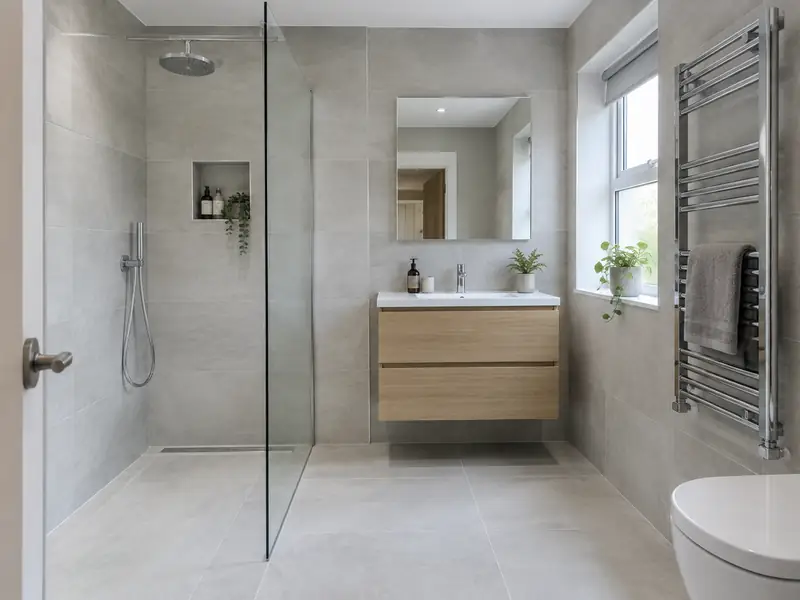
A bathroom installation replaces your old suite with new sanitaryware, a bath or shower, tiling and fittings, including the plumbing, electrics, ventilation and waterproofing needed for a complete, watertight room.
We offer a new bathroom across Derbyshire, and Derby is one of the places we cover, along with nearby Belper, Ilkeston and Heanor. Before anything is agreed we visit, check the existing structure and talk through your options. You then receive a written quote setting out the full scope; for most homes in the East Midlands it sits within £4,800–£11,500 including VAT.
- Guide price
- £4,800–£11,500 inc VAT
- Time on site
- 1–2 weeks per bathroom
- Postcodes
- DE1, DE21, DE22, DE23 and DE24
- Planning rules
- England
- Local area
- Derbyshire
- Survey
- Free, with a written quote
How much does a new bathroom cost in Derby?
Prices for a new bathroom vary from house to house, but in Derby most projects fall within £4,800–£11,500 including VAT. That reflects costs in the East Midlands, about 4% below the national guide. Treat the table as a budgeting aid; the written figure follows a survey we carry out for free.
| Type of job | What it usually involves | Guide in Derby |
|---|---|---|
| Shower room or en-suite | A compact room with a shower, basin and toilet, keeping the existing layout. | £3,800–£7,700 |
| Family bathroom | A full suite with bath and shower, new tiling, lighting and an extractor fan. | £4,800–£11,500 |
| Premium bathroom or wet room | Standalone bath, wet room or walk-in shower, underfloor heating and large-format tiles. | £11,500–£19,000 |
What moves the price up or down:
- Room size and the amount of tiling
- Suite, shower and tap specification
- Wet room waterproofing and underfloor heating
- Condition of the floor, walls and existing pipework
What’s included?
- Measured survey and layout planning for your room
- Removal and disposal of the old suite and tiles
- Electrics, lighting and extractor fan by qualified trades, with certificates
- Waterproofing behind showers and in wet areas
- Wall and floor tiling to your chosen design
- Heated towel rail, silicone sealing and a final clean
Local housing and a new bathroom
Derby has wide areas of Victorian red-brick terraces and interwar semis, while Peak District villages use gritstone and limestone under stone-slate or Welsh slate roofs. Former mining towns in the north-east of the county have brick terraces and post-war housing built for mining communities, and modern estates have grown around Derby, Chesterfield and the M1 corridor.
The High Peak gets heavy rain, snow and frequent frost, while the lower Trent valley is milder; old mine workings can also affect ground conditions in places.
If your house in Derby fits one of these patterns, it helps us anticipate what a new bathroom will involve, though we always confirm the details on site.
Permissions for a new bathroom in Derby
As Derby is in England, read the following with that system of planning and building control in mind. We check what applies to your house with the council before you receive a quote.
Internal work such as a new kitchen, bathroom, flooring, plastering or decorating does not need planning permission in England, unless the house is listed, when listed building consent may be needed even for internal changes.
Some internal work is covered by Building Regulations: new electrical circuits and work in bathrooms (Part P), new drainage, structural changes, extractor ventilation and any new window. Notifiable work is certified by a registered installer or by building control.
Rules change and every property is different, so we check the planning history and constraints for your address before we quote.
The four stages
Free site survey
First, someone visits your home in Derby to see the space, take measurements and note anything that could affect the work, such as access or the condition of what is there. There is no charge for this visit.
Written quote
We turn the survey notes into a written quote. The price is fixed for the specification we agree, and the document sets out materials, scope and payment stages in plain language.
Dates and permissions
Once you accept, we agree start dates, order materials and deal with any planning, building control or neighbour notices the job needs. You'll know who is coming and when before work begins.
Finish and handover
On site, the agreed plan is followed and any change is put in writing first. At completion we do a final clean, go through the snagging list with you and leave you with the relevant documents.
Why homeowners choose us
Questions about a new bathroom in Derby
Can I stay at home during the work?
In most cases, yes. Most people can live at home throughout, and we plan the work to keep disruption down by protecting floors, agreeing working hours and keeping access routes clear. Bigger jobs affecting kitchens, bathrooms or heating may mean a short spell with reduced facilities, and we talk this through with you at the survey.
Which postcodes in Derby do you cover?
We cover DE1, DE21, DE22 and DE23, along with the rest of Derbyshire. If your postcode is not listed, get in touch anyway: our coverage is UK-wide, and we can usually arrange a survey wherever you live. Enter your postcode in the guide-price tool or contact form and we will confirm.
How much does a new bathroom cost?
A typical family bathroom costs £4,800–£11,500 supplied and fitted, including tiling, a new suite, shower, lighting and an extractor fan. Shower rooms and simple en-suites cost a little less, while wet rooms, standalone baths and large-format tiles cost more. Moving the toilet or replacing rotten floorboards adds to the total. We confirm a fixed price for the agreed specification after the survey.
Which tiles are easiest to keep clean?
Large-format porcelain tiles are usually easiest to keep clean, because there are fewer grout lines to collect dirt and porcelain absorbs very little water. Glossy tiles show water marks more than matt ones, while textured floor tiles give better grip. Grout colour matters too: mid-grey hides staining better than white. We can suggest anti-slip ratings and grout options that suit how you use the room.
What ventilation does a bathroom need?
A bathroom needs mechanical ventilation, usually an extractor fan, to remove steam and help prevent condensation and mould. Building regulations set minimum extraction rates for new or refitted bathrooms. A fan linked to the light with an overrun timer, or one with a humidity sensor, works well. Ducting should vent outside by the shortest practical route. We include a suitable fan in every bathroom quote.
Also covering areas around Derby
We cover every part of Derby, including DE1, DE21, DE22 and DE23, and nearby Belper, Ilkeston and Heanor. Wherever you are within that patch, the survey is free and the quote comes to you in writing.