
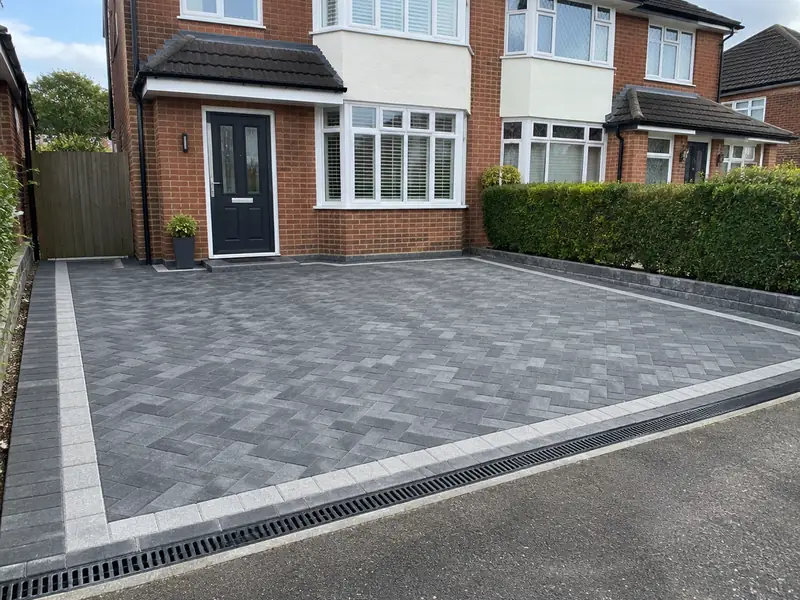
A new driveway is a hard-wearing surface for parking, such as block paving, resin bound gravel, tarmac or gravel, laid on an excavated and compacted sub-base with edging and drainage designed to carry vehicle loads and handle rainwater.
Getting a new driveway right in Lowestoft starts with understanding the house you already have: its age, how it was built and what has been altered over the years. We survey first, then commit on paper to a price that holds as long as the scope stays the same. Across the East of England, guide prices run at £4,200–£9,400 including VAT, and homes in Great Yarmouth, Norwich and Bowthorpe are covered too.
- Guide price
- £4,200–£9,400 inc VAT
- Time on site
- 3–7 days on site
- Postcodes
- NR32 and NR33
- Planning rules
- England
- Local area
- Suffolk
- Survey
- Free, with a written quote
What should you budget for a new driveway in Lowestoft?
Use the table to gauge the cost of a new driveway in Lowestoft before we visit. Figures include VAT and are scaled for the East of England, coming out about 5% above the national guide, which gives £4,200–£9,400 overall. After a free survey, you receive a fixed written price.
| Type of job | What it usually involves | Guide in Lowestoft |
|---|---|---|
| Gravel or tarmac | A typical 40–50m² drive in gravel on a grid, or tarmac with block edging. | £2,100–£5,200 |
| Block paving or resin bound | A typical 40–50m² drive with sub-base, edging and drainage. | £4,200–£9,400 |
| Large or premium driveway | Larger drives, natural stone, walls, steps or a new dropped kerb. | £8,400–£17,000 |
Expect these to shape the final quote:
- Surface: gravel, tarmac, block paving, resin or stone
- Drainage, soakaways and changes in level
- Edging, steps, walls and manhole adjustments
- Access for machinery and removal of spoil
What do you get?
- Survey of levels, drainage, manholes and access
- Excavation and removal of the old surface and soil
- Weed membrane and compacted MOT Type 1 sub-base
- Edging kerbs or restraints to hold the surface in place
- Drainage channels or soakaway where needed
- Site cleared and waste removed
Homes in Suffolk
Suffolk villages are full of timber-framed cottages, many limewashed in traditional colours such as Suffolk pink, with pargeting and thatch in places. Flint and pale gault brick are common too. Ipswich has Victorian terraces and interwar estates, Bury St Edmunds has Georgian streets, and Lowestoft and Felixstowe mix Victorian seaside housing with newer estates.
Timber-framed buildings need breathable lime plaster and render, and roof repairs that suit the original materials. Terraces suit loft conversions and rear extensions, while newer homes commonly take garage conversions and porches.
These patterns matter for a new driveway: older walls, roofs and floors in Lowestoft can need different materials or extra preparation compared with newer homes.
Planning and building rules in Lowestoft
Which rules apply depends on where you live. For Lowestoft, the answer is England, and the points below reflect that; we verify them with the council before quoting.
In England, a new or replacement front-garden surface over 5 m² needs planning permission unless it is permeable or drains to a lawn or border within your property. A new dropped kerb needs consent from the council’s highways team, and access onto a classified road may need planning permission.
Building Regulations do not usually apply to driveways, but drainage must not discharge onto the road or a neighbour’s land.
Rules change and every property is different, so we check the planning history and constraints for your address before we quote.
From survey to handover
Free site survey
Book a visit and we'll come to you. The survey covers measurements, the state of what's there now and any obvious constraints, so the price that follows is based on your actual home, not an average.
Written quote
You get the price in writing, itemised so you can see where the money goes. As long as the specification stays the same, that is the price you pay for a new driveway.
Booking the work
Next comes planning the work itself. We set a start date that suits you, line up the right trades, and make sure any approvals for a new driveway are in place before the first day on site.
Finish and handover
The job proceeds in the order set out in the programme, with dust and debris kept under control. Finally we tidy away, inspect the work together and pass the finished project over to you with its paperwork.
What you can expect from us
Driveways in Lowestoft: questions
Which driveway surface is easiest to maintain?
Resin bound gravel is one of the easiest surfaces to maintain, because it is smooth, porous and resists weeds, needing only an occasional sweep and wash. Block paving needs re-sanding joints and occasional weed control. Tarmac needs little upkeep but can soften in heat. Gravel needs raking and topping up. We explain the upkeep of each surface before you choose.
How much will a new driveway cost in Lowestoft?
As a guide, expect to pay £4,200–£9,400 including VAT for a new driveway in Lowestoft. That range is adjusted for the East of England, which runs about 5% above the national guide. Where your project lands depends on size, materials, access and the condition of what is already there. We confirm a fixed price in writing after a free survey of your home.
How long does it take to lay a driveway?
Laying a typical driveway takes around three to seven days, depending on size, surface and ground conditions. Excavation and sub-base usually take the first few days, then edging, drainage and the surface. Resin needs dry weather and time to cure, and you will usually need to keep cars off for a short period afterwards. We confirm timings and access arrangements with your quote.
Can I use my car during the work?
You will not be able to park on the driveway while it is being dug out and laid, so plan to park on the street or nearby for the duration. We keep a safe pedestrian route to your front door where possible. After completion, block paving and tarmac can usually be driven on straight away, while resin and concrete need a short curing period first.
Can I stay at home during the work?
In most cases, yes. Most people can live at home throughout, and we plan the work to keep disruption down by protecting floors, agreeing working hours and keeping access routes clear. Bigger jobs affecting kitchens, bathrooms or heating may mean a short spell with reduced facilities, and we talk this through with you at the survey.
Near Lowestoft
Coverage for Lowestoft spans NR32 and NR33. Close by, Great Yarmouth, Norwich and Bowthorpe are covered too, and the rest of our UK-wide area follows the same survey-then-quote process from start to finish.