
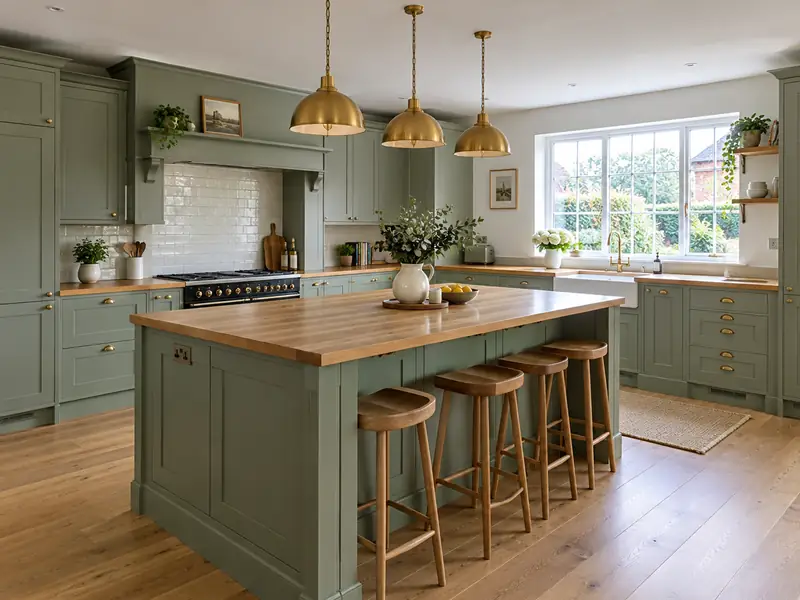
A new kitchen installation replaces your old units, worktops and appliances with a new layout fitted to your room, including the plumbing, electrics, tiling and finishing needed to leave a complete, working kitchen.
Anyone planning a new kitchen in Lowestoft wants three things: a clear price, a realistic timetable and a tidy job. We publish a guide of £8,400–£23,000 including VAT for the East of England up front, explain that work normally takes 1–3 weeks on site, and confirm both in writing after a free survey of your property.
- Guide price
- £8,400–£23,000 inc VAT
- Time on site
- 1–3 weeks on site
- Postcodes
- NR32 and NR33
- Planning rules
- England
- Local area
- Suffolk
- Survey
- Free, with a written quote
What should you budget for a new kitchen in Lowestoft?
Below is a breakdown of typical costs for a new kitchen in Lowestoft. Because rates in the East of England are about 5% above the national guide, the overall guide comes to £8,400–£23,000, including VAT. Size, materials and access move the figure, and a free-of-charge survey settles it.
| Type of job | What it usually involves | Guide in Lowestoft |
|---|---|---|
| Value kitchen | Standard units and laminate worktops in a small or medium room, keeping the existing layout. | £5,200–£9,400 |
| Mid-range kitchen | Better units, some layout changes, built-in appliances and a choice of worktops. | £9,400–£21,000 |
| Premium kitchen | High-end units, stone worktops, an island and premium appliances in a larger room. | £21,000–£42,000 |
Expect these to shape the final quote:
- Length of units and the size of the room
- Unit range, door finish and worktop material
- Appliances, including built-in and premium models
- Tiling, flooring and any wall removal or replastering
What does the job include in Lowestoft?
- Measured survey and layout planning for your room
- Removal and disposal of the old kitchen
- Plumbing for sink, dishwasher and washing machine
- Electrics and new circuits by qualified electricians, with certificates
- Gas connections by a suitably registered engineer where needed
- Splashbacks or wall tiling to your chosen design
Building in Lowestoft
Suffolk villages are full of timber-framed cottages, many limewashed in traditional colours such as Suffolk pink, with pargeting and thatch in places. Flint and pale gault brick are common too. Ipswich has Victorian terraces and interwar estates, Bury St Edmunds has Georgian streets, and Lowestoft and Felixstowe mix Victorian seaside housing with newer estates.
Timber-framed buildings need breathable lime plaster and render, and roof repairs that suit the original materials. Terraces suit loft conversions and rear extensions, while newer homes commonly take garage conversions and porches.
With that background in mind, here is how we typically handle a new kitchen for homes in Lowestoft, from the first visit to the finished result.
Do you need permission in Lowestoft?
Homes in Lowestoft come under the regulations for England, summarised below. We don't rely on general rules alone: we confirm the position for your address with the council before a quote goes out.
Internal work such as a new kitchen, bathroom, flooring, plastering or decorating does not need planning permission in England, unless the house is listed, when listed building consent may be needed even for internal changes.
Some internal work is covered by Building Regulations: new electrical circuits and work in bathrooms (Part P), new drainage, structural changes, extractor ventilation and any new window. Notifiable work is certified by a registered installer or by building control.
Rules change and every property is different, so we check the planning history and constraints for your address before we quote.
What happens after you get in touch?
A visit to your home
It starts with a survey at the property, free of charge. We check condition, access and services, ask how you want the finished result to look, and answer any questions you have about a new kitchen.
Written quote
We put everything into a written, fixed-price quote: the specification, what's excluded, staged payments and the expected time on site. Take whatever time you need to decide; there's no pressure to commit.
Getting ready
Next comes planning the work itself. We set a start date that suits you, line up the right trades, and make sure any approvals for a new kitchen are in place before the first day on site.
Finish and handover
The work is carried out to the agreed specification, with floors and furniture protected and the site kept tidy. At the end we clean up, walk through the finished job with you and hand over any certificates.
Why homeowners choose us
Frequently asked questions
Which worktop material should I choose?
Laminate worktops are the most affordable and come in many stone and wood effects, though they can be damaged by hot pans. Solid wood is warm and repairable but needs regular oiling. Quartz is very hard-wearing, stain-resistant and needs little maintenance, but it costs more and is made to template after the units are fitted. We bring samples and explain the care each one needs.
What should I do to prepare for my kitchen fitting?
Before fitting starts, empty all cupboards and drawers, clear worktops and remove anything from the walls. Plan where you will make drinks and simple meals for a week or two, and agree where deliveries will be stored, as units take up a lot of space. Make sure we can access the stopcock, fuse board and gas meter. We confirm the delivery date and start date in advance.
How much will a new kitchen cost in Lowestoft?
As a guide, expect to pay £8,400–£23,000 including VAT for a new kitchen in Lowestoft. That range is adjusted for the East of England, which runs about 5% above the national guide. Where your project lands depends on size, materials, access and the condition of what is already there. We confirm a fixed price in writing after a free survey of your home.
How long does it take to fit a kitchen?
Fitting a kitchen typically takes one to three weeks on site, depending on its size and how much the layout changes. Strip-out, first-fix plumbing and electrics, and any plastering come first, then units, worktops, appliances and tiling. Stone worktops are templated once the base units are in and usually fitted a week or two later. We give you a day-by-day plan before we start.
Can I stay at home during the work?
In most cases, yes. Most people can live at home throughout, and we plan the work to keep disruption down by protecting floors, agreeing working hours and keeping access routes clear. Bigger jobs affecting kitchens, bathrooms or heating may mean a short spell with reduced facilities, and we talk this through with you at the survey.
Near Lowestoft
Homes across NR32 and NR33 in Lowestoft are within our coverage, as are those in Great Yarmouth, Norwich and Bowthorpe. If you are just outside these areas, ask anyway, because we work right across the UK.