
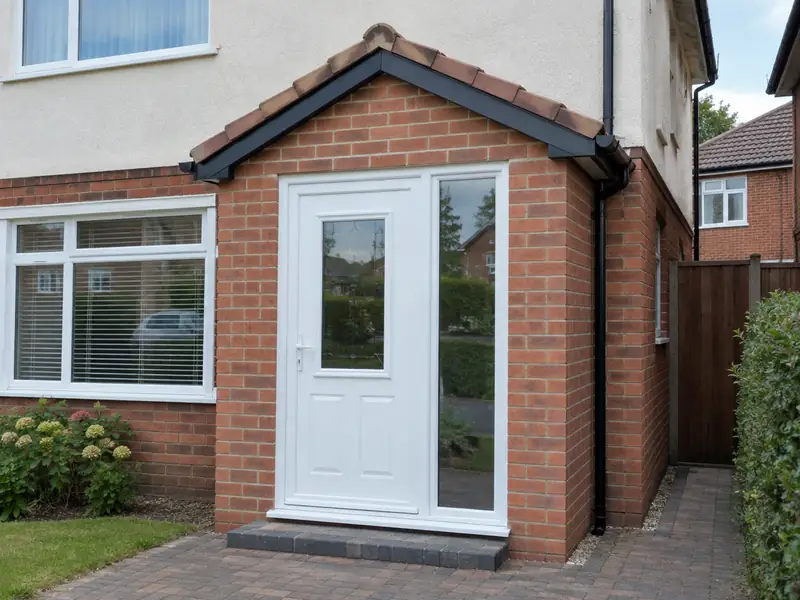
A porch is a small enclosed structure built over a front or side door, adding a weatherproof entrance space for coats, shoes and deliveries, improving security and reducing draughts and heat loss from the house.
Looking for a new porch in Suffolk? We organise the whole job, bringing in the trades it needs under one agreement, and you have a single contact. We cover Ipswich, Lowestoft, Bury St Edmunds and Haverhill, along with villages and suburbs nearby. The rules in England decide what consents are needed, and our guide range of £3,700–£8,400 including VAT gives you a realistic starting point for a budget.
- Guide price
- £3,700–£8,400 inc VAT
- Time on site
- 1–2 weeks on site
- Planning rules
- England
- Price level
- About 5% above the national guide
- Towns listed
- 7
- Survey
- Free, with a written quote
How much does a new porch cost in Suffolk?
Here is how the guide price for a new porch breaks down in Suffolk. We start from national figures and adjust for the East of England, which comes out about 5% above the national guide. The resulting range, VAT included, is £3,700–£8,400, and a survey, at no cost to you, firms it up.
| Type of job | What it usually involves | Guide in Suffolk |
|---|---|---|
| Canopy or open porch | A tiled or lead canopy, or an open timber porch, over an existing door. | £1,050–£3,200 |
| uPVC or aluminium porch | A glazed enclosed porch on a brick dwarf wall with a new door. | £3,200–£5,800 |
| Brick-built porch | A fully brick-built porch matching the house, with tiled roof, windows and lighting. | £5,800–£10,500 |
The main things that change the figure:
- Floor area and height of the porch
- Construction: uPVC, aluminium, brick or timber frame
- Roof type and how it meets the house
- Drains, meters or paths that need moving
What do you get?
- Survey of the doorway, paths, drains and meters
- Foundations and a concrete base with damp-proof membrane
- Brick dwarf walls or full brick walls to match the house
- Windows and an external door in your chosen style
- Guttering and a downpipe connected to drainage
- Plastering, sills, skirting and flooring ready to use
Homes in Suffolk
Suffolk villages are full of timber-framed cottages, many limewashed in traditional colours such as Suffolk pink, with pargeting and thatch in places. Flint and pale gault brick are common too. Ipswich has Victorian terraces and interwar estates, Bury St Edmunds has Georgian streets, and Lowestoft and Felixstowe mix Victorian seaside housing with newer estates.
Timber-framed buildings need breathable lime plaster and render, and roof repairs that suit the original materials. Terraces suit loft conversions and rear extensions, while newer homes commonly take garage conversions and porches.
One of the driest counties, but the coast is eroding in places, and clay soils inland can shrink and crack in dry summers.
Planning and building rules in Suffolk
As Suffolk is in England, read the following with that system of planning and building control in mind. We check what applies to your house with the council before you receive a quote.
In England, a porch is usually permitted development if its ground floor area is no more than 3 m², no part is higher than 3 m, and it is at least 2 m from any boundary with a road.
Small porches at ground level are usually exempt from Building Regulations if the front door stays in place between porch and house, but safety glazing and any electrics must still comply.
Rules change and every property is different, so we check the planning history and constraints for your address before we quote.
How does the job run?
A visit to your home
It starts with a survey at the property, free of charge. We check condition, access and services, ask how you want the finished result to look, and answer any questions you have about a new porch.
Written quote
The quote arrives in writing, not over the phone. It covers the full scope, the finishes you've chosen, any exclusions and the payment schedule, with a fixed price tied to that specification.
Dates and permissions
Before anyone starts, we confirm the programme in writing, check whether consents are required and arrange deliveries. If a skip or scaffolding on the road needs a permit, we apply for it.
The work itself
During the work we protect the areas around it and tidy up at the end of each day. Once complete, we check the finish, remove our materials and hand over paperwork such as building control sign-off where it applies.
What you can expect from us
Questions about a new porch in Suffolk
How much does a porch cost?
A typical enclosed porch of 2–3m² costs £3,700–£8,400, including foundations, walls, roof, windows and a new door. A uPVC porch on a dwarf wall sits at the lower end, while a fully brick-built porch with a tiled roof costs more. Open canopies cost less. The door specification and moving drains or meters also affect the price. We confirm a fixed price after the survey.
Is the price fixed?
Yes, for the specification we agree. Your written quote sets out exactly what is included at a fixed price. It only changes if you ask for something different, or if a problem the survey could not reasonably reveal later needs extra work. In either case we explain the change and confirm it in writing before going ahead.
How long does it take to build a porch?
Building a porch usually takes one to two weeks on site. Foundations and base go in first, then the brickwork, roof, windows and door. uPVC and aluminium porches are often quicker because the frames are made off-site, while brick-built porches with a tiled roof take a little longer. Frames and doors are made to measure, so allow a few weeks' lead time before starting.
Can I stay at home during the work?
In most cases, yes. Most people can live at home throughout, and we plan the work to keep disruption down by protecting floors, agreeing working hours and keeping access routes clear. Bigger jobs affecting kitchens, bathrooms or heating may mean a short spell with reduced facilities, and we talk this through with you at the survey.
Will a porch make my house warmer?
A porch acts as a buffer between the front door and the outside, so cold air does not rush straight in every time the door opens. This reduces draughts in the hallway or living room and can help cut heat loss. It also gives a dry place to take off wet coats and shoes. Well-insulated walls, double glazing and a good door make the biggest difference.
Towns in Suffolk
We offer a new porch in each of the towns below, all within Suffolk. Select yours for guide prices, postcodes covered and nearby places.