
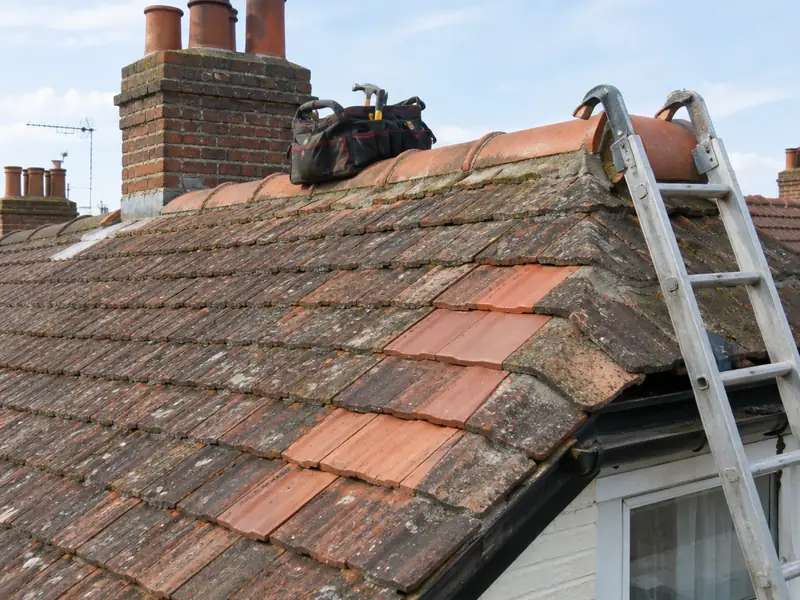
Roof repairs fix specific faults in a pitched or flat roof, such as slipped or cracked tiles, loose ridges, failed flashing, leaking valleys or chimney defects, to stop water getting in without replacing the whole roof.
County Down is part of our UK-wide coverage for roof repairs. Places we cover include Bangor, County Down, Castlereagh, Newtownards and Newry, and we travel to smaller communities across the area as well. Since your property is in Northern Ireland, the relevant planning and building rules are the ones set there. In Northern Ireland, budget around £250–£1,300 with VAT; the figure is confirmed after a survey that costs you nothing.
- Guide price
- £250–£1,300 inc VAT
- Time on site
- Half a day to 3 days for most repairs
- Planning rules
- Northern Ireland
- Price level
- About 14% below the national guide
- Towns listed
- 5
- Survey
- Free, with a written quote
Roof repairs prices in County Down
These are guide costs, not quotes. For roof repairs in County Down the range is £250–£1,300, VAT included, reflecting prices in Northern Ireland that are about 14% below the national guide. Once we have visited for a free survey, you get a firm figure for the scope you approve.
| Type of job | What it usually involves | Guide in County Down |
|---|---|---|
| Minor repair | Replacing a handful of slipped or broken tiles from ladders or a roof ladder. | £150–£450 |
| Ridge, flashing or valley repair | Rebedding a ridge run, renewing flashing or relining a short valley. | £350–£1,050 |
| Larger repair with scaffolding | Several faults, chimney work or repairs on high roofs needing scaffolding. | £850–£2,600 |
Your price depends mostly on:
- Access: ladders, roof ladders, towers or full scaffolding
- Roof height and steepness
- Matching tiles, slates or lead to the existing roof
- Hidden damage to battens, felt or timbers found during repair
What do you get?
- Inspection to trace the source of leaks or damage
- Photos of the problem areas and a clear written explanation
- Safe access by ladders, towers or scaffolding as needed
- Ridge, hip and verge rebedding or dry-fix conversion
- Lead flashing, valley and chimney junction repairs
- Temporary weatherproofing where a full repair must wait
Homes in County Down
County Down takes in suburbs of Belfast, Bangor and Holywood with Victorian and Edwardian villas, and Newry, Downpatrick and Banbridge with older town centres and newer estates. Mourne granite appears in buildings around the mountains, and detached rural homes and bungalows are common across the county, often rendered or pebbledashed.
Villas and semis suit kitchen extensions, loft conversions and garden landscaping. Rural detached homes commonly take extensions and driveways, and rendered houses often need re-rendering, roofline renewal and window replacement.
Coastal areas such as the Ards Peninsula face salt and wind, and the Mournes bring heavier rain and colder conditions.
Do you need permission in County Down?
Homes in County Down come under the regulations for Northern Ireland, summarised below. We don't rely on general rules alone: we confirm the position for your address with the council before a quote goes out.
In Northern Ireland, re-roofing with similar materials does not usually need planning permission outside listed buildings and conservation areas.
Significant re-roofing should be checked with building control under the Building Regulations (Northern Ireland). Bats are protected across the UK; if they roost under roof tiles, soffits or fascias, work stops and a licensed ecologist advises before it restarts.
Rules change and every property is different, so we check the planning history and constraints for your address before we quote.
From survey to handover
We look at the job
First, someone visits your home in County Down to see the space, take measurements and note anything that could affect the work, such as access or the condition of what is there. There is no charge for this visit.
Quote in writing
Next you receive a written quote with a fixed price for the agreed specification. It lists what is included, what is not, and how payments are staged, so you can compare it properly.
Dates and permissions
Before anyone starts, we confirm the programme in writing, check whether consents are required and arrange deliveries. If a skip or scaffolding on the road needs a permit, we apply for it.
Build and hand over
During the work we protect the areas around it and tidy up at the end of each day. Once complete, we check the finish, remove our materials and hand over paperwork such as building control sign-off where it applies.
What you can expect from us
Frequently asked questions
How much will roof repairs cost in County Down?
As a guide, expect to pay £250–£1,300 including VAT for roof repairs in County Down. That range is adjusted for Northern Ireland, which runs about 14% below the national guide. Where your project lands depends on size, materials, access and the condition of what is already there. We confirm a fixed price in writing after a free survey of your home.
Do I need scaffolding for a roof repair?
Not every roof repair needs scaffolding. Small repairs on low roofs can often be done safely from ladders and roof ladders, and towers suit some chimney and gable work. Repairs on two-storey roofs, steep slopes, chimneys or large areas usually need scaffolding for safe working, which adds cost. We choose the safest practical access and include it in the written quote.
How much does a roof repair cost?
A typical roof repair, such as replacing slipped tiles, rebedding a ridge or renewing flashing, costs £250–£1,300. Small repairs reachable by ladder sit at the lower end, while jobs needing scaffolding or several repairs cost more. Matching old tiles or slates and hidden damage to battens can also affect the price. We explain what we find and confirm a fixed price before starting.
Can you do an emergency roof repair?
After storm damage, a temporary repair such as sheeting or refixing loose tiles can stop water getting in until a permanent repair can be made. We aim to attend as quickly as possible, but availability depends on weather and demand, especially after widespread storms. In the meantime, catch drips in containers, move valuables and switch off lights near any wet ceiling.
Can I stay at home during the work?
In most cases, yes. Most people can live at home throughout, and we plan the work to keep disruption down by protecting floors, agreeing working hours and keeping access routes clear. Bigger jobs affecting kitchens, bathrooms or heating may mean a short spell with reduced facilities, and we talk this through with you at the survey.
Towns in County Down
These are the towns in County Down where you can book a free survey for roof repairs. Each has its own page with guide prices and coverage details.