
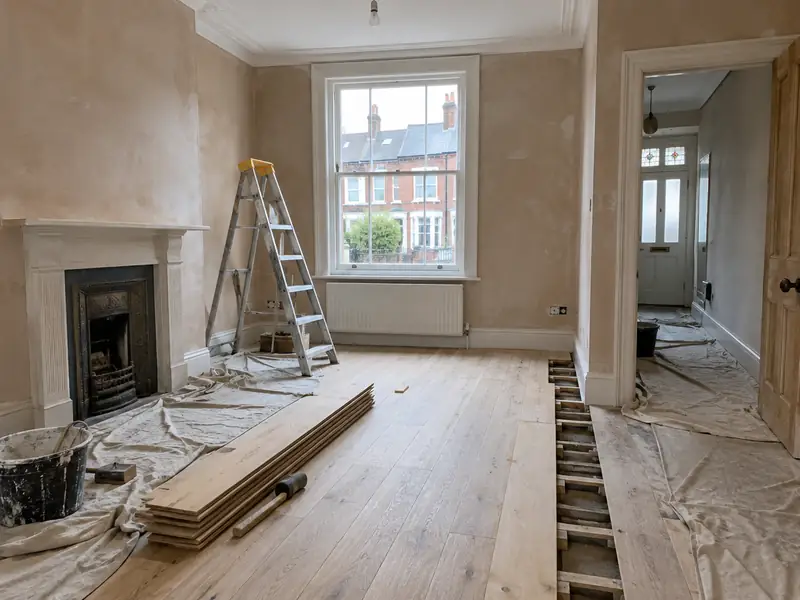
A whole-house renovation is a planned refurbishment of an entire home, typically combining rewiring, heating, plastering, new kitchen and bathroom, flooring and decoration, and sometimes layout changes, carried out in a logical order under one project.
Across County Down, people look into a whole-house renovation to replace something worn out, to make the house work better for them, or to get it ready for a sale. We cover Bangor, County Down, Castlereagh, Newtownards and Newry and the smaller towns around them, working to the rules that apply in Northern Ireland. Expect a guide of £38,500–£103,000, VAT included, in Northern Ireland, and every quote follows a free visit.
- Guide price
- £38,500–£103,000 inc VAT
- Time on site
- 8–24 weeks on site, depending on scope
- Planning rules
- Northern Ireland
- Price level
- About 14% below the national guide
- Towns listed
- 5
- Survey
- Free, with a written quote
Whole-house renovations prices in County Down
What should you budget for a whole-house renovation in County Down? Use the figures below as a starting point. Prices in Northern Ireland sit about 14% below the national guide, so the range here is £38,500–£103,000 including VAT. Your fixed price comes in writing once we've surveyed the property, at no charge.
| Type of job | What it usually involves | Guide in County Down |
|---|---|---|
| Light refurbishment | Decoration, flooring, minor repairs and perhaps one new kitchen or bathroom. | £13,000–£38,500 |
| Full refurbishment | Rewire, heating, plastering, new kitchen and bathroom, flooring and decoration throughout a 3-bed house. | £38,500–£103,000 |
| Renovation with structural changes | A full refurbishment plus wall removal, layout changes or extra bathrooms. | £86,000–£155,000 |
What moves the price up or down:
- Whether rewiring, new heating and full replastering are needed
- Kitchen and bathroom specification
- Structural or layout changes and associated approvals
- Hidden problems such as damp, rot or outdated drainage
Scope of the work
- Room-by-room survey and a planned order of works
- Strip-out of old kitchens, bathrooms, flooring and finishes
- Heating and plumbing upgrades by qualified engineers
- Plastering, skimming and repairs to ceilings and walls
- New kitchen and bathroom fitted to your chosen specification
- Decoration and a final clean before handover
Homes in County Down
County Down takes in suburbs of Belfast, Bangor and Holywood with Victorian and Edwardian villas, and Newry, Downpatrick and Banbridge with older town centres and newer estates. Mourne granite appears in buildings around the mountains, and detached rural homes and bungalows are common across the county, often rendered or pebbledashed.
Villas and semis suit kitchen extensions, loft conversions and garden landscaping. Rural detached homes commonly take extensions and driveways, and rendered houses often need re-rendering, roofline renewal and window replacement.
Coastal areas such as the Ards Peninsula face salt and wind, and the Mournes bring heavier rain and colder conditions.
Planning and building rules in County Down
Which rules apply depends on where you live. For County Down, the answer is Northern Ireland, and the points below reflect that; we verify them with the council before quoting.
Internal improvements do not need planning permission in Northern Ireland unless the building is listed.
The Building Regulations (Northern Ireland) apply to structural work, drainage and ventilation; electrical work should be tested and certified.
Rules change and every property is different, so we check the planning history and constraints for your address before we quote.
From survey to handover
A visit to your home
It starts with a survey at the property, free of charge. We check condition, access and services, ask how you want the finished result to look, and answer any questions you have about a whole-house renovation.
Price and scope agreed
The quote arrives in writing, not over the phone. It covers the full scope, the finishes you've chosen, any exclusions and the payment schedule, with a fixed price tied to that specification.
Getting ready
Before anyone starts, we confirm the programme in writing, check whether consents are required and arrange deliveries. If a skip or scaffolding on the road needs a permit, we apply for it.
The work itself
During the work we protect the areas around it and tidy up at the end of each day. Once complete, we check the finish, remove our materials and hand over paperwork such as building control sign-off where it applies.
What you can expect from us
Frequently asked questions
Is the price fixed?
Yes, for the specification we agree. Your written quote sets out exactly what is included at a fixed price. It only changes if you ask for something different, or if a problem the survey could not reasonably reveal later needs extra work. In either case we explain the change and confirm it in writing before going ahead.
In what order should renovation work be done?
A renovation should follow a set order so finished work is never damaged by later trades. It usually runs from roof and structural repairs, through strip-out, first-fix electrics and plumbing, then plastering, second-fix electrics and plumbing, kitchen and bathroom fitting, flooring and finally decoration. Windows are usually fitted before plastering. We plan the programme around this sequence so each trade follows on smoothly.
Can you combine a whole-house renovation with other work?
Yes. Because we manage several trades under one contract, we can plan a whole-house renovation alongside other work on your County Down home, such as new windows with rendering, or a kitchen refit with an extension. Combining jobs can reduce repeat set-up such as scaffolding, skips and access, and every element is listed and priced in the same written quote.
How much does it cost to renovate a whole house?
A full refurbishment of a typical 3-bed house costs £38,500–£103,000, covering rewiring, heating, plastering, a new kitchen and bathroom, flooring and decoration. A light refresh costs much less, while renovations with structural changes cost more. The biggest variables are the condition of the house and the kitchen and bathroom specification. We survey every room and give you a written price for the agreed scope.
Which parts of a renovation need building regulations approval?
Several parts of a renovation fall under building regulations, including rewiring and new circuits, new boilers and heating systems, structural changes such as removing walls, replacement windows and changes to drainage. Some of this is self-certified by suitably registered trades, and some needs building control approval. In Scotland a building warrant may be needed for certain works. We arrange the right approvals and certificates.
Towns in County Down
Our coverage for a whole-house renovation in County Down includes the towns listed here. Each page explains guide costs, typical timings and the neighbouring places we also serve.