
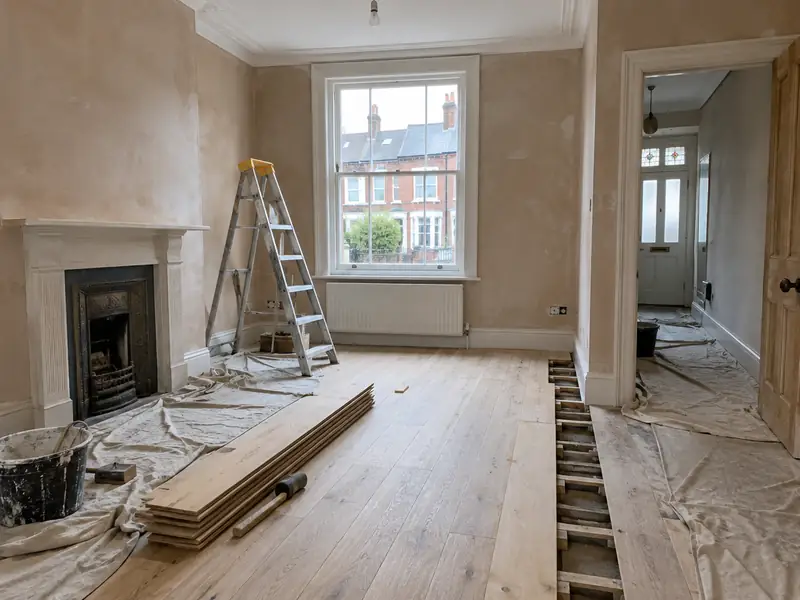
A whole-house renovation is a planned refurbishment of an entire home, typically combining rewiring, heating, plastering, new kitchen and bathroom, flooring and decoration, and sometimes layout changes, carried out in a logical order under one project.
For a homeowner in Castlereagh, planning a whole-house renovation tends to begin with two questions: what will it cost, and how disruptive will it be? Our guide range is £38,500–£103,000 including VAT, and a typical job runs to 8–24 weeks on site, depending on scope. Both numbers firm up once we have seen the property, measured up and agreed exactly what is included.
- Guide price
- £38,500–£103,000 inc VAT
- Time on site
- 8–24 weeks on site, depending on scope
- Postcodes
- BT2, BT4, BT5, BT6 and BT7
- Planning rules
- Northern Ireland
- Local area
- Belfast
- Survey
- Free, with a written quote
What should you budget for a whole-house renovation in Castlereagh?
What will a whole-house renovation cost in Castlereagh? Our guide range is £38,500–£103,000 including VAT. That figure is adjusted for Northern Ireland, about 14% below the national guide, and is intended for planning a budget. A firm written price for your chosen specification follows a free survey at your home.
| Type of job | What it usually involves | Guide in Castlereagh |
|---|---|---|
| Light refurbishment | Decoration, flooring, minor repairs and perhaps one new kitchen or bathroom. | £13,000–£38,500 |
| Full refurbishment | Rewire, heating, plastering, new kitchen and bathroom, flooring and decoration throughout a 3-bed house. | £38,500–£103,000 |
| Renovation with structural changes | A full refurbishment plus wall removal, layout changes or extra bathrooms. | £86,000–£155,000 |
Your price depends mostly on:
- Size of the house and number of rooms being renovated
- Whether rewiring, new heating and full replastering are needed
- Structural or layout changes and associated approvals
- Hidden problems such as damp, rot or outdated drainage
What do you get?
- Room-by-room survey and a planned order of works
- Rewiring and new consumer unit by qualified electricians, with certificates
- Heating and plumbing upgrades by qualified engineers
- New kitchen and bathroom fitted to your chosen specification
- Flooring, internal doors, skirting and joinery
- Decoration and a final clean before handover
Homes in County Down
County Down takes in suburbs of Belfast, Bangor and Holywood with Victorian and Edwardian villas, and Newry, Downpatrick and Banbridge with older town centres and newer estates. Mourne granite appears in buildings around the mountains, and detached rural homes and bungalows are common across the county, often rendered or pebbledashed.
Coastal areas such as the Ards Peninsula face salt and wind, and the Mournes bring heavier rain and colder conditions.
That mix of housing shapes how we approach a whole-house renovation in Castlereagh: the age and construction of your home affect the materials, the method and, in the end, the price.
Do you need permission in Castlereagh?
As Castlereagh is in Northern Ireland, read the following with that system of planning and building control in mind. We check what applies to your house with the council before you receive a quote.
Internal improvements do not need planning permission in Northern Ireland unless the building is listed.
The Building Regulations (Northern Ireland) apply to structural work, drainage and ventilation; electrical work should be tested and certified.
Rules change and every property is different, so we check the planning history and constraints for your address before we quote.
The four stages
Survey and measure
We begin by looking at the job in person. During the free survey we discuss options, materials and budget for a whole-house renovation, and photograph or measure anything the quote needs to reflect.
Your fixed price
The quote arrives in writing, not over the phone. It covers the full scope, the finishes you've chosen, any exclusions and the payment schedule, with a fixed price tied to that specification.
Booking the work
We handle the paperwork side: checking whether planning permission or building control approval is needed, submitting applications where they are, and scheduling the trades and materials around your dates.
Finish and handover
The job proceeds in the order set out in the programme, with dust and debris kept under control. Finally we tidy away, inspect the work together and pass the finished project over to you with its paperwork.
Why homeowners choose us
Whole-house renovations in Castlereagh: questions
Can I stay at home during the work?
In most cases, yes. Most people can live at home throughout, and we plan the work to keep disruption down by protecting floors, agreeing working hours and keeping access routes clear. Bigger jobs affecting kitchens, bathrooms or heating may mean a short spell with reduced facilities, and we talk this through with you at the survey.
Is the price fixed?
Yes, for the specification we agree. Your written quote sets out exactly what is included at a fixed price. It only changes if you ask for something different, or if a problem the survey could not reasonably reveal later needs extra work. In either case we explain the change and confirm it in writing before going ahead.
Do I need planning permission to renovate?
Most internal renovation work does not need planning permission, but it depends on what changes, your home's location, whether it is listed or in a conservation area, and which UK nation you are in. Listed buildings usually need consent for internal and external changes. Altering windows, adding dormers or changing the outside appearance in a conservation area may also need permission. We check before quoting.
Can we live in the house while it is renovated?
Living in a house during a full renovation is possible but hard, especially while rewiring, plastering and the kitchen and bathroom are being done. Many people move out for the noisiest weeks or stay elsewhere for the whole project. If you stay, we can phase the work room by room and keep one bathroom and a basic kitchen working for as long as possible. We discuss this at the survey.
In what order should renovation work be done?
A renovation should follow a set order so finished work is never damaged by later trades. It usually runs from roof and structural repairs, through strip-out, first-fix electrics and plumbing, then plastering, second-fix electrics and plumbing, kitchen and bathroom fitting, flooring and finally decoration. Windows are usually fitted before plastering. We plan the programme around this sequence so each trade follows on smoothly.
Near Castlereagh
We welcome enquiries from all BT2, BT4, BT5 and BT6 postcodes in Castlereagh, plus Belfast, Newtownabbey and Lisburn. Each one gets the same survey at no charge and a written price fixed for the work described.