
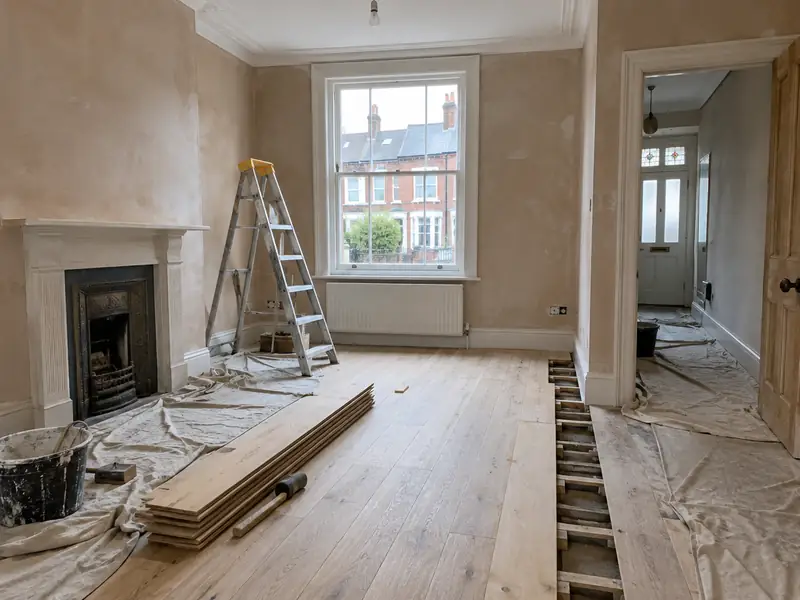
A whole-house renovation is a planned refurbishment of an entire home, typically combining rewiring, heating, plastering, new kitchen and bathroom, flooring and decoration, and sometimes layout changes, carried out in a logical order under one project.
Planning a whole-house renovation for a home in Belfast means making a handful of decisions about materials, layout, finish and timing. We help you work through them at a free survey, then confirm in writing what it will cost for the options you pick. Most projects of this type need 8–24 weeks on site, depending on scope, and we cover every BT1, BT2, BT6 and BT7 address as well as the rest of County Antrim.
- Guide price
- £38,500–£103,000 inc VAT
- Time on site
- 8–24 weeks on site, depending on scope
- Postcodes
- BT1, BT2, BT6, BT7 and BT12
- Planning rules
- Northern Ireland
- Local area
- County Antrim
- Survey
- Free, with a written quote
What should you budget for a whole-house renovation in Belfast?
The table below shows guide prices for a whole-house renovation in Belfast. They are based on rates in Northern Ireland, which run about 14% below the national guide, giving an overall range of £38,500–£103,000. All figures include VAT and are firmed up after a free site survey.
| Type of job | What it usually involves | Guide in Belfast |
|---|---|---|
| Light refurbishment | Decoration, flooring, minor repairs and perhaps one new kitchen or bathroom. | £13,000–£38,500 |
| Full refurbishment | Rewire, heating, plastering, new kitchen and bathroom, flooring and decoration throughout a 3-bed house. | £38,500–£103,000 |
| Renovation with structural changes | A full refurbishment plus wall removal, layout changes or extra bathrooms. | £86,000–£155,000 |
Expect these to shape the final quote:
- Size of the house and number of rooms being renovated
- Kitchen and bathroom specification
- Structural or layout changes and associated approvals
- Hidden problems such as damp, rot or outdated drainage
Scope of the work
- Room-by-room survey and a planned order of works
- Strip-out of old kitchens, bathrooms, flooring and finishes
- Rewiring and new consumer unit by qualified electricians, with certificates
- Plastering, skimming and repairs to ceilings and walls
- Flooring, internal doors, skirting and joinery
- Decoration and a final clean before handover
Building in Belfast
Belfast has long rows of red-brick Victorian terraces, Edwardian villas in the north and south of the city and large post-war estates, while towns such as Ballymena, Antrim, Larne and Carrickfergus mix terraces, semis and newer developments. Dark basalt appears in older rural buildings, and pebbledash or roughcast is a very common finish.
Terraces suit loft conversions and rear extensions, and many need window and roof renewal. Pebbledashed homes commonly need re-rendering, and detached rural houses often take extensions, porches and driveways.
That mix of housing shapes how we approach a whole-house renovation in Belfast: the age and construction of your home affect the materials, the method and, in the end, the price.
Do you need permission in Belfast?
England, Wales, Scotland and Northern Ireland each handle planning a little differently. Belfast comes under Northern Ireland, covered below, and we raise any questions with the council before your quote is finalised.
Internal improvements do not need planning permission in Northern Ireland unless the building is listed.
The Building Regulations (Northern Ireland) apply to structural work, drainage and ventilation; electrical work should be tested and certified.
Rules change and every property is different, so we check the planning history and constraints for your address before we quote.
How does the job run?
Free site survey
We begin by looking at the job in person. During the free survey we discuss options, materials and budget for a whole-house renovation, and photograph or measure anything the quote needs to reflect.
Written quote
We put everything into a written, fixed-price quote: the specification, what's excluded, staged payments and the expected time on site. Take whatever time you need to decide; there's no pressure to commit.
Getting ready
With the quote agreed, we book the work in and handle preparation: permissions where needed, building control notifications, material orders and access arrangements for your Belfast property.
On site to finish
Work goes ahead as scheduled and you deal with one contact throughout. When the last trade leaves, we clear and clean the site, talk you through what has been done and pass on any certificates and care instructions.
What you can expect from us
Frequently asked questions
Do you cover Castlereagh, Newtownabbey and Lisburn?
Yes. As well as Belfast, we cover Castlereagh, Newtownabbey and Lisburn and the rest of County Antrim. Our coverage is UK-wide, so the process is the same wherever you are: a free site survey, a quote in writing that fixes the price for the agreed scope, and one point of contact while the work is planned and carried out.
Do I need planning permission to renovate?
Most internal renovation work does not need planning permission, but it depends on what changes, your home's location, whether it is listed or in a conservation area, and which UK nation you are in. Listed buildings usually need consent for internal and external changes. Altering windows, adding dormers or changing the outside appearance in a conservation area may also need permission. We check before quoting.
How long will a whole-house renovation take?
On a typical home, allow 8–24 weeks on site, depending on scope. Larger projects, older buildings and extra work found once things are opened up can extend that, while simpler jobs may be shorter. Your quote includes an estimate of time on site, and your point of contact keeps you updated on the programme as the work progresses.
Can we live in the house while it is renovated?
Living in a house during a full renovation is possible but hard, especially while rewiring, plastering and the kitchen and bathroom are being done. Many people move out for the noisiest weeks or stay elsewhere for the whole project. If you stay, we can phase the work room by room and keep one bathroom and a basic kitchen working for as long as possible. We discuss this at the survey.
What happens if you find damp or rot?
If we find damp or rot during a renovation, we stop that area, show you the problem and explain the likely cause, such as a leaking gutter, bridged damp-proof course or poor ventilation. We then give you a written price to fix the cause and repair the damage before carrying on. Treating the cause matters more than treating the symptom, so we focus on that first.
Near Belfast
Whether you're in the centre of Belfast or on its outskirts, BT1, BT2, BT6 and BT7 addresses are covered. We extend the same service, and the same fixed-price approach, to Castlereagh, Newtownabbey and Lisburn.