
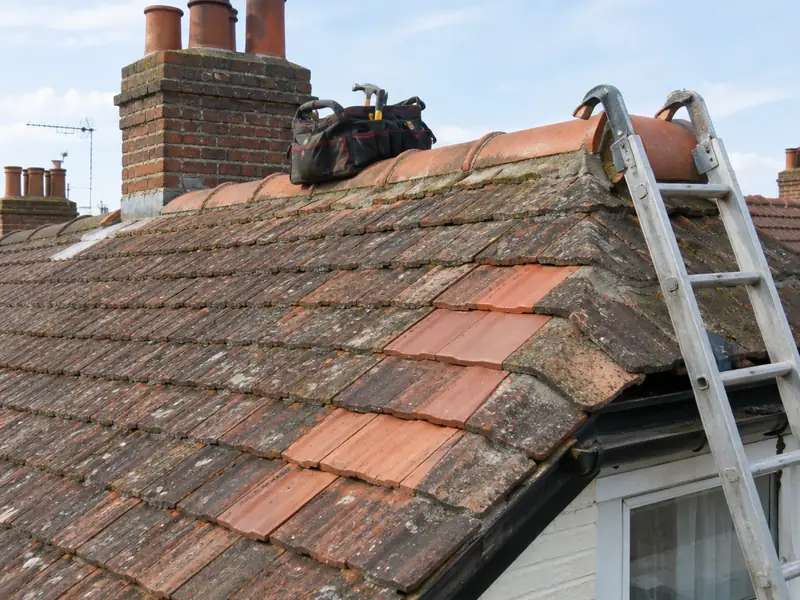
Roof repairs fix specific faults in a pitched or flat roof, such as slipped or cracked tiles, loose ridges, failed flashing, leaking valleys or chimney defects, to stop water getting in without replacing the whole roof.
Homes across Oxfordshire vary a great deal, so we price roof repairs only after seeing the property. Our coverage takes in Oxford, Banbury, Abingdon and Bicester and the surrounding districts. As a guide, expect £350–£1,700 including VAT in the South East; the final figure depends on size, materials and access. Any permissions are checked against the rules for England before we quote.
- Guide price
- £350–£1,700 inc VAT
- Time on site
- Half a day to 3 days for most repairs
- Planning rules
- England
- Price level
- About 12% above the national guide
- Towns listed
- 6
- Survey
- Free, with a written quote
Roof repairs prices in Oxfordshire
No two jobs cost exactly the same, but the ranges below give a fair picture of roof repairs in Oxfordshire. Pricing for the South East runs about 12% above the national guide, and the overall guide is £350–£1,700 with VAT included. We'll confirm your figure after surveying the property for free.
| Type of job | What it usually involves | Guide in Oxfordshire |
|---|---|---|
| Minor repair | Replacing a handful of slipped or broken tiles from ladders or a roof ladder. | £200–£550 |
| Ridge, flashing or valley repair | Rebedding a ridge run, renewing flashing or relining a short valley. | £450–£1,350 |
| Larger repair with scaffolding | Several faults, chimney work or repairs on high roofs needing scaffolding. | £1,100–£3,400 |
Your price depends mostly on:
- Number and type of faults to repair
- Access: ladders, roof ladders, towers or full scaffolding
- Matching tiles, slates or lead to the existing roof
- Hidden damage to battens, felt or timbers found during repair
What do you get?
- Inspection to trace the source of leaks or damage
- Photos of the problem areas and a clear written explanation
- Safe access by ladders, towers or scaffolding as needed
- Replacement of slipped, cracked or missing tiles and slates
- Ridge, hip and verge rebedding or dry-fix conversion
- Clearing debris from gutters and the work area
Homes in Oxfordshire
West Oxfordshire's Cotswold villages are built of honey-coloured limestone, while Banbury and the north use orange ironstone. Oxford has Victorian terraces in Jericho and East Oxford and Gothic brick villas in North Oxford. Didcot, Bicester and Witney have grown with large new estates around older market-town centres.
Stone cottages often need lime pointing and conservation-sensitive windows. Victorian terraces suit loft conversions and side-return extensions, and newer estate homes commonly take garage conversions and garden landscaping.
Low ground around Oxford and Abingdon floods from the Thames and its tributaries; the Cotswold uplands are more exposed to wind and frost.
Do you need permission in Oxfordshire?
Homes in Oxfordshire come under the regulations for England, summarised below. We don't rely on general rules alone: we confirm the position for your address with the council before a quote goes out.
Re-roofing a house with similar materials does not usually need planning permission in England. Listed buildings and conservation areas may need consent if the covering changes.
Replacing more than a quarter of a roof’s covering counts as renovation under Building Regulations, so the work is notified and the roof insulation may need upgrading. Bats are protected across the UK; if they roost under roof tiles, soffits or fascias, work stops and a licensed ecologist advises before it restarts.
Rules change and every property is different, so we check the planning history and constraints for your address before we quote.
From survey to handover
Survey and measure
Book a visit and we'll come to you. The survey covers measurements, the state of what's there now and any obvious constraints, so the price that follows is based on your actual home, not an average.
Written quote
The quote arrives in writing, not over the phone. It covers the full scope, the finishes you've chosen, any exclusions and the payment schedule, with a fixed price tied to that specification.
Booking the work
Before anyone starts, we confirm the programme in writing, check whether consents are required and arrange deliveries. If a skip or scaffolding on the road needs a permit, we apply for it.
Build and hand over
On site, the agreed plan is followed and any change is put in writing first. At completion we do a final clean, go through the snagging list with you and leave you with the relevant documents.
How we work
Questions about roof repairs in Oxfordshire
Is the price fixed?
Yes, for the specification we agree. Your written quote sets out exactly what is included at a fixed price. It only changes if you ask for something different, or if a problem the survey could not reasonably reveal later needs extra work. In either case we explain the change and confirm it in writing before going ahead.
Can I stay at home during the work?
In most cases, yes. Most people can live at home throughout, and we plan the work to keep disruption down by protecting floors, agreeing working hours and keeping access routes clear. Bigger jobs affecting kitchens, bathrooms or heating may mean a short spell with reduced facilities, and we talk this through with you at the survey.
Do I need scaffolding for a roof repair?
Not every roof repair needs scaffolding. Small repairs on low roofs can often be done safely from ladders and roof ladders, and towers suit some chimney and gable work. Repairs on two-storey roofs, steep slopes, chimneys or large areas usually need scaffolding for safe working, which adds cost. We choose the safest practical access and include it in the written quote.
How can I spot roof problems early?
Spotting roof problems early saves money. Look from the ground after storms for slipped or missing tiles, cracked ridge mortar or debris in gutters. In the loft, check for daylight, damp patches, stained timbers or wet insulation. Inside, watch for ceiling stains and peeling paint near outside walls. Clearing gutters each autumn prevents overflow damage.
Why is my roof leaking?
Roof leaks usually come from slipped or cracked tiles, failed flashing around chimneys and walls, leaking valleys, blocked gutters overflowing, or perished felt beneath the tiles. Water can travel along timbers before it drips, so the stain on your ceiling may not be directly under the fault. Condensation in the loft can also look like a leak. We trace the source before recommending a repair.
Towns in Oxfordshire
Looking for roof repairs somewhere in Oxfordshire? Start with the towns below; each links to a page with pricing for your region and coverage details.