
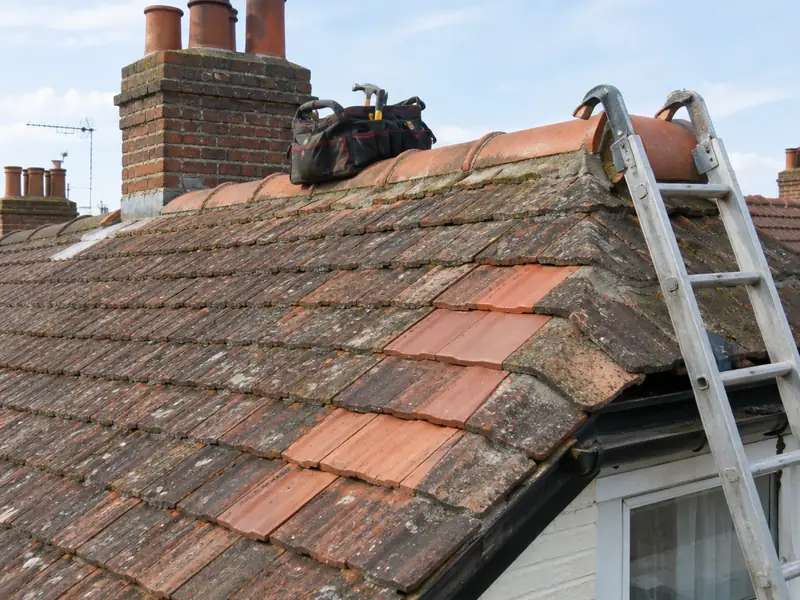
Roof repairs fix specific faults in a pitched or flat roof, such as slipped or cracked tiles, loose ridges, failed flashing, leaking valleys or chimney defects, to stop water getting in without replacing the whole roof.
Whether you live in one of the larger towns, such as Redruth, Falmouth, St Austell and Truro, or somewhere quieter in Cornwall, the way we handle roof repairs is identical. We survey, agree the specification with you, and confirm a fixed price on paper. Everything is planned under the regulations in force in England, and guide costs in the South West sit at £300–£1,550 with VAT.
- Guide price
- £300–£1,550 inc VAT
- Time on site
- Half a day to 3 days for most repairs
- Planning rules
- England
- Price level
- About 2% above the national guide
- Towns listed
- 7
- Survey
- Free, with a written quote
How much do roof repairs cost in Cornwall?
To help you plan, we show what roof repairs typically costs in Cornwall instead of holding figures back for a sales call. The range is £300–£1,550 with VAT, using rates in the South West that are about 2% above the national guide. A free survey then fixes your actual price.
| Type of job | What it usually involves | Guide in Cornwall |
|---|---|---|
| Minor repair | Replacing a handful of slipped or broken tiles from ladders or a roof ladder. | £200–£500 |
| Ridge, flashing or valley repair | Rebedding a ridge run, renewing flashing or relining a short valley. | £400–£1,200 |
| Larger repair with scaffolding | Several faults, chimney work or repairs on high roofs needing scaffolding. | £1,000–£3,100 |
What moves the price up or down:
- Number and type of faults to repair
- Access: ladders, roof ladders, towers or full scaffolding
- Matching tiles, slates or lead to the existing roof
- Hidden damage to battens, felt or timbers found during repair
What do you get?
- Inspection to trace the source of leaks or damage
- Safe access by ladders, towers or scaffolding as needed
- Replacement of slipped, cracked or missing tiles and slates
- Ridge, hip and verge rebedding or dry-fix conversion
- Lead flashing, valley and chimney junction repairs
- Temporary weatherproofing where a full repair must wait
Homes in Cornwall
Older Cornish homes are often built of granite or slatey local stone, with slate roofs and sometimes slate-hung walls facing the weather. Cob cottages survive in places, Truro and Falmouth keep Georgian and Victorian streets, and many towns have rendered post-war houses, bungalows and newer estates on their edges.
Stone and cob properties often need breathable lime render, careful repointing and roof repairs. Post-war and newer homes commonly benefit from new windows, roofline renewal, external rendering and single-storey extensions.
Cornwall faces Atlantic gales, driving rain and salt-laden air, so render, pointing and window hardware on exposed elevations need a suitably robust specification.
Do you need permission in Cornwall?
The notes below cover England, which is where Cornwall sits. Rules change and every property is different, so we speak to the council before pricing your job.
Re-roofing a house with similar materials does not usually need planning permission in England. Listed buildings and conservation areas may need consent if the covering changes.
Replacing more than a quarter of a roof’s covering counts as renovation under Building Regulations, so the work is notified and the roof insulation may need upgrading. Bats are protected across the UK; if they roost under roof tiles, soffits or fascias, work stops and a licensed ecologist advises before it restarts.
Rules change and every property is different, so we check the planning history and constraints for your address before we quote.
From survey to handover
Free site survey
A free survey comes first. It gives us what we need to price roof repairs properly, including dimensions, existing materials and access for deliveries, and gives you the chance to ask anything you like.
Price and scope agreed
The quote arrives in writing, not over the phone. It covers the full scope, the finishes you've chosen, any exclusions and the payment schedule, with a fixed price tied to that specification.
Dates and permissions
With the quote agreed, we book the work in and handle preparation: permissions where needed, building control notifications, material orders and access arrangements for your Cornwall property.
On site to finish
On site, the agreed plan is followed and any change is put in writing first. At completion we do a final clean, go through the snagging list with you and leave you with the relevant documents.
How we work
Frequently asked questions
Why is my roof leaking?
Roof leaks usually come from slipped or cracked tiles, failed flashing around chimneys and walls, leaking valleys, blocked gutters overflowing, or perished felt beneath the tiles. Water can travel along timbers before it drips, so the stain on your ceiling may not be directly under the fault. Condensation in the loft can also look like a leak. We trace the source before recommending a repair.
What happens at the survey?
We visit your home at a time that suits you, look at the area involved, take measurements and check access, condition and any services that might be affected. We talk through what you want from roof repairs, explain the options and answer questions. There is no charge and no obligation; afterwards we send a written quote.
Can I stay at home during the work?
In most cases, yes. Most people can live at home throughout, and we plan the work to keep disruption down by protecting floors, agreeing working hours and keeping access routes clear. Bigger jobs affecting kitchens, bathrooms or heating may mean a short spell with reduced facilities, and we talk this through with you at the survey.
Will my home insurance pay for the repair?
Home insurance policies often cover sudden storm damage but usually exclude wear and tear or gradual deterioration. If you think the damage is storm-related, contact your insurer before repairs, apart from urgent temporary work, and take photos. We can provide a written report and photographs describing the damage and cause to help with your claim. The insurer decides what is covered.
What is dry-fix ridge and is it better than mortar?
Dry-fix ridge systems use screws, clips and weather seals instead of mortar to hold ridge and hip tiles in place. They avoid the cracking and loosening that mortar suffers over time, need less upkeep and are now common on new roofs. Mortar-bedded ridges suit some period or conservation-area roofs. We recommend the method that suits your roof and its location.
Towns in Cornwall
We offer roof repairs in each of the towns below, all within Cornwall. Select yours for guide prices, postcodes covered and nearby places.