
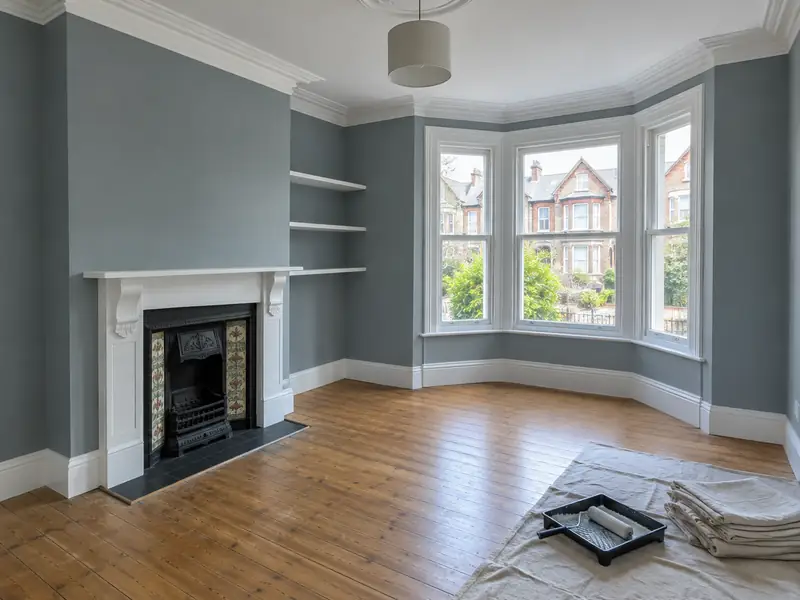
Painting and decorating is preparing and finishing the surfaces of a home, including filling, sanding, priming and painting walls, ceilings and woodwork, hanging wallpaper and painting exterior walls and joinery, to protect them and refresh how rooms look.
Our guide for painting and decorating in Wales comes to £1,100–£2,800 with VAT added, and that range applies across Gwent, including Newport, Gwent, Cwmbran, Pontypool and Ebbw Vale. Your own price depends on the size of the job, the specification and how easy it is to work on the site. We survey for free, check any consents needed under the rules in Wales, and then put the price in writing.
- Guide price
- £1,100–£2,800 inc VAT
- Time on site
- 1–2 days per room; 3–7 days for a house exterior
- Planning rules
- Wales
- Price level
- About 8% below the national guide
- Towns listed
- 4
- Survey
- Free, with a written quote
Painting and decorating prices in Gwent
Below is a breakdown of typical costs for painting and decorating in Gwent. Because rates in Wales are about 8% below the national guide, the overall guide comes to £1,100–£2,800, including VAT. Size, materials and access move the figure, and a free-of-charge survey settles it.
| Type of job | What it usually involves | Guide in Gwent |
|---|---|---|
| Single room | Walls, ceiling and woodwork in one average bedroom or living room. | £300–£850 |
| House exterior | Masonry and joinery on a typical semi, including access equipment. | £2,300–£5,500 |
| Whole interior of a 3-bed house | Every room, hallway, stairs and landing, including woodwork. | £2,800–£6,000 |
What moves the price up or down:
- Number and size of rooms, including ceiling height
- Whether woodwork, doors and wallpaper are included
- Paint quality, colour changes and number of coats
- Exterior access, scaffolding and the condition of surfaces
What’s included?
- Survey of each surface and agreed colours and finishes
- Floors, furniture and fittings protected with dust sheets and masking
- Mist coat on new plaster before finishing coats
- Woodwork sanded, primed where bare, and painted
- Wallpaper stripped or hung where included
- Furniture replaced, waste removed and a final tidy-up
Homes in Gwent
Newport has Victorian and Edwardian terraces and interwar suburbs, while valley towns such as Ebbw Vale, Abertillery and Blaenavon have stone terraces stepped along steep hillsides. Monmouth and Abergavenny keep Georgian centres, and Cwmbran was built as a post-war new town with planned estates.
Valley terraces commonly need repointing, roof work and window replacement, and steep plots can make extensions more involved. Newport terraces suit loft rooms, while Cwmbran homes often take garage conversions and cladding upgrades.
The valleys are among the wettest parts of south Wales, and steep sites, old mine workings and retaining walls all affect building work.
Planning and building rules in Gwent
The notes below cover Wales, which is where Gwent sits. Rules change and every property is different, so we speak to the council before pricing your job.
Internal improvements do not need planning permission in Wales unless the building is listed.
Building Regulations in Wales cover notifiable electrical work, drainage, ventilation and any structural change.
Rules change and every property is different, so we check the planning history and constraints for your address before we quote.
The four stages
We look at the job
We arrange a free site survey on a date convenient to you. We measure up, look at the existing structure and access, and discuss your plans for painting and decorating so the price reflects your home.
Price and scope agreed
We put everything into a written, fixed-price quote: the specification, what's excluded, staged payments and the expected time on site. Take whatever time you need to decide; there's no pressure to commit.
Getting ready
Before anyone starts, we confirm the programme in writing, check whether consents are required and arrange deliveries. If a skip or scaffolding on the road needs a permit, we apply for it.
On site to finish
The job proceeds in the order set out in the programme, with dust and debris kept under control. Finally we tidy away, inspect the work together and pass the finished project over to you with its paperwork.
How we work
Frequently asked questions
Can you paint over wallpaper?
Painting over wallpaper is possible if it is firmly stuck, but it often leads to bubbles and visible seams, and makes future stripping harder. In most cases, stripping the paper, filling and lining the walls, or skimming them, gives a better and longer-lasting finish. We check how well the paper is bonded during the survey and explain the options and costs.
What happens at the survey?
We visit your home at a time that suits you, look at the area involved, take measurements and check access, condition and any services that might be affected. We talk through what you want from painting and decorating, explain the options and answer questions. There is no charge and no obligation; afterwards we send a written quote.
How long does it take to decorate a room?
Decorating an average room usually takes one to two days, allowing time for preparation, a mist coat or primer where needed and two finishing coats. Hallways, stairs and landings take longer because of the height and the amount of woodwork. Wallpapering adds time for stripping and lining. We give you a schedule so you know which rooms will be out of use and when.
What paint finish should I choose?
Matt emulsion hides imperfections and gives a soft look, which suits ceilings and living rooms. Eggshell or soft sheen finishes are more washable, so they suit kitchens, hallways and children's rooms. For woodwork, satin gives a modern low-shine look, while gloss is harder-wearing and more traditional. Bathrooms benefit from paints made to resist moisture and mould.
Who do I deal with during the job?
One point of contact manages your project from survey to handover. They schedule the trades working under our contract, keep you updated on progress, and are the person to call with any question. You don't need to coordinate builders, electricians or decorators separately, because that is part of what we do.
Towns in Gwent
These are the towns in Gwent where you can book a free survey for painting and decorating. Each has its own page with guide prices and coverage details.