
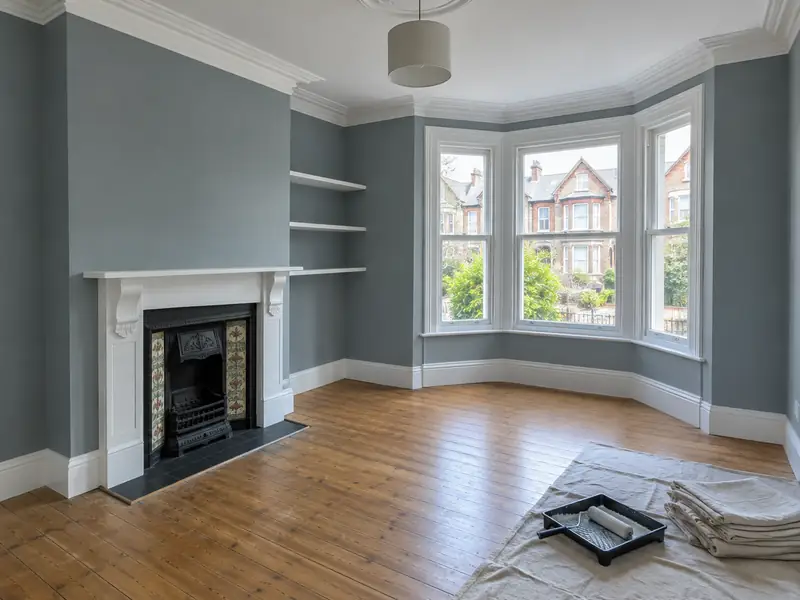
Painting and decorating is preparing and finishing the surfaces of a home, including filling, sanding, priming and painting walls, ceilings and woodwork, hanging wallpaper and painting exterior walls and joinery, to protect them and refresh how rooms look.
Cost is usually the first question about painting and decorating, so here is the guide for Northern Ireland: £1,050–£2,600 including VAT. We cover the whole of County Antrim, with Belfast, Lisburn, Newtownabbey and Carrickfergus among the main centres. Because each UK nation sets its own rules, we check the requirements in Northern Ireland for your property, then put a firm price on paper following a free survey.
- Guide price
- £1,050–£2,600 inc VAT
- Time on site
- 1–2 days per room; 3–7 days for a house exterior
- Planning rules
- Northern Ireland
- Price level
- About 14% below the national guide
- Towns listed
- 7
- Survey
- Free, with a written quote
How much does painting and decorating cost in County Antrim?
No two jobs cost exactly the same, but the ranges below give a fair picture of painting and decorating in County Antrim. Pricing for Northern Ireland runs about 14% below the national guide, and the overall guide is £1,050–£2,600 with VAT included. We'll confirm your figure after surveying the property for free.
| Type of job | What it usually involves | Guide in County Antrim |
|---|---|---|
| Single room | Walls, ceiling and woodwork in one average bedroom or living room. | £300–£750 |
| House exterior | Masonry and joinery on a typical semi, including access equipment. | £2,200–£5,200 |
| Whole interior of a 3-bed house | Every room, hallway, stairs and landing, including woodwork. | £2,600–£5,600 |
The main things that change the figure:
- Number and size of rooms, including ceiling height
- Amount of preparation, filling and repairs needed
- Whether woodwork, doors and wallpaper are included
- Exterior access, scaffolding and the condition of surfaces
Scope of the work
- Survey of each surface and agreed colours and finishes
- Floors, furniture and fittings protected with dust sheets and masking
- Mist coat on new plaster before finishing coats
- Woodwork sanded, primed where bare, and painted
- Wallpaper stripped or hung where included
- Furniture replaced, waste removed and a final tidy-up
Housing across County Antrim
Belfast has long rows of red-brick Victorian terraces, Edwardian villas in the north and south of the city and large post-war estates, while towns such as Ballymena, Antrim, Larne and Carrickfergus mix terraces, semis and newer developments. Dark basalt appears in older rural buildings, and pebbledash or roughcast is a very common finish.
Terraces suit loft conversions and rear extensions, and many need window and roof renewal. Pebbledashed homes commonly need re-rendering, and detached rural houses often take extensions, porches and driveways.
The north coast and glens are exposed to strong winds, salt and frequent rain, which affects render, roofline and outdoor work.
Planning and building rules in County Antrim
Which rules apply depends on where you live. For County Antrim, the answer is Northern Ireland, and the points below reflect that; we verify them with the council before quoting.
Internal improvements do not need planning permission in Northern Ireland unless the building is listed.
The Building Regulations (Northern Ireland) apply to structural work, drainage and ventilation; electrical work should be tested and certified.
Rules change and every property is different, so we check the planning history and constraints for your address before we quote.
The four stages
A visit to your home
Book a visit and we'll come to you. The survey covers measurements, the state of what's there now and any obvious constraints, so the price that follows is based on your actual home, not an average.
Price and scope agreed
Next you receive a written quote with a fixed price for the agreed specification. It lists what is included, what is not, and how payments are staged, so you can compare it properly.
Dates and permissions
We handle the paperwork side: checking whether planning permission or building control approval is needed, submitting applications where they are, and scheduling the trades and materials around your dates.
Finish and handover
Our trades complete painting and decorating while your point of contact keeps you updated. When everything is finished, we clear the site, take away waste and go through the result with you before handover.
What you can expect from us
Frequently asked questions
What happens at the survey?
We visit your home at a time that suits you, look at the area involved, take measurements and check access, condition and any services that might be affected. We talk through what you want from painting and decorating, explain the options and answer questions. There is no charge and no obligation; afterwards we send a written quote.
Who do I deal with during the job?
One point of contact manages your project from survey to handover. They schedule the trades working under our contract, keep you updated on progress, and are the person to call with any question. You don't need to coordinate builders, electricians or decorators separately, because that is part of what we do.
How much does it cost to decorate a room?
Decorating an average room costs roughly £350–£900, covering walls, ceiling and woodwork, while three rooms typically come to £1,050–£2,600. Large living rooms, high ceilings, stairwells and wallpapering cost more, and so do rooms needing a lot of filling and sanding. Strong colour changes may need an extra coat. We confirm a fixed price for the agreed rooms after the survey.
Do I need to move my furniture?
You only need to remove small items, ornaments, pictures and anything fragile. We move larger furniture to the middle of the room and cover it, or into another room where agreed. Please empty bookshelves and cabinets that need moving. Let us know about anything very heavy, valuable or awkward, such as pianos or large wardrobes, so we can plan around it.
How often should exterior woodwork be repainted?
Exterior woodwork, such as timber windows, doors and fascias, usually needs repainting every five to eight years, depending on exposure, paint quality and how well it was prepared. South-facing and coastal elevations wear faster. Look out for flaking, cracking or bare patches, which let water into the timber. Repainting before rot sets in costs far less than replacing joinery.
Towns in County Antrim
Below is our list of County Antrim towns for painting and decorating. If yours isn't shown, we may still cover it, so it is worth asking us directly.