
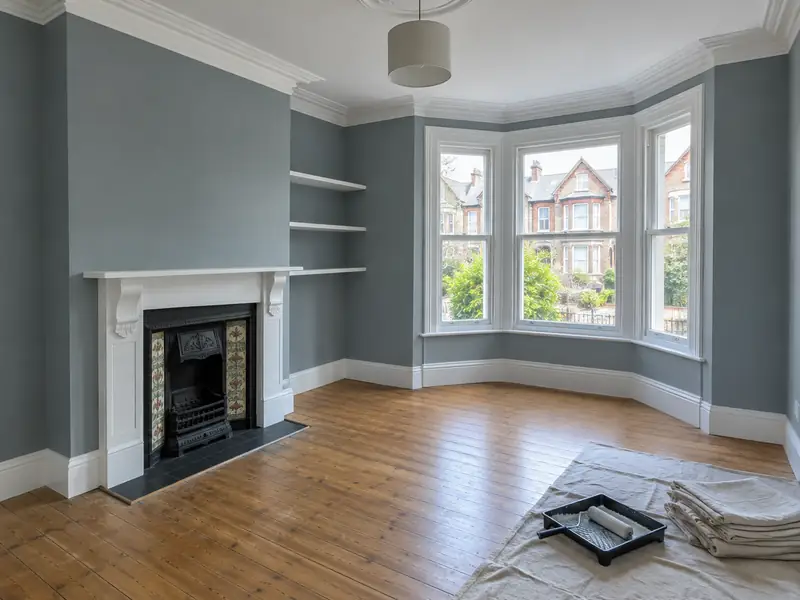
Painting and decorating is preparing and finishing the surfaces of a home, including filling, sanding, priming and painting walls, ceilings and woodwork, hanging wallpaper and painting exterior walls and joinery, to protect them and refresh how rooms look.
Whatever type of house you own in Belfast, we start by looking at how painting and decorating would fit it rather than offering a standard package. We cover BT1, BT2, BT6 and BT7 and neighbouring places such as Castlereagh, Newtownabbey and Lisburn. One named person looks after you from survey to handover, and nothing is booked until you hold our figure in writing, fixed for the work described.
- Guide price
- £1,050–£2,600 inc VAT
- Time on site
- 1–2 days per room; 3–7 days for a house exterior
- Postcodes
- BT1, BT2, BT6, BT7 and BT12
- Planning rules
- Northern Ireland
- Local area
- County Antrim
- Survey
- Free, with a written quote
Painting and decorating prices in Belfast
These are guide costs, not quotes. For painting and decorating in Belfast the range is £1,050–£2,600, VAT included, reflecting prices in Northern Ireland that are about 14% below the national guide. Once we have visited for a free survey, you get a firm figure for the scope you approve.
| Type of job | What it usually involves | Guide in Belfast |
|---|---|---|
| Single room | Walls, ceiling and woodwork in one average bedroom or living room. | £300–£750 |
| House exterior | Masonry and joinery on a typical semi, including access equipment. | £2,200–£5,200 |
| Whole interior of a 3-bed house | Every room, hallway, stairs and landing, including woodwork. | £2,600–£5,600 |
Expect these to shape the final quote:
- Number and size of rooms, including ceiling height
- Amount of preparation, filling and repairs needed
- Whether woodwork, doors and wallpaper are included
- Paint quality, colour changes and number of coats
What’s included?
- Survey of each surface and agreed colours and finishes
- Filling cracks and holes, sanding and spot priming
- Mist coat on new plaster before finishing coats
- Two finishing coats to walls and ceilings as standard
- Wallpaper stripped or hung where included
- Furniture replaced, waste removed and a final tidy-up
Homes in County Antrim
Belfast has long rows of red-brick Victorian terraces, Edwardian villas in the north and south of the city and large post-war estates, while towns such as Ballymena, Antrim, Larne and Carrickfergus mix terraces, semis and newer developments. Dark basalt appears in older rural buildings, and pebbledash or roughcast is a very common finish.
The north coast and glens are exposed to strong winds, salt and frequent rain, which affects render, roofline and outdoor work.
These patterns matter for painting and decorating: older walls, roofs and floors in Belfast can need different materials or extra preparation compared with newer homes.
Permissions for painting and decorating in Belfast
Each UK nation sets its own consent rules, and Belfast is in Northern Ireland. What follows is a plain summary; we check the specifics for your property with the council before pricing anything.
Internal improvements do not need planning permission in Northern Ireland unless the building is listed.
The Building Regulations (Northern Ireland) apply to structural work, drainage and ventilation; electrical work should be tested and certified.
Rules change and every property is different, so we check the planning history and constraints for your address before we quote.
What happens after you get in touch?
A visit to your home
We arrange a free site survey on a date convenient to you. We measure up, look at the existing structure and access, and discuss your plans for painting and decorating so the price reflects your home.
Written quote
The quote arrives in writing, not over the phone. It covers the full scope, the finishes you've chosen, any exclusions and the payment schedule, with a fixed price tied to that specification.
Getting ready
Preparation matters as much as the build. We agree access, parking and working hours with you, order materials in good time, and confirm any permissions so the job isn't held up once it starts.
Build and hand over
The job proceeds in the order set out in the programme, with dust and debris kept under control. Finally we tidy away, inspect the work together and pass the finished project over to you with its paperwork.
How we work
Frequently asked questions
When is the right time to paint the outside of a house?
Exterior painting needs dry weather and mild temperatures, so late spring to early autumn is usually the right time. Paint should not be applied to damp surfaces, in rain or frost, or in strong direct sun. Surfaces need time to dry out after rain before work starts. We plan exterior work around the forecast and pause if conditions turn.
Which postcodes in Belfast do you cover?
We cover BT1, BT2, BT6 and BT7, along with the rest of County Antrim. If your postcode is not listed, get in touch anyway: our coverage is UK-wide, and we can usually arrange a survey wherever you live. Enter your postcode in the guide-price tool or contact form and we will confirm.
How often should exterior woodwork be repainted?
Exterior woodwork, such as timber windows, doors and fascias, usually needs repainting every five to eight years, depending on exposure, paint quality and how well it was prepared. South-facing and coastal elevations wear faster. Look out for flaking, cracking or bare patches, which let water into the timber. Repainting before rot sets in costs far less than replacing joinery.
How long will painting and decorating take?
On a typical home, allow 1–2 days per room; 3–7 days for a house exterior. Larger projects, older buildings and extra work found once things are opened up can extend that, while simpler jobs may be shorter. Your quote includes an estimate of time on site, and your point of contact keeps you updated on the programme as the work progresses.
What paint finish should I choose?
Matt emulsion hides imperfections and gives a soft look, which suits ceilings and living rooms. Eggshell or soft sheen finishes are more washable, so they suit kitchens, hallways and children's rooms. For woodwork, satin gives a modern low-shine look, while gloss is harder-wearing and more traditional. Bathrooms benefit from paints made to resist moisture and mould.
Also covering areas around Belfast
We welcome enquiries from all BT1, BT2, BT6 and BT7 postcodes in Belfast, plus Castlereagh, Newtownabbey and Lisburn. Each one gets the same survey at no charge and a written price fixed for the work described.