
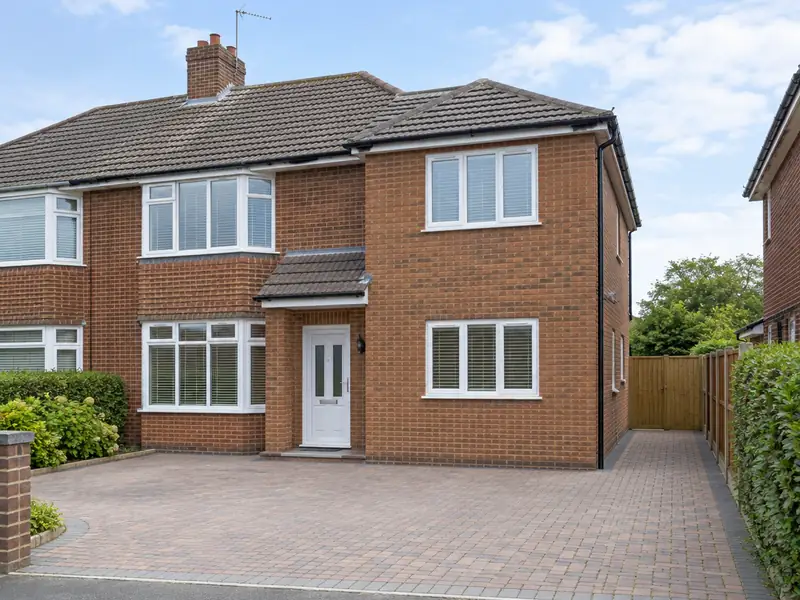
A double-storey extension adds two floors of new space to your house in one build, typically a larger kitchen or living room downstairs with an extra bedroom, bathroom or en-suite above, sharing one set of foundations and one roof.
For a homeowner in Belfast, planning a double-storey extension tends to begin with two questions: what will it cost, and how disruptive will it be? Our guide range is £52,000–£103,000 including VAT, and a typical job runs to 14–22 weeks on site. Both numbers firm up once we have seen the property, measured up and agreed exactly what is included.
- Guide price
- £52,000–£103,000 inc VAT
- Time on site
- 14–22 weeks on site
- Postcodes
- BT1, BT2, BT6, BT7 and BT12
- Planning rules
- Northern Ireland
- Local area
- County Antrim
- Survey
- Free, with a written quote
Double-storey extensions prices in Belfast
No two jobs cost exactly the same, but the ranges below give a fair picture of a double-storey extension in Belfast. Pricing for Northern Ireland runs about 14% below the national guide, and the overall guide is £52,000–£103,000 with VAT included. We'll confirm your figure after surveying the property for free.
| Type of job | What it usually involves | Guide in Belfast |
|---|---|---|
| Small (15–20m² total) | A compact rear or side extension adding a small room on each floor. | £34,500–£56,000 |
| Typical (30–40m² total) | A larger kitchen or living room below with a double bedroom or en-suite above. | £52,000–£103,000 |
| Large (50m² plus total) | Wide or deep extensions, often with a new bathroom, steelwork and high-spec glazing. | £86,000–£155,000 |
Expect these to shape the final quote:
- Combined floor area across both storeys
- Bathrooms, en-suites and plumbing on the upper floor
- Foundation depth, ground conditions and drains to divert
- Scaffolding duration, access and the level of finishes
What do you get?
- Groundworks, foundations and below-ground drainage
- First-floor joists, stud walls and new openings upstairs
- Roof structure tied into the existing roof, tiled to match
- Scaffolding for the full build, erected and inspected
- Electrics, plumbing and heating by qualified trades, with certificates
- Windows, external doors, plastering and internal doors
Building in Belfast
Belfast has long rows of red-brick Victorian terraces, Edwardian villas in the north and south of the city and large post-war estates, while towns such as Ballymena, Antrim, Larne and Carrickfergus mix terraces, semis and newer developments. Dark basalt appears in older rural buildings, and pebbledash or roughcast is a very common finish.
The north coast and glens are exposed to strong winds, salt and frequent rain, which affects render, roofline and outdoor work.
That variety is why a guide price for a double-storey extension in Belfast is only a starting point; the survey shows what your particular property needs.
Do you need permission in Belfast?
Belfast is in Northern Ireland, so the planning and building rules set out below are the ones that apply. We confirm the details with the council before we quote.
In Northern Ireland, two-storey extensions usually need planning permission from the council.
Building control approval is needed under the Building Regulations (Northern Ireland). There is no Party Wall Act in Northern Ireland.
Rules change and every property is different, so we check the planning history and constraints for your address before we quote.
What happens after you get in touch?
We look at the job
We arrange a free site survey on a date convenient to you. We measure up, look at the existing structure and access, and discuss your plans for a double-storey extension so the price reflects your home.
Your fixed price
You get the price in writing, itemised so you can see where the money goes. As long as the specification stays the same, that is the price you pay for a double-storey extension.
Plan and prepare
Once you accept, we agree start dates, order materials and deal with any planning, building control or neighbour notices the job needs. You'll know who is coming and when before work begins.
Build and hand over
On site, the agreed plan is followed and any change is put in writing first. At completion we do a final clean, go through the snagging list with you and leave you with the relevant documents.
Why homeowners choose us
Frequently asked questions
Do I need planning permission in Belfast?
It depends on the work, the size of the project, your property type and whether the building is listed or in a conservation area. Belfast is in Northern Ireland, so Northern Ireland's rules apply. Many smaller jobs need no planning application, but some still need building control approval. We check what applies to your address before quoting.
Will the extension affect my neighbours?
A double-storey extension can affect neighbours' light, outlook and privacy, which is why planning departments look closely at height, depth and window positions. Side windows facing neighbours often need obscure glass. Work near a shared wall may also need party wall notices; the Party Wall etc. Act 1996 applies in England and Wales only. We talk through these points early so the design is realistic.
Which postcodes in Belfast do you cover?
We cover BT1, BT2, BT6 and BT7, along with the rest of County Antrim. If your postcode is not listed, get in touch anyway: our coverage is UK-wide, and we can usually arrange a survey wherever you live. Enter your postcode in the guide-price tool or contact form and we will confirm.
Can the new upstairs room have its own bathroom?
A new upstairs room can usually have an en-suite, provided waste pipes can reach the soil stack or a new one can be installed. Running the waste pipe to the right falls is the main design question, and a pumped system is an option where gravity will not work. We plan bathroom positions at the design stage so pipes, ventilation and insulation are built in rather than added later.
Can we live at home while it is built?
Most families stay at home during a double-storey extension. The new structure is built outside first, and we only break through into the existing rooms near the end, usually one floor at a time. Upstairs, this may mean a bedroom is out of use for a week or two. We fit dust screens, protect floors and stairs, and plan any time without water or power in advance.
Near Belfast
If your address falls within BT1, BT2, BT6 and BT7, we cover it. The same goes for neighbouring Castlereagh, Newtownabbey and Lisburn, which we include alongside Belfast when arranging surveys and quotes.