
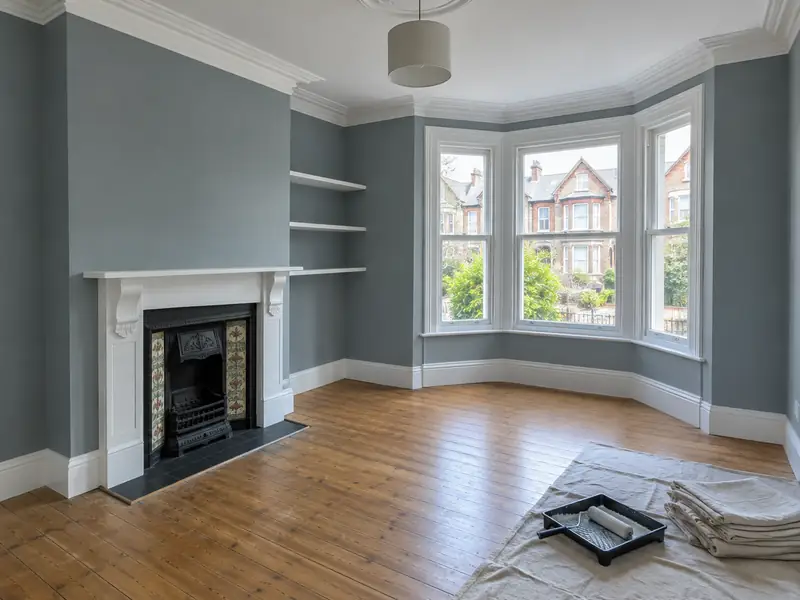
Painting and decorating is preparing and finishing the surfaces of a home, including filling, sanding, priming and painting walls, ceilings and woodwork, hanging wallpaper and painting exterior walls and joinery, to protect them and refresh how rooms look.
Homes across Hampshire vary a great deal, so we price painting and decorating only after seeing the property. Our coverage takes in Southampton, Portsmouth, Basingstoke and Gosport and the surrounding districts. As a guide, expect £1,350–£3,400 including VAT in the South East; the final figure depends on size, materials and access. Any permissions are checked against the rules for England before we quote.
- Guide price
- £1,350–£3,400 inc VAT
- Time on site
- 1–2 days per room; 3–7 days for a house exterior
- Planning rules
- England
- Price level
- About 12% above the national guide
- Towns listed
- 20
- Survey
- Free, with a written quote
Painting and decorating prices in Hampshire
Budgeting for painting and decorating in Hampshire? The numbers below include VAT and are adjusted for the South East, where costs are about 12% above the national guide. The headline range is £1,350–£3,400. Nothing is final until we have measured up at a free survey and agreed the specification with you.
| Type of job | What it usually involves | Guide in Hampshire |
|---|---|---|
| Single room | Walls, ceiling and woodwork in one average bedroom or living room. | £400–£1,000 |
| House exterior | Masonry and joinery on a typical semi, including access equipment. | £2,800–£6,700 |
| Whole interior of a 3-bed house | Every room, hallway, stairs and landing, including woodwork. | £3,400–£7,300 |
The main things that change the figure:
- Number and size of rooms, including ceiling height
- Amount of preparation, filling and repairs needed
- Whether woodwork, doors and wallpaper are included
- Paint quality, colour changes and number of coats
What do you get?
- Floors, furniture and fittings protected with dust sheets and masking
- Filling cracks and holes, sanding and spot priming
- Mist coat on new plaster before finishing coats
- Two finishing coats to walls and ceilings as standard
- Woodwork sanded, primed where bare, and painted
- Wallpaper stripped or hung where included
Housing across Hampshire
Southampton and Portsmouth have dense Victorian terraces, with plenty of post-war rebuilding after wartime bombing. Winchester keeps Georgian and medieval streets, Basingstoke expanded rapidly with 1960s and 1970s estates, and New Forest villages feature cob, thatch and brick. Brick and flint is common on the chalk downs, and new estates ring most towns.
Terraces suit loft rooms and side-return extensions; post-war and expanded-town homes often need window, roofline and cladding renewal. Cottages in the Forest may call for lime repairs and planning-sensitive windows.
Coastal areas along the Solent face salt and wind, while chalk downland is better drained but exposed; inland clay can move in dry summers.
Planning and building rules in Hampshire
England, Wales, Scotland and Northern Ireland each handle planning a little differently. Hampshire comes under England, covered below, and we raise any questions with the council before your quote is finalised.
Internal work such as a new kitchen, bathroom, flooring, plastering or decorating does not need planning permission in England, unless the house is listed, when listed building consent may be needed even for internal changes.
Some internal work is covered by Building Regulations: new electrical circuits and work in bathrooms (Part P), new drainage, structural changes, extractor ventilation and any new window. Notifiable work is certified by a registered installer or by building control.
Rules change and every property is different, so we check the planning history and constraints for your address before we quote.
How does the job run?
Survey and measure
It starts with a survey at the property, free of charge. We check condition, access and services, ask how you want the finished result to look, and answer any questions you have about painting and decorating.
Written quote
You get the price in writing, itemised so you can see where the money goes. As long as the specification stays the same, that is the price you pay for painting and decorating.
Dates and permissions
We handle the paperwork side: checking whether planning permission or building control approval is needed, submitting applications where they are, and scheduling the trades and materials around your dates.
Finish and handover
The work is carried out to the agreed specification, with floors and furniture protected and the site kept tidy. At the end we clean up, walk through the finished job with you and hand over any certificates.
How we work
Questions about painting and decorating in Hampshire
Can I stay at home during the work?
In most cases, yes. Most people can live at home throughout, and we plan the work to keep disruption down by protecting floors, agreeing working hours and keeping access routes clear. Bigger jobs affecting kitchens, bathrooms or heating may mean a short spell with reduced facilities, and we talk this through with you at the survey.
Is the price fixed?
Yes, for the specification we agree. Your written quote sets out exactly what is included at a fixed price. It only changes if you ask for something different, or if a problem the survey could not reasonably reveal later needs extra work. In either case we explain the change and confirm it in writing before going ahead.
What paint finish should I choose?
Matt emulsion hides imperfections and gives a soft look, which suits ceilings and living rooms. Eggshell or soft sheen finishes are more washable, so they suit kitchens, hallways and children's rooms. For woodwork, satin gives a modern low-shine look, while gloss is harder-wearing and more traditional. Bathrooms benefit from paints made to resist moisture and mould.
How much does it cost to decorate a room?
Decorating an average room costs roughly £350–£900, covering walls, ceiling and woodwork, while three rooms typically come to £1,350–£3,400. Large living rooms, high ceilings, stairwells and wallpapering cost more, and so do rooms needing a lot of filling and sanding. Strong colour changes may need an extra coat. We confirm a fixed price for the agreed rooms after the survey.
Can you paint over wallpaper?
Painting over wallpaper is possible if it is firmly stuck, but it often leads to bubbles and visible seams, and makes future stripping harder. In most cases, stripping the paper, filling and lining the walls, or skimming them, gives a better and longer-lasting finish. We check how well the paper is bonded during the survey and explain the options and costs.
Towns in Hampshire
Find your town below. Every place listed in Hampshire is covered for painting and decorating, with the same survey, written quote and fixed-price process.