
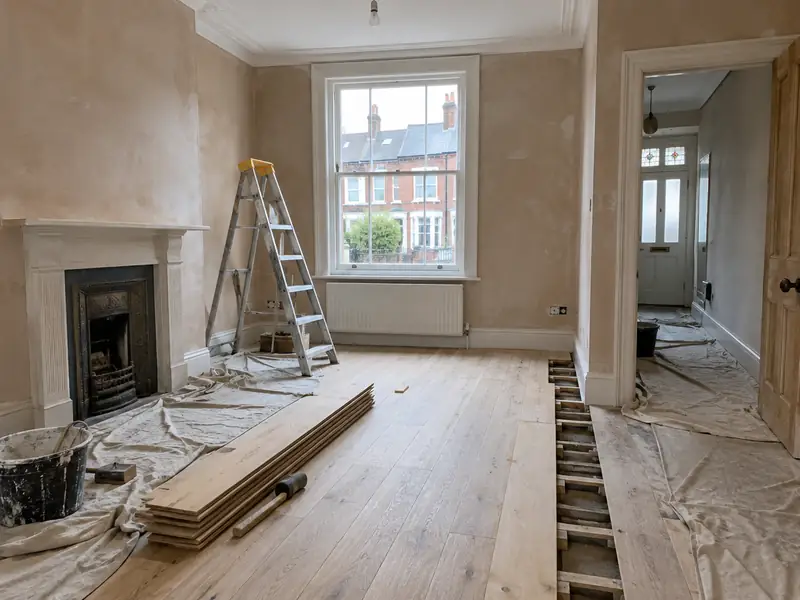
A whole-house renovation is a planned refurbishment of an entire home, typically combining rewiring, heating, plastering, new kitchen and bathroom, flooring and decoration, and sometimes layout changes, carried out in a logical order under one project.
Our guide for a whole-house renovation in the South East comes to £50,000–£134,000 with VAT added, and that range applies across Hampshire, including Southampton, Portsmouth, Basingstoke and Gosport. Your own price depends on the size of the job, the specification and how easy it is to work on the site. We survey for free, check any consents needed under the rules in England, and then put the price in writing.
- Guide price
- £50,000–£134,000 inc VAT
- Time on site
- 8–24 weeks on site, depending on scope
- Planning rules
- England
- Price level
- About 12% above the national guide
- Towns listed
- 20
- Survey
- Free, with a written quote
How much does a whole-house renovation cost in Hampshire?
Prices for a whole-house renovation vary from house to house, but in Hampshire most projects fall within £50,000–£134,000 including VAT. That reflects costs in the South East, about 12% above the national guide. Treat the table as a budgeting aid; the written figure follows a survey we carry out for free.
| Type of job | What it usually involves | Guide in Hampshire |
|---|---|---|
| Light refurbishment | Decoration, flooring, minor repairs and perhaps one new kitchen or bathroom. | £17,000–£50,000 |
| Full refurbishment | Rewire, heating, plastering, new kitchen and bathroom, flooring and decoration throughout a 3-bed house. | £50,000–£134,000 |
| Renovation with structural changes | A full refurbishment plus wall removal, layout changes or extra bathrooms. | £112,000–£202,000 |
Your price depends mostly on:
- Size of the house and number of rooms being renovated
- Kitchen and bathroom specification
- Structural or layout changes and associated approvals
- Hidden problems such as damp, rot or outdated drainage
What’s included?
- Room-by-room survey and a planned order of works
- Rewiring and new consumer unit by qualified electricians, with certificates
- Heating and plumbing upgrades by qualified engineers
- Plastering, skimming and repairs to ceilings and walls
- Flooring, internal doors, skirting and joinery
- Decoration and a final clean before handover
Homes in Hampshire
Southampton and Portsmouth have dense Victorian terraces, with plenty of post-war rebuilding after wartime bombing. Winchester keeps Georgian and medieval streets, Basingstoke expanded rapidly with 1960s and 1970s estates, and New Forest villages feature cob, thatch and brick. Brick and flint is common on the chalk downs, and new estates ring most towns.
Terraces suit loft rooms and side-return extensions; post-war and expanded-town homes often need window, roofline and cladding renewal. Cottages in the Forest may call for lime repairs and planning-sensitive windows.
Coastal areas along the Solent face salt and wind, while chalk downland is better drained but exposed; inland clay can move in dry summers.
Do you need permission in Hampshire?
Each UK nation sets its own consent rules, and Hampshire is in England. What follows is a plain summary; we check the specifics for your property with the council before pricing anything.
Internal work such as a new kitchen, bathroom, flooring, plastering or decorating does not need planning permission in England, unless the house is listed, when listed building consent may be needed even for internal changes.
Some internal work is covered by Building Regulations: new electrical circuits and work in bathrooms (Part P), new drainage, structural changes, extractor ventilation and any new window. Notifiable work is certified by a registered installer or by building control.
Rules change and every property is different, so we check the planning history and constraints for your address before we quote.
From survey to handover
We look at the job
First, someone visits your home in Hampshire to see the space, take measurements and note anything that could affect the work, such as access or the condition of what is there. There is no charge for this visit.
Quote in writing
We turn the survey notes into a written quote. The price is fixed for the specification we agree, and the document sets out materials, scope and payment stages in plain language.
Booking the work
Next comes planning the work itself. We set a start date that suits you, line up the right trades, and make sure any approvals for a whole-house renovation are in place before the first day on site.
Finish and handover
Work goes ahead as scheduled and you deal with one contact throughout. When the last trade leaves, we clear and clean the site, talk you through what has been done and pass on any certificates and care instructions.
What you can expect from us
Questions about a whole-house renovation in Hampshire
Which parts of a renovation need building regulations approval?
Several parts of a renovation fall under building regulations, including rewiring and new circuits, new boilers and heating systems, structural changes such as removing walls, replacement windows and changes to drainage. Some of this is self-certified by suitably registered trades, and some needs building control approval. In Scotland a building warrant may be needed for certain works. We arrange the right approvals and certificates.
What contingency should I allow?
A contingency is money set aside for problems found once work starts, such as rotten joists, hidden damp or wiring that is worse than expected. For older houses, setting aside at least 10–15% of the build cost is sensible. We look for warning signs during the survey and price known issues upfront. If something unexpected is found, we explain it and price it before carrying on.
In what order should renovation work be done?
A renovation should follow a set order so finished work is never damaged by later trades. It usually runs from roof and structural repairs, through strip-out, first-fix electrics and plumbing, then plastering, second-fix electrics and plumbing, kitchen and bathroom fitting, flooring and finally decoration. Windows are usually fitted before plastering. We plan the programme around this sequence so each trade follows on smoothly.
Can I stay at home during the work?
In most cases, yes. Most people can live at home throughout, and we plan the work to keep disruption down by protecting floors, agreeing working hours and keeping access routes clear. Bigger jobs affecting kitchens, bathrooms or heating may mean a short spell with reduced facilities, and we talk this through with you at the survey.
Do you cover Southampton, Portsmouth and Basingstoke?
Yes. As well as Hampshire, we cover Southampton, Portsmouth and Basingstoke and the rest of Hampshire. Our coverage is UK-wide, so the process is the same wherever you are: a free site survey, a quote in writing that fixes the price for the agreed scope, and one point of contact while the work is planned and carried out.
Towns in Hampshire
We offer a whole-house renovation in each of the towns below, all within Hampshire. Select yours for guide prices, postcodes covered and nearby places.