
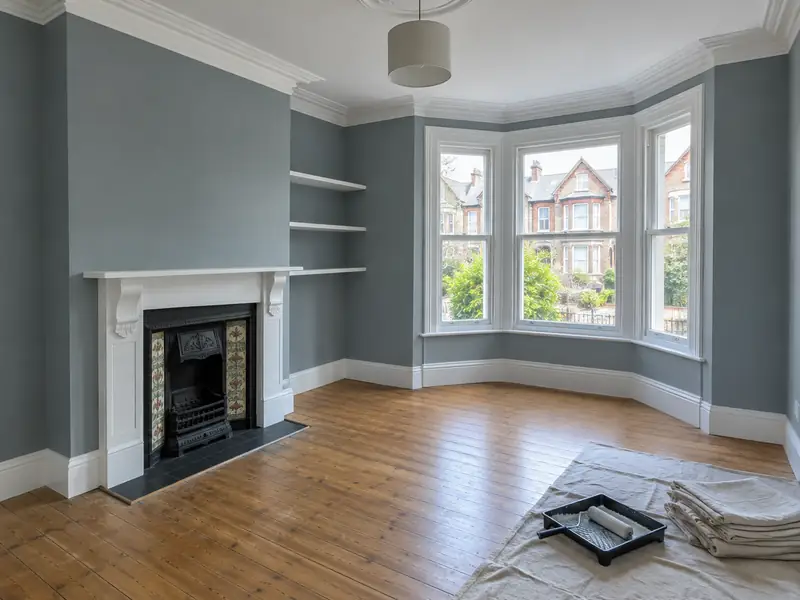
Painting and decorating is preparing and finishing the surfaces of a home, including filling, sanding, priming and painting walls, ceilings and woodwork, hanging wallpaper and painting exterior walls and joinery, to protect them and refresh how rooms look.
Across Norfolk, people look into painting and decorating to replace something worn out, to make the house work better for them, or to get it ready for a sale. We cover Norwich, Great Yarmouth, King's Lynn and Thetford and the smaller towns around them, working to the rules that apply in England. Expect a guide of £1,250–£3,200, VAT included, in the East of England, and every quote follows a free visit.
- Guide price
- £1,250–£3,200 inc VAT
- Time on site
- 1–2 days per room; 3–7 days for a house exterior
- Planning rules
- England
- Price level
- About 5% above the national guide
- Towns listed
- 6
- Survey
- Free, with a written quote
Painting and decorating prices in Norfolk
Prices for painting and decorating vary from house to house, but in Norfolk most projects fall within £1,250–£3,200 including VAT. That reflects costs in the East of England, about 5% above the national guide. Treat the table as a budgeting aid; the written figure follows a survey we carry out for free.
| Type of job | What it usually involves | Guide in Norfolk |
|---|---|---|
| Single room | Walls, ceiling and woodwork in one average bedroom or living room. | £350–£950 |
| House exterior | Masonry and joinery on a typical semi, including access equipment. | £2,600–£6,300 |
| Whole interior of a 3-bed house | Every room, hallway, stairs and landing, including woodwork. | £3,200–£6,800 |
Your price depends mostly on:
- Number and size of rooms, including ceiling height
- Amount of preparation, filling and repairs needed
- Whether woodwork, doors and wallpaper are included
- Exterior access, scaffolding and the condition of surfaces
What do you get?
- Survey of each surface and agreed colours and finishes
- Floors, furniture and fittings protected with dust sheets and masking
- Filling cracks and holes, sanding and spot priming
- Mist coat on new plaster before finishing coats
- Woodwork sanded, primed where bare, and painted
- Wallpaper stripped or hung where included
Homes in Norfolk
Flint is everywhere in Norfolk, often combined with brick quoins and red or black-glazed pantile roofs. Norwich has Victorian terraces and interwar suburbs around its medieval centre, Norfolk reed thatch survives across the county, carrstone is used in the west, and coastal towns such as Great Yarmouth and Cromer have Victorian terraces and newer bungalows.
Flint walls often need lime repointing and careful repairs, and pantile roofs need matching tiles. Norwich terraces suit loft conversions and rear extensions, while coastal bungalows commonly take loft rooms, porches and new windows.
Norfolk is dry but exposed, with strong easterly winds, an eroding coast in places and low-lying land around the Broads.
Planning and building rules in Norfolk
Homes in Norfolk come under the regulations for England, summarised below. We don't rely on general rules alone: we confirm the position for your address with the council before a quote goes out.
Internal work such as a new kitchen, bathroom, flooring, plastering or decorating does not need planning permission in England, unless the house is listed, when listed building consent may be needed even for internal changes.
Some internal work is covered by Building Regulations: new electrical circuits and work in bathrooms (Part P), new drainage, structural changes, extractor ventilation and any new window. Notifiable work is certified by a registered installer or by building control.
Rules change and every property is different, so we check the planning history and constraints for your address before we quote.
From survey to handover
A visit to your home
Book a visit and we'll come to you. The survey covers measurements, the state of what's there now and any obvious constraints, so the price that follows is based on your actual home, not an average.
Your fixed price
You get the price in writing, itemised so you can see where the money goes. As long as the specification stays the same, that is the price you pay for painting and decorating.
Booking the work
With the quote agreed, we book the work in and handle preparation: permissions where needed, building control notifications, material orders and access arrangements for your Norfolk property.
The work itself
Our trades complete painting and decorating while your point of contact keeps you updated. When everything is finished, we clear the site, take away waste and go through the result with you before handover.
What you can expect from us
Frequently asked questions
How often should exterior woodwork be repainted?
Exterior woodwork, such as timber windows, doors and fascias, usually needs repainting every five to eight years, depending on exposure, paint quality and how well it was prepared. South-facing and coastal elevations wear faster. Look out for flaking, cracking or bare patches, which let water into the timber. Repainting before rot sets in costs far less than replacing joinery.
Is the price fixed?
Yes, for the specification we agree. Your written quote sets out exactly what is included at a fixed price. It only changes if you ask for something different, or if a problem the survey could not reasonably reveal later needs extra work. In either case we explain the change and confirm it in writing before going ahead.
Can I stay at home during the work?
In most cases, yes. Most people can live at home throughout, and we plan the work to keep disruption down by protecting floors, agreeing working hours and keeping access routes clear. Bigger jobs affecting kitchens, bathrooms or heating may mean a short spell with reduced facilities, and we talk this through with you at the survey.
Can you paint over wallpaper?
Painting over wallpaper is possible if it is firmly stuck, but it often leads to bubbles and visible seams, and makes future stripping harder. In most cases, stripping the paper, filling and lining the walls, or skimming them, gives a better and longer-lasting finish. We check how well the paper is bonded during the survey and explain the options and costs.
When is the right time to paint the outside of a house?
Exterior painting needs dry weather and mild temperatures, so late spring to early autumn is usually the right time. Paint should not be applied to damp surfaces, in rain or frost, or in strong direct sun. Surfaces need time to dry out after rain before work starts. We plan exterior work around the forecast and pause if conditions turn.
Towns in Norfolk
Choose your town from the list to see how we price and plan painting and decorating in your part of Norfolk, including typical time on site.