
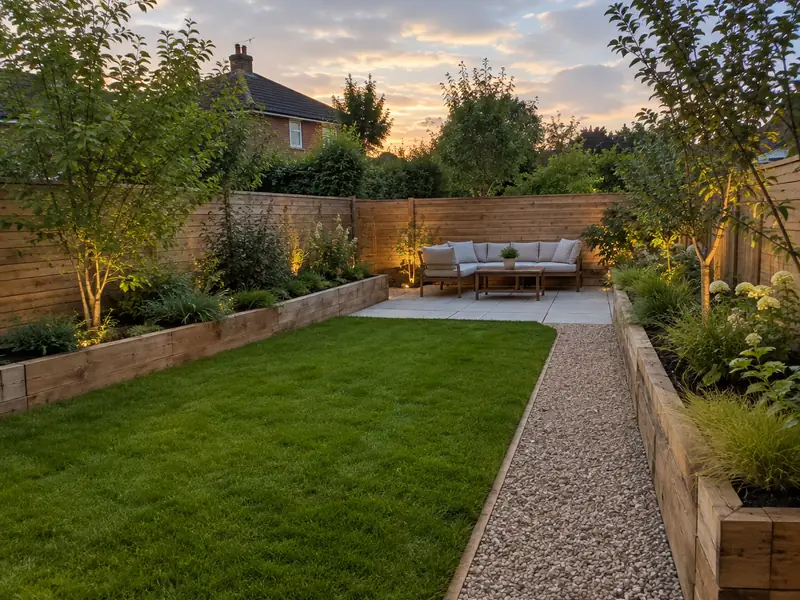
Garden landscaping is designing and building an outdoor space as a whole, combining hard landscaping such as patios, paths, walls and steps with soft landscaping such as lawns, planting and beds, plus drainage and lighting, so the garden works for how you live.
Whether you live in one of the larger towns, such as Norwich, Great Yarmouth, King's Lynn and Thetford, or somewhere quieter in Norfolk, the way we handle garden landscaping is identical. We survey, agree the specification with you, and confirm a fixed price on paper. Everything is planned under the regulations in force in England, and guide costs in the East of England sit at £6,300–£16,000 with VAT.
- Guide price
- £6,300–£16,000 inc VAT
- Time on site
- 1–4 weeks on site, depending on scope
- Planning rules
- England
- Price level
- About 5% above the national guide
- Towns listed
- 6
- Survey
- Free, with a written quote
How much does garden landscaping cost in Norfolk?
Below is a breakdown of typical costs for garden landscaping in Norfolk. Because rates in the East of England are about 5% above the national guide, the overall guide comes to £6,300–£16,000, including VAT. Size, materials and access move the figure, and a free-of-charge survey settles it.
| Type of job | What it usually involves | Guide in Norfolk |
|---|---|---|
| Garden refresh | Clearance, new turf, edging, bark or gravel and some planting. | £1,600–£5,200 |
| Typical garden makeover | A new patio, lawn, borders, paths and planting in a typical rear garden. | £6,300–£16,000 |
| Full redesign | Levels, retaining walls, large patios, lighting and drainage for larger or sloping gardens. | £16,000–£37,000 |
What moves the price up or down:
- Garden size, access and the amount of clearance needed
- Levels, slopes, retaining walls and steps
- Drainage, soil quality and ground conditions
- Materials chosen for paving, walls and features
What do you get?
- Survey of size, levels, soil, drainage and access
- Groundworks, levelling and drainage
- Patios, paths, steps and edging laid on proper bases
- Raised beds, low walls or sleepers built to the agreed design
- Turf or artificial grass laid on a prepared base
- Planting, bark or gravel finishing and outdoor lighting where included
Housing across Norfolk
Flint is everywhere in Norfolk, often combined with brick quoins and red or black-glazed pantile roofs. Norwich has Victorian terraces and interwar suburbs around its medieval centre, Norfolk reed thatch survives across the county, carrstone is used in the west, and coastal towns such as Great Yarmouth and Cromer have Victorian terraces and newer bungalows.
Flint walls often need lime repointing and careful repairs, and pantile roofs need matching tiles. Norwich terraces suit loft conversions and rear extensions, while coastal bungalows commonly take loft rooms, porches and new windows.
Norfolk is dry but exposed, with strong easterly winds, an eroding coast in places and low-lying land around the Broads.
Planning and building rules in Norfolk
Homes in Norfolk come under the regulations for England, summarised below. We don't rely on general rules alone: we confirm the position for your address with the council before a quote goes out.
Most garden landscaping in England needs no planning permission. Trees protected by a Tree Preservation Order, or trees in a conservation area, need the council’s consent or notice before work; outbuildings and raised platforms have their own limits.
Building Regulations rarely apply to landscaping, though new drainage and garden electrics must comply.
Rules change and every property is different, so we check the planning history and constraints for your address before we quote.
The four stages
Free site survey
Book a visit and we'll come to you. The survey covers measurements, the state of what's there now and any obvious constraints, so the price that follows is based on your actual home, not an average.
Price and scope agreed
We turn the survey notes into a written quote. The price is fixed for the specification we agree, and the document sets out materials, scope and payment stages in plain language.
Plan and prepare
We handle the paperwork side: checking whether planning permission or building control approval is needed, submitting applications where they are, and scheduling the trades and materials around your dates.
The work itself
Our trades complete garden landscaping while your point of contact keeps you updated. When everything is finished, we clear the site, take away waste and go through the result with you before handover.
What you can expect from us
Questions about garden landscaping in Norfolk
What time of year suits garden landscaping?
Hard landscaping such as patios, paths and walls can be built most of the year, though frost and heavy rain cause delays. Planting is usually most successful in autumn and spring, when plants can establish roots before summer. Turf can be laid in most months if the ground is not frozen or waterlogged. We plan the order of work around the season.
Can you work around existing trees and plants?
We can design around trees and plants you want to keep, protecting their roots from digging and machinery and keeping levels unchanged near trunks. Some trees are protected by tree preservation orders or conservation area rules, which require permission before cutting or significant root work. We note any trees and plants you want to keep at the survey.
How long will garden landscaping take?
On a typical home, allow 1–4 weeks on site, depending on scope. Larger projects, older buildings and extra work found once things are opened up can extend that, while simpler jobs may be shorter. Your quote includes an estimate of time on site, and your point of contact keeps you updated on the programme as the work progresses.
Can you combine garden landscaping with other work?
Yes. Because we manage several trades under one contract, we can plan garden landscaping alongside other work on your Norfolk home, such as new windows with rendering, or a kitchen refit with an extension. Combining jobs can reduce repeat set-up such as scaffolding, skips and access, and every element is listed and priced in the same written quote.
What can be done about a waterlogged garden?
A waterlogged garden is usually caused by heavy clay soil, compacted ground or water running off from hard surfaces. Solutions include French drains, soakaways, improving soil with organic matter, and making new paving permeable or directing its run-off to drains. Raised beds help plants in wet areas. We look at the cause during the survey and include drainage in the design.
Towns in Norfolk
These are the towns in Norfolk where you can book a free survey for garden landscaping. Each has its own page with guide prices and coverage details.