
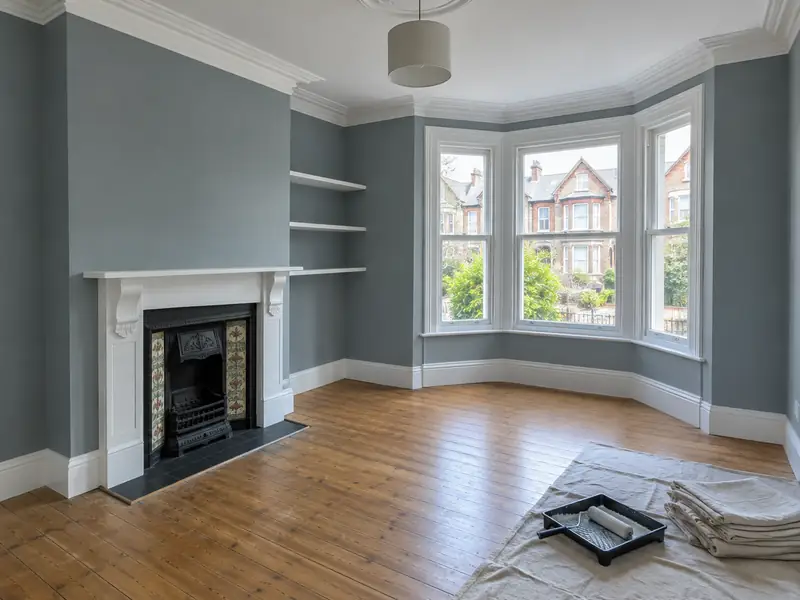
Painting and decorating is preparing and finishing the surfaces of a home, including filling, sanding, priming and painting walls, ceilings and woodwork, hanging wallpaper and painting exterior walls and joinery, to protect them and refresh how rooms look.
Our guide for painting and decorating in Scotland comes to £1,150–£2,900 with VAT added, and that range applies across Fife, including Dunfermline, Kirkcaldy, Glenrothes and St Andrews. Your own price depends on the size of the job, the specification and how easy it is to work on the site. We survey for free, check any consents needed under the rules in Scotland, and then put the price in writing.
- Guide price
- £1,150–£2,900 inc VAT
- Time on site
- 1–2 days per room; 3–7 days for a house exterior
- Planning rules
- Scotland
- Price level
- About 4% below the national guide
- Towns listed
- 4
- Survey
- Free, with a written quote
How much does painting and decorating cost in Fife?
Prices for painting and decorating vary from house to house, but in Fife most projects fall within £1,150–£2,900 including VAT. That reflects costs in Scotland, about 4% below the national guide. Treat the table as a budgeting aid; the written figure follows a survey we carry out for free.
| Type of job | What it usually involves | Guide in Fife |
|---|---|---|
| Single room | Walls, ceiling and woodwork in one average bedroom or living room. | £350–£850 |
| House exterior | Masonry and joinery on a typical semi, including access equipment. | £2,400–£5,800 |
| Whole interior of a 3-bed house | Every room, hallway, stairs and landing, including woodwork. | £2,900–£6,200 |
What moves the price up or down:
- Amount of preparation, filling and repairs needed
- Whether woodwork, doors and wallpaper are included
- Paint quality, colour changes and number of coats
- Exterior access, scaffolding and the condition of surfaces
What do you get?
- Survey of each surface and agreed colours and finishes
- Floors, furniture and fittings protected with dust sheets and masking
- Filling cracks and holes, sanding and spot priming
- Mist coat on new plaster before finishing coats
- Wallpaper stripped or hung where included
- Furniture replaced, waste removed and a final tidy-up
Housing across Fife
Fife's East Neuk fishing villages are known for pantiled roofs and crow-stepped gables, and St Andrews has historic stone streets. Kirkcaldy and Dunfermline have Victorian sandstone housing and interwar estates, Glenrothes was built as a post-war new town, and former mining towns in central Fife have rows of cottages and post-war council housing.
Pantiled and stone homes need careful roof repairs and lime work. Post-war and new-town houses commonly take re-rendering, window replacement and extensions, while bungalows suit loft conversions.
The coast faces cold easterly winds and salt from the North Sea, and frost is common inland through the winter.
Do you need permission in Fife?
The notes below cover Scotland, which is where Fife sits. Rules change and every property is different, so we speak to the council before pricing your job.
Internal improvements do not need planning permission in Scotland unless the building is listed.
Like-for-like kitchen and bathroom replacements do not normally need a building warrant, but structural changes and some drainage or heating alterations do, and electrical work must meet the building standards.
Rules change and every property is different, so we check the planning history and constraints for your address before we quote.
From survey to handover
Survey and measure
A free survey comes first. It gives us what we need to price painting and decorating properly, including dimensions, existing materials and access for deliveries, and gives you the chance to ask anything you like.
Your fixed price
Next you receive a written quote with a fixed price for the agreed specification. It lists what is included, what is not, and how payments are staged, so you can compare it properly.
Booking the work
Preparation matters as much as the build. We agree access, parking and working hours with you, order materials in good time, and confirm any permissions so the job isn't held up once it starts.
The work itself
On site, the agreed plan is followed and any change is put in writing first. At completion we do a final clean, go through the snagging list with you and leave you with the relevant documents.
What you can expect from us
Frequently asked questions
Can you paint over wallpaper?
Painting over wallpaper is possible if it is firmly stuck, but it often leads to bubbles and visible seams, and makes future stripping harder. In most cases, stripping the paper, filling and lining the walls, or skimming them, gives a better and longer-lasting finish. We check how well the paper is bonded during the survey and explain the options and costs.
Which postcodes in Fife do you cover?
We cover KY12, KY1, KY6 and KY16, along with the rest of Fife. If your postcode is not listed, get in touch anyway: our coverage is UK-wide, and we can usually arrange a survey wherever you live. Enter your postcode in the guide-price tool or contact form and we will confirm.
When is the right time to paint the outside of a house?
Exterior painting needs dry weather and mild temperatures, so late spring to early autumn is usually the right time. Paint should not be applied to damp surfaces, in rain or frost, or in strong direct sun. Surfaces need time to dry out after rain before work starts. We plan exterior work around the forecast and pause if conditions turn.
Why is preparation so important?
Preparation decides how good the finish looks and how long it lasts. Filling cracks, sanding glossy surfaces, washing greasy areas and priming bare wood all help paint grip and dry evenly. Skipping it leads to visible repairs, peeling and patchy colour. Most of the time on a decorating job goes into preparation, and our quotes always allow for it.
Can I stay at home during the work?
In most cases, yes. Most people can live at home throughout, and we plan the work to keep disruption down by protecting floors, agreeing working hours and keeping access routes clear. Bigger jobs affecting kitchens, bathrooms or heating may mean a short spell with reduced facilities, and we talk this through with you at the survey.
Towns in Fife
We offer painting and decorating in each of the towns below, all within Fife. Select yours for guide prices, postcodes covered and nearby places.