
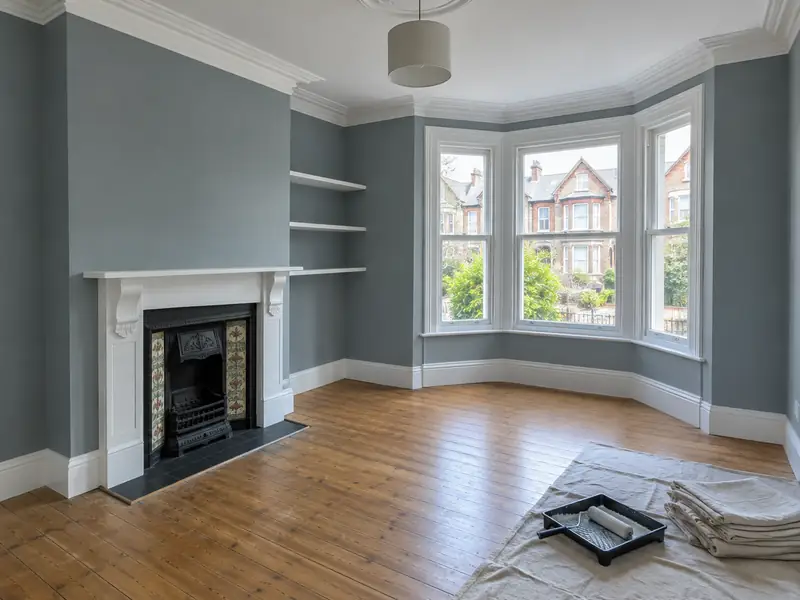
Painting and decorating is preparing and finishing the surfaces of a home, including filling, sanding, priming and painting walls, ceilings and woodwork, hanging wallpaper and painting exterior walls and joinery, to protect them and refresh how rooms look.
Glasgow is part of our UK-wide coverage for painting and decorating. Places we cover include Glasgow, and we travel to smaller communities across the area as well. Since your property is in Scotland, the relevant planning and building rules are the ones set there. In Scotland, budget around £1,150–£2,900 with VAT; the figure is confirmed after a survey that costs you nothing.
- Guide price
- £1,150–£2,900 inc VAT
- Time on site
- 1–2 days per room; 3–7 days for a house exterior
- Planning rules
- Scotland
- Price level
- About 4% below the national guide
- Towns listed
- Whole area
- Survey
- Free, with a written quote
Painting and decorating prices in Glasgow
Prices for painting and decorating vary from house to house, but in Glasgow most projects fall within £1,150–£2,900 including VAT. That reflects costs in Scotland, about 4% below the national guide. Treat the table as a budgeting aid; the written figure follows a survey we carry out for free.
| Type of job | What it usually involves | Guide in Glasgow |
|---|---|---|
| Single room | Walls, ceiling and woodwork in one average bedroom or living room. | £350–£850 |
| House exterior | Masonry and joinery on a typical semi, including access equipment. | £2,400–£5,800 |
| Whole interior of a 3-bed house | Every room, hallway, stairs and landing, including woodwork. | £2,900–£6,200 |
Your price depends mostly on:
- Number and size of rooms, including ceiling height
- Amount of preparation, filling and repairs needed
- Paint quality, colour changes and number of coats
- Exterior access, scaffolding and the condition of surfaces
Scope of the work
- Survey of each surface and agreed colours and finishes
- Floors, furniture and fittings protected with dust sheets and masking
- Filling cracks and holes, sanding and spot priming
- Two finishing coats to walls and ceilings as standard
- Woodwork sanded, primed where bare, and painted
- Furniture replaced, waste removed and a final tidy-up
Housing across Glasgow
Glasgow is known for its blond and red sandstone tenements, built in large numbers in the late Victorian and Edwardian periods, alongside terraced and villa housing in the West End and Southside. Interwar cottage flats, large post-war housing schemes, high-rise blocks and newer developments make up much of the rest of the city.
Tenement flats commonly need window replacement and internal renovation, often with neighbours' agreement for shared parts. Villas and cottage flats suit kitchen and bathroom refits, loft conversions and extensions.
High rainfall and frequent wind-driven rain mean sandstone, pointing and roofs need regular care, especially on exposed elevations.
Planning and building rules in Glasgow
As Glasgow is in Scotland, read the following with that system of planning and building control in mind. We check what applies to your house with the council before you receive a quote.
Internal improvements do not need planning permission in Scotland unless the building is listed.
Like-for-like kitchen and bathroom replacements do not normally need a building warrant, but structural changes and some drainage or heating alterations do, and electrical work must meet the building standards.
Rules change and every property is different, so we check the planning history and constraints for your address before we quote.
The four stages
Survey and measure
Book a visit and we'll come to you. The survey covers measurements, the state of what's there now and any obvious constraints, so the price that follows is based on your actual home, not an average.
Price and scope agreed
The quote arrives in writing, not over the phone. It covers the full scope, the finishes you've chosen, any exclusions and the payment schedule, with a fixed price tied to that specification.
Getting ready
Preparation matters as much as the build. We agree access, parking and working hours with you, order materials in good time, and confirm any permissions so the job isn't held up once it starts.
The work itself
On site, the agreed plan is followed and any change is put in writing first. At completion we do a final clean, go through the snagging list with you and leave you with the relevant documents.
How we work
Frequently asked questions
When is the right time to paint the outside of a house?
Exterior painting needs dry weather and mild temperatures, so late spring to early autumn is usually the right time. Paint should not be applied to damp surfaces, in rain or frost, or in strong direct sun. Surfaces need time to dry out after rain before work starts. We plan exterior work around the forecast and pause if conditions turn.
What happens at the survey?
We visit your home at a time that suits you, look at the area involved, take measurements and check access, condition and any services that might be affected. We talk through what you want from painting and decorating, explain the options and answer questions. There is no charge and no obligation; afterwards we send a written quote.
What paint finish should I choose?
Matt emulsion hides imperfections and gives a soft look, which suits ceilings and living rooms. Eggshell or soft sheen finishes are more washable, so they suit kitchens, hallways and children's rooms. For woodwork, satin gives a modern low-shine look, while gloss is harder-wearing and more traditional. Bathrooms benefit from paints made to resist moisture and mould.
Can you combine painting and decorating with other work?
Yes. Because we manage several trades under one contract, we can plan painting and decorating alongside other work on your Glasgow home, such as new windows with rendering, or a kitchen refit with an extension. Combining jobs can reduce repeat set-up such as scaffolding, skips and access, and every element is listed and priced in the same written quote.
Can you paint over wallpaper?
Painting over wallpaper is possible if it is firmly stuck, but it often leads to bubbles and visible seams, and makes future stripping harder. In most cases, stripping the paper, filling and lining the walls, or skimming them, gives a better and longer-lasting finish. We check how well the paper is bonded during the survey and explain the options and costs.