
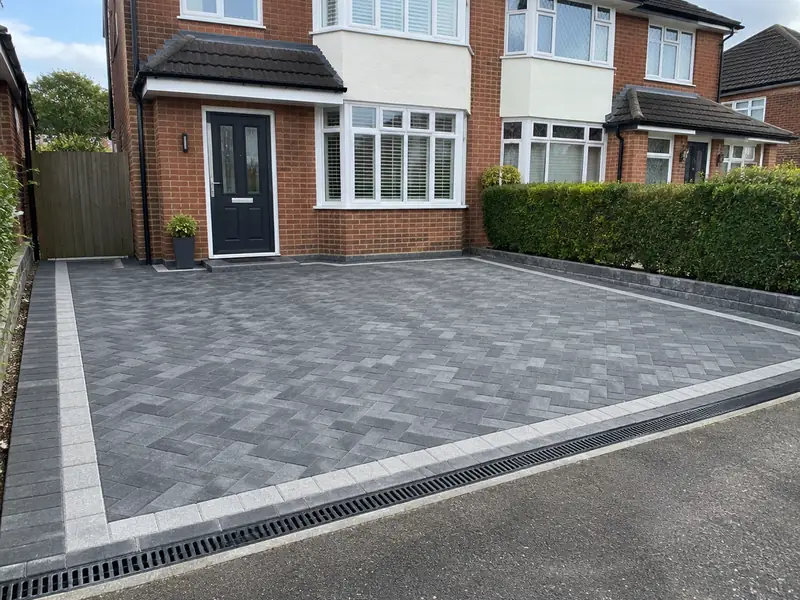
A new driveway is a hard-wearing surface for parking, such as block paving, resin bound gravel, tarmac or gravel, laid on an excavated and compacted sub-base with edging and drainage designed to carry vehicle loads and handle rainwater.
In Glasgow, we price a new driveway against our guide for Scotland, £3,800–£8,600 including VAT, then adjust it once we have surveyed your home. We work across Glasgow and the rest of the county or region. Planning and building control requirements follow the rules for Scotland, and we look into your property's position before a written quote is sent.
- Guide price
- £3,800–£8,600 inc VAT
- Time on site
- 3–7 days on site
- Planning rules
- Scotland
- Price level
- About 4% below the national guide
- Towns listed
- Whole area
- Survey
- Free, with a written quote
How much does a new driveway cost in Glasgow?
Here is how the guide price for a new driveway breaks down in Glasgow. We start from national figures and adjust for Scotland, which comes out about 4% below the national guide. The resulting range, VAT included, is £3,800–£8,600, and a survey, at no cost to you, firms it up.
| Type of job | What it usually involves | Guide in Glasgow |
|---|---|---|
| Gravel or tarmac | A typical 40–50m² drive in gravel on a grid, or tarmac with block edging. | £1,900–£4,800 |
| Block paving or resin bound | A typical 40–50m² drive with sub-base, edging and drainage. | £3,800–£8,600 |
| Large or premium driveway | Larger drives, natural stone, walls, steps or a new dropped kerb. | £7,700–£15,500 |
What moves the price up or down:
- Driveway area and the depth of excavation needed
- Drainage, soakaways and changes in level
- Edging, steps, walls and manhole adjustments
- Access for machinery and removal of spoil
What do you get?
- Excavation and removal of the old surface and soil
- Weed membrane and compacted MOT Type 1 sub-base
- Edging kerbs or restraints to hold the surface in place
- Manhole covers raised or replaced to new levels
- New surface laid, compacted and finished
- Site cleared and waste removed
Housing across Glasgow
Glasgow is known for its blond and red sandstone tenements, built in large numbers in the late Victorian and Edwardian periods, alongside terraced and villa housing in the West End and Southside. Interwar cottage flats, large post-war housing schemes, high-rise blocks and newer developments make up much of the rest of the city.
Tenement flats commonly need window replacement and internal renovation, often with neighbours' agreement for shared parts. Villas and cottage flats suit kitchen and bathroom refits, loft conversions and extensions.
High rainfall and frequent wind-driven rain mean sandstone, pointing and roofs need regular care, especially on exposed elevations.
Planning and building rules in Glasgow
Each UK nation sets its own consent rules, and Glasgow is in Scotland. What follows is a plain summary; we check the specifics for your property with the council before pricing anything.
In Scotland, a hard surface in front of a house is usually permitted development if it is permeable or drains within the property. A dropped kerb or road opening needs consent from the council as roads authority.
A building warrant is not normally needed for a driveway.
Rules change and every property is different, so we check the planning history and constraints for your address before we quote.
The four stages
Free site survey
We begin by looking at the job in person. During the free survey we discuss options, materials and budget for a new driveway, and photograph or measure anything the quote needs to reflect.
Quote in writing
Next you receive a written quote with a fixed price for the agreed specification. It lists what is included, what is not, and how payments are staged, so you can compare it properly.
Dates and permissions
Before anyone starts, we confirm the programme in writing, check whether consents are required and arrange deliveries. If a skip or scaffolding on the road needs a permit, we apply for it.
On site to finish
The work is carried out to the agreed specification, with floors and furniture protected and the site kept tidy. At the end we clean up, walk through the finished job with you and hand over any certificates.
What you can expect from us
Frequently asked questions
How long will a new driveway take?
On a typical home, allow 3–7 days on site. Larger projects, older buildings and extra work found once things are opened up can extend that, while simpler jobs may be shorter. Your quote includes an estimate of time on site, and your point of contact keeps you updated on the programme as the work progresses.
Who do I deal with during the job?
One point of contact manages your project from survey to handover. They schedule the trades working under our contract, keep you updated on progress, and are the person to call with any question. You don't need to coordinate builders, electricians or decorators separately, because that is part of what we do.
What is a sub-base and why does it matter?
The sub-base is the layer of crushed, compacted stone beneath the driveway surface that spreads the weight of vehicles into the ground. Most driveway failures, such as sinking, rutting and loose blocks, come from a sub-base that is too thin or poorly compacted. We excavate to the right depth for your soil and compact the sub-base in layers before laying the surface.
How much does a new driveway cost?
A typical 40–50m² block paved or resin bound driveway costs £3,800–£8,600, including excavation, sub-base, edging and drainage. As a guide, allow roughly £70–£150 per square metre plus fixed costs for machinery and waste. Gravel and tarmac cost less, while natural stone, steps and walls cost more. A new dropped kerb is a separate cost. We confirm a fixed price after measuring.
Do I need planning permission for a driveway?
Whether a driveway needs planning permission depends on its size, surface and drainage, your home's location, whether it is listed or in a conservation area, and which UK nation you are in. In England, a new or replacement front driveway over 5m² needs permission unless it uses a permeable surface or drains to a lawn or border. We check the rules and design to suit.