
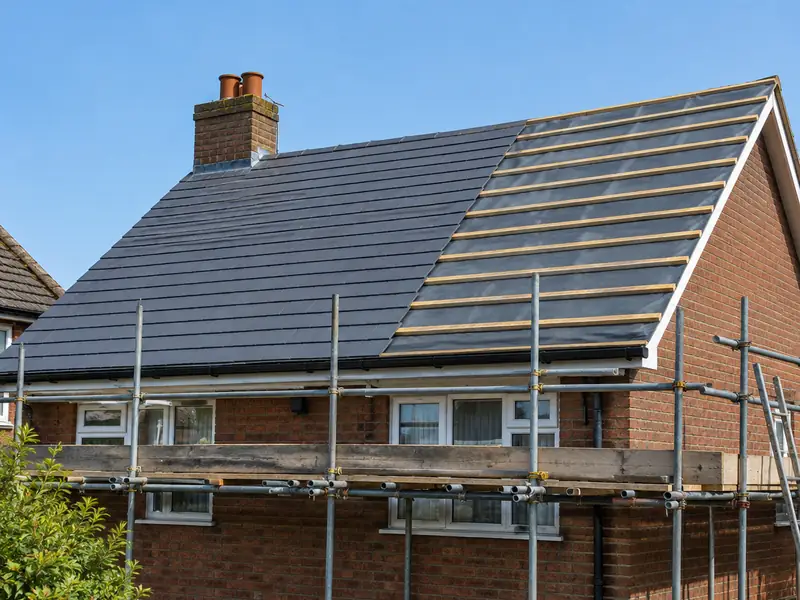
A roof replacement, or re-roof, strips the old tiles or slates, battens and felt from a pitched roof and replaces them with a new breathable membrane, battens and covering, repairing timbers and renewing ridges, valleys and flashings at the same time.
Our guide for a new roof in Wales comes to £6,400–£14,000 with VAT added, and that range applies across Dyfed, including Llanelli, Ammanford, Aberystwyth and Carmarthen. Your own price depends on the size of the job, the specification and how easy it is to work on the site. We survey for free, check any consents needed under the rules in Wales, and then put the price in writing.
- Guide price
- £6,400–£14,000 inc VAT
- Time on site
- 1–2 weeks on site, plus scaffolding time
- Planning rules
- Wales
- Price level
- About 8% below the national guide
- Towns listed
- 4
- Survey
- Free, with a written quote
How much does a new roof cost in Dyfed?
To help you plan, we show what a new roof typically costs in Dyfed instead of holding figures back for a sales call. The range is £6,400–£14,000 with VAT, using rates in Wales that are about 8% below the national guide. A free survey then fixes your actual price.
| Type of job | What it usually involves | Guide in Dyfed |
|---|---|---|
| Terraced house or bungalow | A smaller pitched roof re-covered in concrete or clay tiles, including scaffolding. | £4,600–£9,200 |
| Typical semi-detached | A 3-bed semi re-roofed in concrete or clay tiles with new membrane, battens and leadwork. | £6,400–£14,000 |
| Detached or natural slate | Larger or more complex roofs, or any roof finished in natural slate. | £11,000–£23,000 |
What moves the price up or down:
- Roof area, pitch and the number of hips, valleys and dormers
- Covering material: concrete tile, clay tile or natural slate
- Condition of rafters, fascias and other timbers
- Chimneys, leadwork and roof windows to rework
Scope of the work
- Stripping old tiles or slates, battens and felt in stages
- Repairs or replacement of damaged rafters and fascia boards
- Breathable membrane and new treated battens
- New tiles or slates, or sound originals refitted where suitable
- Ridges, hips and verges dry-fixed or bedded, with new leadwork
- Waste removal by skip and a clean site on completion
Homes in Dyfed
Dyfed covers Carmarthenshire, Ceredigion and Pembrokeshire. Stone cottages and farmhouses under slate roofs are common, often rendered or colour-washed, as in Tenby's brightly painted terraces. Llanelli has Victorian industrial terraces, Aberystwyth and Carmarthen have Georgian and Victorian centres, and bungalows and newer estates surround most towns.
Stone homes often need lime render, repointing and roof slating repairs. Terraces suit loft conversions and extensions, and rural bungalows commonly take extensions, porches and driveways.
Atlantic weather brings strong winds, driving rain and salt to the coast, so exposure ratings matter when specifying render and pointing.
Do you need permission in Dyfed?
England, Wales, Scotland and Northern Ireland each handle planning a little differently. Dyfed comes under Wales, covered below, and we raise any questions with the council before your quote is finalised.
Re-roofing with similar materials does not usually need planning permission in Wales, except on listed buildings or where a conservation area restricts materials.
Building Regulations in Wales apply to major re-roofing, including insulation upgrades. Bats are protected across the UK; if they roost under roof tiles, soffits or fascias, work stops and a licensed ecologist advises before it restarts.
Rules change and every property is different, so we check the planning history and constraints for your address before we quote.
From survey to handover
Free site survey
We begin by looking at the job in person. During the free survey we discuss options, materials and budget for a new roof, and photograph or measure anything the quote needs to reflect.
Written quote
We turn the survey notes into a written quote. The price is fixed for the specification we agree, and the document sets out materials, scope and payment stages in plain language.
Getting ready
Next comes planning the work itself. We set a start date that suits you, line up the right trades, and make sure any approvals for a new roof are in place before the first day on site.
On site to finish
The work is carried out to the agreed specification, with floors and furniture protected and the site kept tidy. At the end we clean up, walk through the finished job with you and hand over any certificates.
What you can expect from us
Frequently asked questions
Do I need planning permission to replace my roof?
Planning permission is not usually needed to re-roof in similar materials, but it depends on the change, your home's location, whether it is listed or in a conservation area, and which UK nation you live in. Changing the roof shape, height or covering material can need permission. Listed buildings need consent for re-roofing. We check the position for your home before quoting.
What happens at the survey?
We visit your home at a time that suits you, look at the area involved, take measurements and check access, condition and any services that might be affected. We talk through what you want from a new roof, explain the options and answer questions. There is no charge and no obligation; afterwards we send a written quote.
What happens if it rains during the work?
We strip the roof in sections and only remove as much covering as we can replace or protect the same day. New breathable membrane goes on straight after stripping, which keeps most rain out, and we sheet exposed areas at the end of each day and before forecast showers. If heavy rain or high winds are forecast, we pause work. The house is never left open.
How long will a new roof last?
A well-installed roof lasts for decades. Concrete tiles typically last around 50 years or more, clay tiles longer, and natural slate can last a century with proper upkeep. Lifespan depends on the quality of materials, fixings, ventilation and leadwork, and on how exposed the roof is. Keeping gutters clear and fixing slipped tiles quickly helps it reach its full life.
Which postcodes in Dyfed do you cover?
We cover SA15, SA18, SY23 and SA31, along with the rest of Dyfed. If your postcode is not listed, get in touch anyway: our coverage is UK-wide, and we can usually arrange a survey wherever you live. Enter your postcode in the guide-price tool or contact form and we will confirm.
Towns in Dyfed
Find your town below. Every place listed in Dyfed is covered for a new roof, with the same survey, written quote and fixed-price process.