
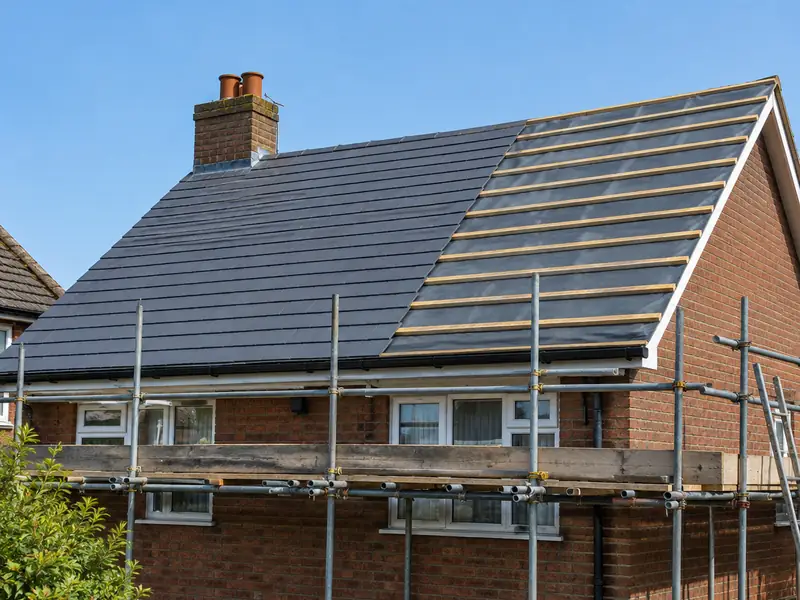
A roof replacement, or re-roof, strips the old tiles or slates, battens and felt from a pitched roof and replaces them with a new breathable membrane, battens and covering, repairing timbers and renewing ridges, valleys and flashings at the same time.
Across Worcestershire, people look into a new roof to replace something worn out, to make the house work better for them, or to get it ready for a sale. We cover Worcester, Redditch, Kidderminster and Great Malvern and the smaller towns around them, working to the rules that apply in England. Expect a guide of £6,900–£14,500, VAT included, in the West Midlands, and every quote follows a free visit.
- Guide price
- £6,900–£14,500 inc VAT
- Time on site
- 1–2 weeks on site, plus scaffolding time
- Planning rules
- England
- Price level
- About 2% below the national guide
- Towns listed
- 8
- Survey
- Free, with a written quote
Roof replacement prices in Worcestershire
Budgeting for a new roof in Worcestershire? The numbers below include VAT and are adjusted for the West Midlands, where costs are about 2% below the national guide. The headline range is £6,900–£14,500. Nothing is final until we have measured up at a free survey and agreed the specification with you.
| Type of job | What it usually involves | Guide in Worcestershire |
|---|---|---|
| Terraced house or bungalow | A smaller pitched roof re-covered in concrete or clay tiles, including scaffolding. | £4,900–£9,800 |
| Typical semi-detached | A 3-bed semi re-roofed in concrete or clay tiles with new membrane, battens and leadwork. | £6,900–£14,500 |
| Detached or natural slate | Larger or more complex roofs, or any roof finished in natural slate. | £12,000–£24,500 |
Your price depends mostly on:
- Roof area, pitch and the number of hips, valleys and dormers
- Covering material: concrete tile, clay tile or natural slate
- Condition of rafters, fascias and other timbers
- Chimneys, leadwork and roof windows to rework
Scope of the work
- Survey of the covering, timbers, chimneys and loft ventilation
- Scaffolding with edge protection, erected and removed
- Stripping old tiles or slates, battens and felt in stages
- Repairs or replacement of damaged rafters and fascia boards
- Breathable membrane and new treated battens
- Waste removal by skip and a clean site on completion
Homes in Worcestershire
Worcester has Georgian and Victorian streets and interwar suburbs, black-and-white timber framing survives in many villages, and Malvern has Victorian villas, some built in Malvern stone. Redditch was expanded as a new town from the 1960s, Kidderminster has carpet-era terraces, and Bromsgrove and Evesham mix older centres with newer estates.
Timber-framed and stone buildings call for lime plaster and careful repairs. Terraces suit loft conversions and rear extensions, and new-town homes often take window, roofline and cladding renewal.
The Severn and Teme flood regularly, and the Malvern Hills are more exposed to wind and rain than the Vale of Evesham.
Planning and building rules in Worcestershire
As Worcestershire is in England, read the following with that system of planning and building control in mind. We check what applies to your house with the council before you receive a quote.
Re-roofing a house with similar materials does not usually need planning permission in England. Listed buildings and conservation areas may need consent if the covering changes.
Replacing more than a quarter of a roof’s covering counts as renovation under Building Regulations, so the work is notified and the roof insulation may need upgrading. Bats are protected across the UK; if they roost under roof tiles, soffits or fascias, work stops and a licensed ecologist advises before it restarts.
Rules change and every property is different, so we check the planning history and constraints for your address before we quote.
From survey to handover
A visit to your home
Book a visit and we'll come to you. The survey covers measurements, the state of what's there now and any obvious constraints, so the price that follows is based on your actual home, not an average.
Quote in writing
We turn the survey notes into a written quote. The price is fixed for the specification we agree, and the document sets out materials, scope and payment stages in plain language.
Dates and permissions
Preparation matters as much as the build. We agree access, parking and working hours with you, order materials in good time, and confirm any permissions so the job isn't held up once it starts.
The work itself
On site, the agreed plan is followed and any change is put in writing first. At completion we do a final clean, go through the snagging list with you and leave you with the relevant documents.
How we work
Questions about a new roof in Worcestershire
How long will a new roof take?
On a typical home, allow 1–2 weeks on site, plus scaffolding time. Larger projects, older buildings and extra work found once things are opened up can extend that, while simpler jobs may be shorter. Your quote includes an estimate of time on site, and your point of contact keeps you updated on the programme as the work progresses.
How do I know if I need a new roof or just repairs?
A roof needs replacing when problems are widespread, not isolated. Signs include many slipped, cracked or porous tiles, sagging between rafters, daylight or damp in the loft, perished felt that crumbles to the touch and repeated leaks in different places. A few slipped tiles or a loose ridge can usually be repaired. We inspect from outside and inside the loft and tell you honestly which is needed.
Can my old tiles or slates be reused?
Old tiles or slates can sometimes be reused if they are sound, which can help keep the look of a period house. Many older concrete tiles and some slates are porous, cracked or have failing fixing nibs, so they would not last. Reclaimed slates or tiles can make up shortfalls. We check a sample during the survey and explain the cost difference.
Do I need planning permission to replace my roof?
Planning permission is not usually needed to re-roof in similar materials, but it depends on the change, your home's location, whether it is listed or in a conservation area, and which UK nation you live in. Changing the roof shape, height or covering material can need permission. Listed buildings need consent for re-roofing. We check the position for your home before quoting.
Is the price fixed?
Yes, for the specification we agree. Your written quote sets out exactly what is included at a fixed price. It only changes if you ask for something different, or if a problem the survey could not reasonably reveal later needs extra work. In either case we explain the change and confirm it in writing before going ahead.
Towns in Worcestershire
Our coverage for a new roof in Worcestershire includes the towns listed here. Each page explains guide costs, typical timings and the neighbouring places we also serve.