
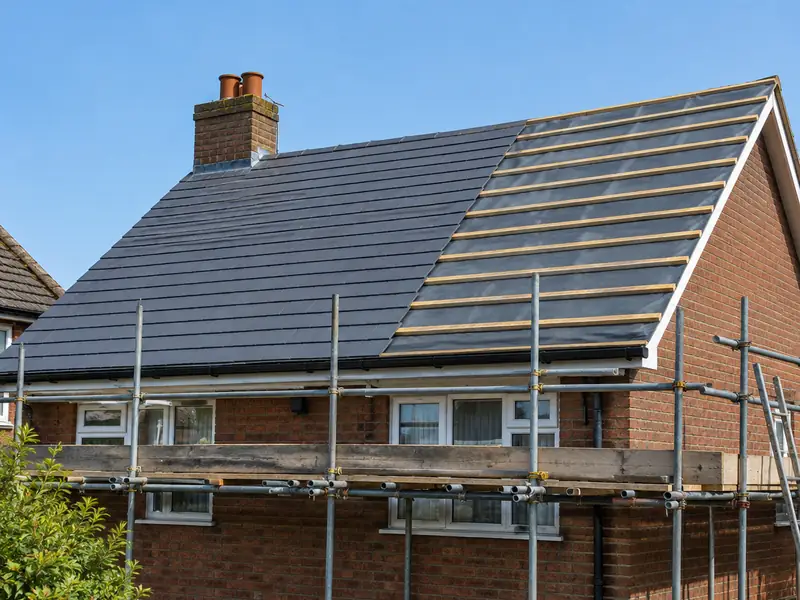
A roof replacement, or re-roof, strips the old tiles or slates, battens and felt from a pitched roof and replaces them with a new breathable membrane, battens and covering, repairing timbers and renewing ridges, valleys and flashings at the same time.
Across Nottinghamshire, people look into a new roof to replace something worn out, to make the house work better for them, or to get it ready for a sale. We cover Nottingham, Mansfield, Worksop and Newark-on-Trent and the smaller towns around them, working to the rules that apply in England. Expect a guide of £6,700–£14,500, VAT included, in the East Midlands, and every quote follows a free visit.
- Guide price
- £6,700–£14,500 inc VAT
- Time on site
- 1–2 weeks on site, plus scaffolding time
- Planning rules
- England
- Price level
- About 4% below the national guide
- Towns listed
- 12
- Survey
- Free, with a written quote
How much does a new roof cost in Nottinghamshire?
These are guide costs, not quotes. For a new roof in Nottinghamshire the range is £6,700–£14,500, VAT included, reflecting prices in the East Midlands that are about 4% below the national guide. Once we have visited for a free survey, you get a firm figure for the scope you approve.
| Type of job | What it usually involves | Guide in Nottinghamshire |
|---|---|---|
| Terraced house or bungalow | A smaller pitched roof re-covered in concrete or clay tiles, including scaffolding. | £4,800–£9,600 |
| Typical semi-detached | A 3-bed semi re-roofed in concrete or clay tiles with new membrane, battens and leadwork. | £6,700–£14,500 |
| Detached or natural slate | Larger or more complex roofs, or any roof finished in natural slate. | £11,500–£24,000 |
The main things that change the figure:
- Covering material: concrete tile, clay tile or natural slate
- Condition of rafters, fascias and other timbers
- Chimneys, leadwork and roof windows to rework
- Scaffolding, access and the height of the house
Scope of the work
- Survey of the covering, timbers, chimneys and loft ventilation
- Scaffolding with edge protection, erected and removed
- Stripping old tiles or slates, battens and felt in stages
- New tiles or slates, or sound originals refitted where suitable
- Ridges, hips and verges dry-fixed or bedded, with new leadwork
- Waste removal by skip and a clean site on completion
Housing across Nottinghamshire
Nottingham has large areas of Victorian red-brick terraces, with Edwardian villas in Mapperley and Sherwood and big interwar council estates. Mansfield, Ashfield and Worksop have brick terraces and post-war housing built for mining communities, while Newark and Southwell keep Georgian centres. New estates continue to appear around Nottingham and the larger towns.
Terraces commonly suit loft rooms, rear extensions and repointing. Interwar semis take side extensions and garage conversions, and older buildings in Newark or Southwell may need conservation-area window choices.
A moderate, fairly dry climate, but the Trent flood plain affects low-lying areas, and former coal workings can influence ground conditions.
Planning and building rules in Nottinghamshire
Each UK nation sets its own consent rules, and Nottinghamshire is in England. What follows is a plain summary; we check the specifics for your property with the council before pricing anything.
Re-roofing a house with similar materials does not usually need planning permission in England. Listed buildings and conservation areas may need consent if the covering changes.
Replacing more than a quarter of a roof’s covering counts as renovation under Building Regulations, so the work is notified and the roof insulation may need upgrading. Bats are protected across the UK; if they roost under roof tiles, soffits or fascias, work stops and a licensed ecologist advises before it restarts.
Rules change and every property is different, so we check the planning history and constraints for your address before we quote.
From survey to handover
Free site survey
We arrange a free site survey on a date convenient to you. We measure up, look at the existing structure and access, and discuss your plans for a new roof so the price reflects your home.
Quote in writing
We put everything into a written, fixed-price quote: the specification, what's excluded, staged payments and the expected time on site. Take whatever time you need to decide; there's no pressure to commit.
Dates and permissions
Preparation matters as much as the build. We agree access, parking and working hours with you, order materials in good time, and confirm any permissions so the job isn't held up once it starts.
On site to finish
The job proceeds in the order set out in the programme, with dust and debris kept under control. Finally we tidy away, inspect the work together and pass the finished project over to you with its paperwork.
How we work
Questions about a new roof in Nottinghamshire
Will my loft insulation and ventilation be improved?
Re-roofing is a good time to improve loft ventilation and insulation. A breathable membrane and eaves or ridge vents keep air moving and reduce condensation in the loft. Building regulations may require insulation upgrades when a large part of the roof is renewed. We check your current insulation and ventilation and include any required improvements in the quote.
Can you combine a new roof with other work?
Yes. Because we manage several trades under one contract, we can plan a new roof alongside other work on your Nottinghamshire home, such as new windows with rendering, or a kitchen refit with an extension. Combining jobs can reduce repeat set-up such as scaffolding, skips and access, and every element is listed and priced in the same written quote.
Do I need planning permission in Nottinghamshire?
It depends on the work, the size of the project, your property type and whether the building is listed or in a conservation area. Nottinghamshire is in England, so England's rules apply. Many smaller jobs need no planning application, but some still need building control approval. We check what applies to your address before quoting.
How long will a new roof last?
A well-installed roof lasts for decades. Concrete tiles typically last around 50 years or more, clay tiles longer, and natural slate can last a century with proper upkeep. Lifespan depends on the quality of materials, fixings, ventilation and leadwork, and on how exposed the roof is. Keeping gutters clear and fixing slipped tiles quickly helps it reach its full life.
How much does a new roof cost?
Re-roofing a typical 3-bed semi costs £6,700–£14,500, including scaffolding, new membrane and battens. As a guide, allow roughly £70–£160 per square metre of roof plus fixed costs for scaffolding and waste. Concrete tiles sit at the lower end and natural slate at the top. Hips, valleys, chimneys and timber repairs add to the price. We confirm a fixed figure after inspecting the roof and loft.
Towns in Nottinghamshire
Our coverage for a new roof in Nottinghamshire includes the towns listed here. Each page explains guide costs, typical timings and the neighbouring places we also serve.