
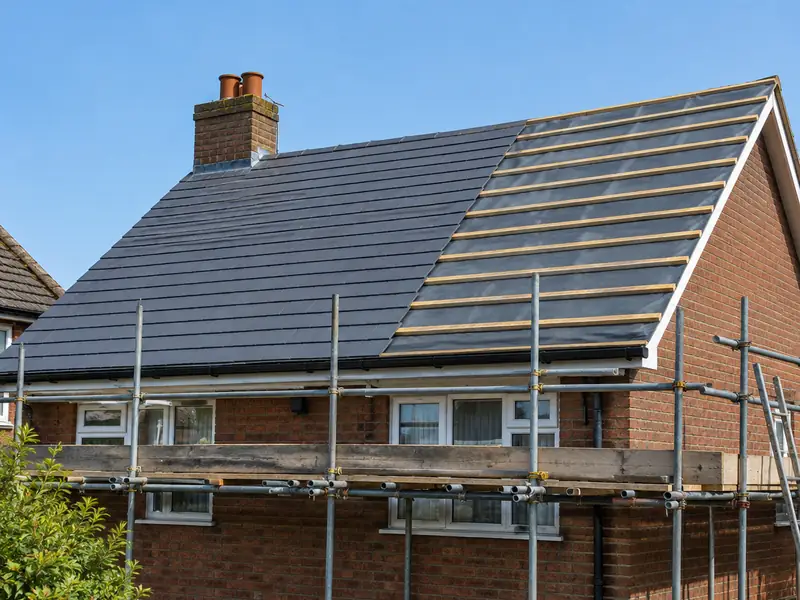
A roof replacement, or re-roof, strips the old tiles or slates, battens and felt from a pitched roof and replaces them with a new breathable membrane, battens and covering, repairing timbers and renewing ridges, valleys and flashings at the same time.
Whether you live in one of the larger towns, such as Redruth, Falmouth, St Austell and Truro, or somewhere quieter in Cornwall, the way we handle a new roof is identical. We survey, agree the specification with you, and confirm a fixed price on paper. Everything is planned under the regulations in force in England, and guide costs in the South West sit at £7,100–£15,500 with VAT.
- Guide price
- £7,100–£15,500 inc VAT
- Time on site
- 1–2 weeks on site, plus scaffolding time
- Planning rules
- England
- Price level
- About 2% above the national guide
- Towns listed
- 7
- Survey
- Free, with a written quote
Roof replacement prices in Cornwall
In Cornwall, guide figures for a new roof sit at £7,100–£15,500, VAT included. We set them using rates for the South West, currently about 2% above the national guide. The table shows what pushes a project towards either end of the range; your own price is set after a free survey.
| Type of job | What it usually involves | Guide in Cornwall |
|---|---|---|
| Terraced house or bungalow | A smaller pitched roof re-covered in concrete or clay tiles, including scaffolding. | £5,100–£10,000 |
| Typical semi-detached | A 3-bed semi re-roofed in concrete or clay tiles with new membrane, battens and leadwork. | £7,100–£15,500 |
| Detached or natural slate | Larger or more complex roofs, or any roof finished in natural slate. | £12,000–£25,500 |
What moves the price up or down:
- Roof area, pitch and the number of hips, valleys and dormers
- Covering material: concrete tile, clay tile or natural slate
- Chimneys, leadwork and roof windows to rework
- Scaffolding, access and the height of the house
Scope of the work
- Survey of the covering, timbers, chimneys and loft ventilation
- Stripping old tiles or slates, battens and felt in stages
- Repairs or replacement of damaged rafters and fascia boards
- Breathable membrane and new treated battens
- New tiles or slates, or sound originals refitted where suitable
- Waste removal by skip and a clean site on completion
Housing across Cornwall
Older Cornish homes are often built of granite or slatey local stone, with slate roofs and sometimes slate-hung walls facing the weather. Cob cottages survive in places, Truro and Falmouth keep Georgian and Victorian streets, and many towns have rendered post-war houses, bungalows and newer estates on their edges.
Stone and cob properties often need breathable lime render, careful repointing and roof repairs. Post-war and newer homes commonly benefit from new windows, roofline renewal, external rendering and single-storey extensions.
Cornwall faces Atlantic gales, driving rain and salt-laden air, so render, pointing and window hardware on exposed elevations need a suitably robust specification.
Planning and building rules in Cornwall
As Cornwall is in England, read the following with that system of planning and building control in mind. We check what applies to your house with the council before you receive a quote.
Re-roofing a house with similar materials does not usually need planning permission in England. Listed buildings and conservation areas may need consent if the covering changes.
Replacing more than a quarter of a roof’s covering counts as renovation under Building Regulations, so the work is notified and the roof insulation may need upgrading. Bats are protected across the UK; if they roost under roof tiles, soffits or fascias, work stops and a licensed ecologist advises before it restarts.
Rules change and every property is different, so we check the planning history and constraints for your address before we quote.
The four stages
Survey and measure
We begin by looking at the job in person. During the free survey we discuss options, materials and budget for a new roof, and photograph or measure anything the quote needs to reflect.
Written quote
We turn the survey notes into a written quote. The price is fixed for the specification we agree, and the document sets out materials, scope and payment stages in plain language.
Booking the work
Once you accept, we agree start dates, order materials and deal with any planning, building control or neighbour notices the job needs. You'll know who is coming and when before work begins.
Finish and handover
Our trades complete a new roof while your point of contact keeps you updated. When everything is finished, we clear the site, take away waste and go through the result with you before handover.
How we work
Frequently asked questions
How do I know if I need a new roof or just repairs?
A roof needs replacing when problems are widespread, not isolated. Signs include many slipped, cracked or porous tiles, sagging between rafters, daylight or damp in the loft, perished felt that crumbles to the touch and repeated leaks in different places. A few slipped tiles or a loose ridge can usually be repaired. We inspect from outside and inside the loft and tell you honestly which is needed.
How long does a roof replacement take?
Re-roofing a typical semi-detached house takes around one to two weeks once scaffolding is up, depending on the roof's size, complexity and the weather. Smaller terraced roofs can take a few days. Scaffolding usually goes up a day or two before work starts and comes down once everything is inspected. We give you a programme and keep the roof weathertight overnight.
Is the price fixed?
Yes, for the specification we agree. Your written quote sets out exactly what is included at a fixed price. It only changes if you ask for something different, or if a problem the survey could not reasonably reveal later needs extra work. In either case we explain the change and confirm it in writing before going ahead.
How long will a new roof take?
On a typical home, allow 1–2 weeks on site, plus scaffolding time. Larger projects, older buildings and extra work found once things are opened up can extend that, while simpler jobs may be shorter. Your quote includes an estimate of time on site, and your point of contact keeps you updated on the programme as the work progresses.
Do I need planning permission to replace my roof?
Planning permission is not usually needed to re-roof in similar materials, but it depends on the change, your home's location, whether it is listed or in a conservation area, and which UK nation you live in. Changing the roof shape, height or covering material can need permission. Listed buildings need consent for re-roofing. We check the position for your home before quoting.
Towns in Cornwall
These are the towns in Cornwall where you can book a free survey for a new roof. Each has its own page with guide prices and coverage details.