
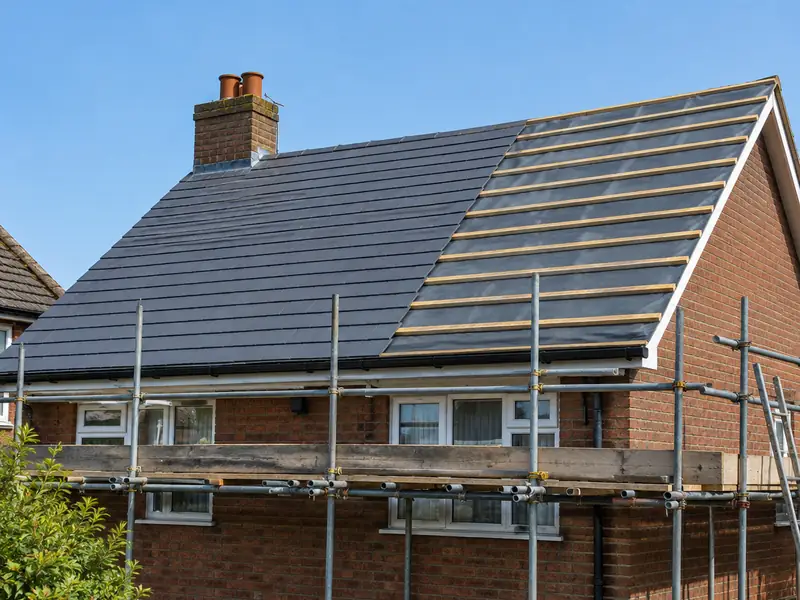
A roof replacement, or re-roof, strips the old tiles or slates, battens and felt from a pitched roof and replaces them with a new breathable membrane, battens and covering, repairing timbers and renewing ridges, valleys and flashings at the same time.
If you are planning a new roof anywhere in Norfolk, including Norwich, Great Yarmouth, King's Lynn and Thetford, we can visit, measure up and talk through the options. The planning and building regulations we work to are those for England, and we check them for your address before quoting. Prices remain guide figures for the East of England, at £7,400–£16,000 including VAT, until the survey is done.
- Guide price
- £7,400–£16,000 inc VAT
- Time on site
- 1–2 weeks on site, plus scaffolding time
- Planning rules
- England
- Price level
- About 5% above the national guide
- Towns listed
- 6
- Survey
- Free, with a written quote
Roof replacement prices in Norfolk
Prices for a new roof vary from house to house, but in Norfolk most projects fall within £7,400–£16,000 including VAT. That reflects costs in the East of England, about 5% above the national guide. Treat the table as a budgeting aid; the written figure follows a survey we carry out for free.
| Type of job | What it usually involves | Guide in Norfolk |
|---|---|---|
| Terraced house or bungalow | A smaller pitched roof re-covered in concrete or clay tiles, including scaffolding. | £5,200–£10,500 |
| Typical semi-detached | A 3-bed semi re-roofed in concrete or clay tiles with new membrane, battens and leadwork. | £7,400–£16,000 |
| Detached or natural slate | Larger or more complex roofs, or any roof finished in natural slate. | £12,500–£26,000 |
Your price depends mostly on:
- Roof area, pitch and the number of hips, valleys and dormers
- Condition of rafters, fascias and other timbers
- Chimneys, leadwork and roof windows to rework
- Scaffolding, access and the height of the house
Scope of the work
- Scaffolding with edge protection, erected and removed
- Stripping old tiles or slates, battens and felt in stages
- Breathable membrane and new treated battens
- New tiles or slates, or sound originals refitted where suitable
- Ridges, hips and verges dry-fixed or bedded, with new leadwork
- Waste removal by skip and a clean site on completion
Housing across Norfolk
Flint is everywhere in Norfolk, often combined with brick quoins and red or black-glazed pantile roofs. Norwich has Victorian terraces and interwar suburbs around its medieval centre, Norfolk reed thatch survives across the county, carrstone is used in the west, and coastal towns such as Great Yarmouth and Cromer have Victorian terraces and newer bungalows.
Flint walls often need lime repointing and careful repairs, and pantile roofs need matching tiles. Norwich terraces suit loft conversions and rear extensions, while coastal bungalows commonly take loft rooms, porches and new windows.
Norfolk is dry but exposed, with strong easterly winds, an eroding coast in places and low-lying land around the Broads.
Planning and building rules in Norfolk
Homes in Norfolk come under the regulations for England, summarised below. We don't rely on general rules alone: we confirm the position for your address with the council before a quote goes out.
Re-roofing a house with similar materials does not usually need planning permission in England. Listed buildings and conservation areas may need consent if the covering changes.
Replacing more than a quarter of a roof’s covering counts as renovation under Building Regulations, so the work is notified and the roof insulation may need upgrading. Bats are protected across the UK; if they roost under roof tiles, soffits or fascias, work stops and a licensed ecologist advises before it restarts.
Rules change and every property is different, so we check the planning history and constraints for your address before we quote.
The four stages
Free site survey
We arrange a free site survey on a date convenient to you. We measure up, look at the existing structure and access, and discuss your plans for a new roof so the price reflects your home.
Your fixed price
We put everything into a written, fixed-price quote: the specification, what's excluded, staged payments and the expected time on site. Take whatever time you need to decide; there's no pressure to commit.
Plan and prepare
Preparation matters as much as the build. We agree access, parking and working hours with you, order materials in good time, and confirm any permissions so the job isn't held up once it starts.
The work itself
During the work we protect the areas around it and tidy up at the end of each day. Once complete, we check the finish, remove our materials and hand over paperwork such as building control sign-off where it applies.
What you can expect from us
Frequently asked questions
How long does a roof replacement take?
Re-roofing a typical semi-detached house takes around one to two weeks once scaffolding is up, depending on the roof's size, complexity and the weather. Smaller terraced roofs can take a few days. Scaffolding usually goes up a day or two before work starts and comes down once everything is inspected. We give you a programme and keep the roof weathertight overnight.
Who do I deal with during the job?
One point of contact manages your project from survey to handover. They schedule the trades working under our contract, keep you updated on progress, and are the person to call with any question. You don't need to coordinate builders, electricians or decorators separately, because that is part of what we do.
Can you combine a new roof with other work?
Yes. Because we manage several trades under one contract, we can plan a new roof alongside other work on your Norfolk home, such as new windows with rendering, or a kitchen refit with an extension. Combining jobs can reduce repeat set-up such as scaffolding, skips and access, and every element is listed and priced in the same written quote.
Do I need planning permission to replace my roof?
Planning permission is not usually needed to re-roof in similar materials, but it depends on the change, your home's location, whether it is listed or in a conservation area, and which UK nation you live in. Changing the roof shape, height or covering material can need permission. Listed buildings need consent for re-roofing. We check the position for your home before quoting.
How do I know if I need a new roof or just repairs?
A roof needs replacing when problems are widespread, not isolated. Signs include many slipped, cracked or porous tiles, sagging between rafters, daylight or damp in the loft, perished felt that crumbles to the touch and repeated leaks in different places. A few slipped tiles or a loose ridge can usually be repaired. We inspect from outside and inside the loft and tell you honestly which is needed.
Towns in Norfolk
Looking for a new roof somewhere in Norfolk? Start with the towns below; each links to a page with pricing for your region and coverage details.