
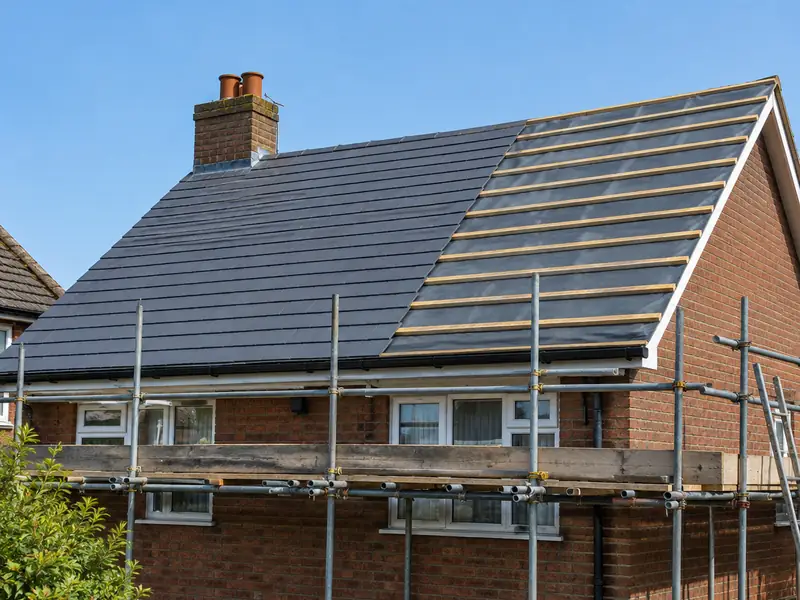
A roof replacement, or re-roof, strips the old tiles or slates, battens and felt from a pitched roof and replaces them with a new breathable membrane, battens and covering, repairing timbers and renewing ridges, valleys and flashings at the same time.
In Ayrshire, we price a new roof against our guide for Scotland, £6,700–£14,500 including VAT, then adjust it once we have surveyed your home. We work across Kilmarnock, Ayr, Irvine and Kilwinning and the rest of the county or region. Planning and building control requirements follow the rules for Scotland, and we look into your property's position before a written quote is sent.
- Guide price
- £6,700–£14,500 inc VAT
- Time on site
- 1–2 weeks on site, plus scaffolding time
- Planning rules
- Scotland
- Price level
- About 4% below the national guide
- Towns listed
- 4
- Survey
- Free, with a written quote
How much does a new roof cost in Ayrshire?
The costs listed here are typical for a new roof around Ayrshire and include VAT. They reflect labour and material costs in Scotland, about 4% below the national guide, giving a range of £6,700–£14,500. Exact pricing depends on your home, so we only fix it once a free site survey is done.
| Type of job | What it usually involves | Guide in Ayrshire |
|---|---|---|
| Terraced house or bungalow | A smaller pitched roof re-covered in concrete or clay tiles, including scaffolding. | £4,800–£9,600 |
| Typical semi-detached | A 3-bed semi re-roofed in concrete or clay tiles with new membrane, battens and leadwork. | £6,700–£14,500 |
| Detached or natural slate | Larger or more complex roofs, or any roof finished in natural slate. | £11,500–£24,000 |
What moves the price up or down:
- Roof area, pitch and the number of hips, valleys and dormers
- Covering material: concrete tile, clay tile or natural slate
- Condition of rafters, fascias and other timbers
- Chimneys, leadwork and roof windows to rework
What do you get?
- Survey of the covering, timbers, chimneys and loft ventilation
- Stripping old tiles or slates, battens and felt in stages
- Repairs or replacement of damaged rafters and fascia boards
- New tiles or slates, or sound originals refitted where suitable
- Ridges, hips and verges dry-fixed or bedded, with new leadwork
- Waste removal by skip and a clean site on completion
Housing across Ayrshire
Ayr, Kilmarnock and the coastal towns from Largs to Girvan have Victorian sandstone villas and terraces, with red sandstone common in older buildings. Former mining villages have rows of cottages, Irvine was developed as a new town from the 1960s, and harled post-war houses and newer estates are found across the area.
Sandstone homes need careful repointing and stone repairs, and harled houses commonly need re-rendering. Villas and semis suit extensions and loft conversions, and coastal homes often take window and roofline renewal.
The Firth of Clyde coast is exposed to westerly winds, salt and frequent rain, which affects render, roofs and window seals.
Planning and building rules in Ayrshire
Which rules apply depends on where you live. For Ayrshire, the answer is Scotland, and the points below reflect that; we verify them with the council before quoting.
In Scotland, like-for-like re-roofing does not usually need planning permission, except on listed buildings or in conservation areas.
Like-for-like re-covering does not usually need a building warrant, but structural changes or new roof windows can. Bats are protected across the UK; if they roost under roof tiles, soffits or fascias, work stops and a licensed ecologist advises before it restarts.
Rules change and every property is different, so we check the planning history and constraints for your address before we quote.
The four stages
Free site survey
We begin by looking at the job in person. During the free survey we discuss options, materials and budget for a new roof, and photograph or measure anything the quote needs to reflect.
Your fixed price
The quote arrives in writing, not over the phone. It covers the full scope, the finishes you've chosen, any exclusions and the payment schedule, with a fixed price tied to that specification.
Getting ready
Once you accept, we agree start dates, order materials and deal with any planning, building control or neighbour notices the job needs. You'll know who is coming and when before work begins.
On site to finish
During the work we protect the areas around it and tidy up at the end of each day. Once complete, we check the finish, remove our materials and hand over paperwork such as building control sign-off where it applies.
What you can expect from us
Frequently asked questions
Can my old tiles or slates be reused?
Old tiles or slates can sometimes be reused if they are sound, which can help keep the look of a period house. Many older concrete tiles and some slates are porous, cracked or have failing fixing nibs, so they would not last. Reclaimed slates or tiles can make up shortfalls. We check a sample during the survey and explain the cost difference.
How long will a new roof take?
On a typical home, allow 1–2 weeks on site, plus scaffolding time. Larger projects, older buildings and extra work found once things are opened up can extend that, while simpler jobs may be shorter. Your quote includes an estimate of time on site, and your point of contact keeps you updated on the programme as the work progresses.
What happens at the survey?
We visit your home at a time that suits you, look at the area involved, take measurements and check access, condition and any services that might be affected. We talk through what you want from a new roof, explain the options and answer questions. There is no charge and no obligation; afterwards we send a written quote.
How much does a new roof cost?
Re-roofing a typical 3-bed semi costs £6,700–£14,500, including scaffolding, new membrane and battens. As a guide, allow roughly £70–£160 per square metre of roof plus fixed costs for scaffolding and waste. Concrete tiles sit at the lower end and natural slate at the top. Hips, valleys, chimneys and timber repairs add to the price. We confirm a fixed figure after inspecting the roof and loft.
How long will a new roof last?
A well-installed roof lasts for decades. Concrete tiles typically last around 50 years or more, clay tiles longer, and natural slate can last a century with proper upkeep. Lifespan depends on the quality of materials, fixings, ventilation and leadwork, and on how exposed the roof is. Keeping gutters clear and fixing slipped tiles quickly helps it reach its full life.
Towns in Ayrshire
Choose your town from the list to see how we price and plan a new roof in your part of Ayrshire, including typical time on site.