
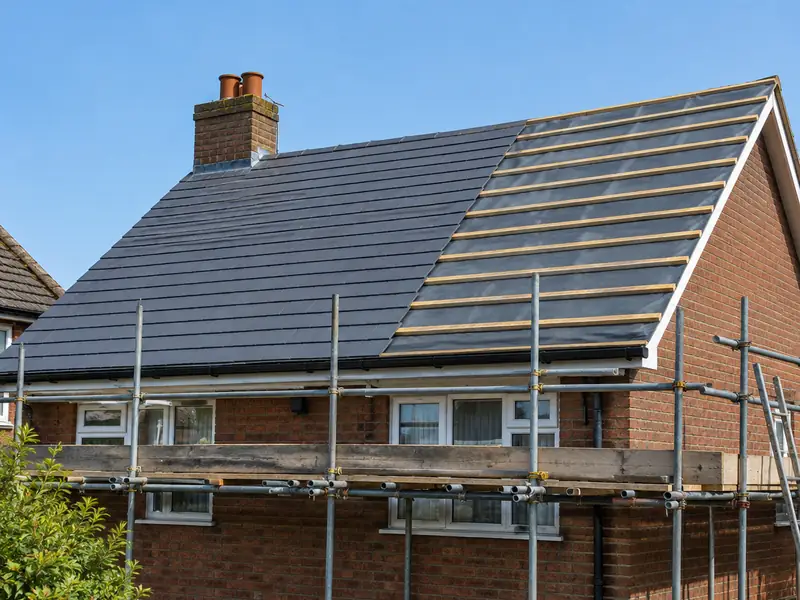
A roof replacement, or re-roof, strips the old tiles or slates, battens and felt from a pitched roof and replaces them with a new breathable membrane, battens and covering, repairing timbers and renewing ridges, valleys and flashings at the same time.
Whether you live in one of the larger towns, such as Oxford, Banbury, Abingdon and Bicester, or somewhere quieter in Oxfordshire, the way we handle a new roof is identical. We survey, agree the specification with you, and confirm a fixed price on paper. Everything is planned under the regulations in force in England, and guide costs in the South East sit at £7,800–£17,000 with VAT.
- Guide price
- £7,800–£17,000 inc VAT
- Time on site
- 1–2 weeks on site, plus scaffolding time
- Planning rules
- England
- Price level
- About 12% above the national guide
- Towns listed
- 6
- Survey
- Free, with a written quote
Roof replacement prices in Oxfordshire
Here is how the guide price for a new roof breaks down in Oxfordshire. We start from national figures and adjust for the South East, which comes out about 12% above the national guide. The resulting range, VAT included, is £7,800–£17,000, and a survey, at no cost to you, firms it up.
| Type of job | What it usually involves | Guide in Oxfordshire |
|---|---|---|
| Terraced house or bungalow | A smaller pitched roof re-covered in concrete or clay tiles, including scaffolding. | £5,600–£11,000 |
| Typical semi-detached | A 3-bed semi re-roofed in concrete or clay tiles with new membrane, battens and leadwork. | £7,800–£17,000 |
| Detached or natural slate | Larger or more complex roofs, or any roof finished in natural slate. | £13,500–£28,000 |
What moves the price up or down:
- Roof area, pitch and the number of hips, valleys and dormers
- Covering material: concrete tile, clay tile or natural slate
- Condition of rafters, fascias and other timbers
- Chimneys, leadwork and roof windows to rework
What’s included?
- Scaffolding with edge protection, erected and removed
- Stripping old tiles or slates, battens and felt in stages
- Repairs or replacement of damaged rafters and fascia boards
- Breathable membrane and new treated battens
- New tiles or slates, or sound originals refitted where suitable
- Ridges, hips and verges dry-fixed or bedded, with new leadwork
Housing across Oxfordshire
West Oxfordshire's Cotswold villages are built of honey-coloured limestone, while Banbury and the north use orange ironstone. Oxford has Victorian terraces in Jericho and East Oxford and Gothic brick villas in North Oxford. Didcot, Bicester and Witney have grown with large new estates around older market-town centres.
Stone cottages often need lime pointing and conservation-sensitive windows. Victorian terraces suit loft conversions and side-return extensions, and newer estate homes commonly take garage conversions and garden landscaping.
Low ground around Oxford and Abingdon floods from the Thames and its tributaries; the Cotswold uplands are more exposed to wind and frost.
Do you need permission in Oxfordshire?
For anyone in Oxfordshire, the relevant framework is England's. The summary below is general, so we always contact the council about your address before putting a price in writing.
Re-roofing a house with similar materials does not usually need planning permission in England. Listed buildings and conservation areas may need consent if the covering changes.
Replacing more than a quarter of a roof’s covering counts as renovation under Building Regulations, so the work is notified and the roof insulation may need upgrading. Bats are protected across the UK; if they roost under roof tiles, soffits or fascias, work stops and a licensed ecologist advises before it restarts.
Rules change and every property is different, so we check the planning history and constraints for your address before we quote.
How does the job run?
A visit to your home
We begin by looking at the job in person. During the free survey we discuss options, materials and budget for a new roof, and photograph or measure anything the quote needs to reflect.
Written quote
We put everything into a written, fixed-price quote: the specification, what's excluded, staged payments and the expected time on site. Take whatever time you need to decide; there's no pressure to commit.
Getting ready
We handle the paperwork side: checking whether planning permission or building control approval is needed, submitting applications where they are, and scheduling the trades and materials around your dates.
On site to finish
Our trades complete a new roof while your point of contact keeps you updated. When everything is finished, we clear the site, take away waste and go through the result with you before handover.
What you can expect from us
Frequently asked questions
Who do I deal with during the job?
One point of contact manages your project from survey to handover. They schedule the trades working under our contract, keep you updated on progress, and are the person to call with any question. You don't need to coordinate builders, electricians or decorators separately, because that is part of what we do.
How do I know if I need a new roof or just repairs?
A roof needs replacing when problems are widespread, not isolated. Signs include many slipped, cracked or porous tiles, sagging between rafters, daylight or damp in the loft, perished felt that crumbles to the touch and repeated leaks in different places. A few slipped tiles or a loose ridge can usually be repaired. We inspect from outside and inside the loft and tell you honestly which is needed.
Can I stay at home during the work?
In most cases, yes. Most people can live at home throughout, and we plan the work to keep disruption down by protecting floors, agreeing working hours and keeping access routes clear. Bigger jobs affecting kitchens, bathrooms or heating may mean a short spell with reduced facilities, and we talk this through with you at the survey.
How long will a new roof last?
A well-installed roof lasts for decades. Concrete tiles typically last around 50 years or more, clay tiles longer, and natural slate can last a century with proper upkeep. Lifespan depends on the quality of materials, fixings, ventilation and leadwork, and on how exposed the roof is. Keeping gutters clear and fixing slipped tiles quickly helps it reach its full life.
Will my loft insulation and ventilation be improved?
Re-roofing is a good time to improve loft ventilation and insulation. A breathable membrane and eaves or ridge vents keep air moving and reduce condensation in the loft. Building regulations may require insulation upgrades when a large part of the roof is renewed. We check your current insulation and ventilation and include any required improvements in the quote.
Towns in Oxfordshire
Below is our list of Oxfordshire towns for a new roof. If yours isn't shown, we may still cover it, so it is worth asking us directly.