
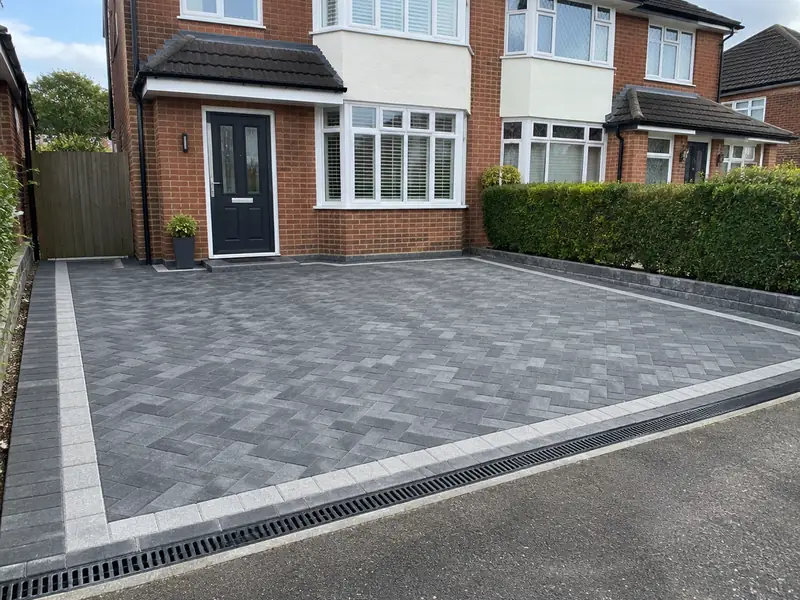
A new driveway is a hard-wearing surface for parking, such as block paving, resin bound gravel, tarmac or gravel, laid on an excavated and compacted sub-base with edging and drainage designed to carry vehicle loads and handle rainwater.
Across Oxfordshire, people look into a new driveway to replace something worn out, to make the house work better for them, or to get it ready for a sale. We cover Oxford, Banbury, Abingdon and Bicester and the smaller towns around them, working to the rules that apply in England. Expect a guide of £4,500–£10,000, VAT included, in the South East, and every quote follows a free visit.
- Guide price
- £4,500–£10,000 inc VAT
- Time on site
- 3–7 days on site
- Planning rules
- England
- Price level
- About 12% above the national guide
- Towns listed
- 6
- Survey
- Free, with a written quote
How much does a new driveway cost in Oxfordshire?
These are guide costs, not quotes. For a new driveway in Oxfordshire the range is £4,500–£10,000, VAT included, reflecting prices in the South East that are about 12% above the national guide. Once we have visited for a free survey, you get a firm figure for the scope you approve.
| Type of job | What it usually involves | Guide in Oxfordshire |
|---|---|---|
| Gravel or tarmac | A typical 40–50m² drive in gravel on a grid, or tarmac with block edging. | £2,200–£5,600 |
| Block paving or resin bound | A typical 40–50m² drive with sub-base, edging and drainage. | £4,500–£10,000 |
| Large or premium driveway | Larger drives, natural stone, walls, steps or a new dropped kerb. | £9,000–£18,000 |
The main things that change the figure:
- Driveway area and the depth of excavation needed
- Surface: gravel, tarmac, block paving, resin or stone
- Drainage, soakaways and changes in level
- Access for machinery and removal of spoil
Scope of the work
- Survey of levels, drainage, manholes and access
- Excavation and removal of the old surface and soil
- Weed membrane and compacted MOT Type 1 sub-base
- Edging kerbs or restraints to hold the surface in place
- Drainage channels or soakaway where needed
- Manhole covers raised or replaced to new levels
Housing across Oxfordshire
West Oxfordshire's Cotswold villages are built of honey-coloured limestone, while Banbury and the north use orange ironstone. Oxford has Victorian terraces in Jericho and East Oxford and Gothic brick villas in North Oxford. Didcot, Bicester and Witney have grown with large new estates around older market-town centres.
Stone cottages often need lime pointing and conservation-sensitive windows. Victorian terraces suit loft conversions and side-return extensions, and newer estate homes commonly take garage conversions and garden landscaping.
Low ground around Oxford and Abingdon floods from the Thames and its tributaries; the Cotswold uplands are more exposed to wind and frost.
Planning and building rules in Oxfordshire
Oxfordshire is in England, so the planning and building rules set out below are the ones that apply. We confirm the details with the council before we quote.
In England, a new or replacement front-garden surface over 5 m² needs planning permission unless it is permeable or drains to a lawn or border within your property. A new dropped kerb needs consent from the council’s highways team, and access onto a classified road may need planning permission.
Building Regulations do not usually apply to driveways, but drainage must not discharge onto the road or a neighbour’s land.
Rules change and every property is different, so we check the planning history and constraints for your address before we quote.
The four stages
We look at the job
We arrange a free site survey on a date convenient to you. We measure up, look at the existing structure and access, and discuss your plans for a new driveway so the price reflects your home.
Quote in writing
The quote arrives in writing, not over the phone. It covers the full scope, the finishes you've chosen, any exclusions and the payment schedule, with a fixed price tied to that specification.
Getting ready
Next comes planning the work itself. We set a start date that suits you, line up the right trades, and make sure any approvals for a new driveway are in place before the first day on site.
Build and hand over
The work is carried out to the agreed specification, with floors and furniture protected and the site kept tidy. At the end we clean up, walk through the finished job with you and hand over any certificates.
How we work
Questions about a new driveway in Oxfordshire
What happens at the survey?
We visit your home at a time that suits you, look at the area involved, take measurements and check access, condition and any services that might be affected. We talk through what you want from a new driveway, explain the options and answer questions. There is no charge and no obligation; afterwards we send a written quote.
How much does a new driveway cost?
A typical 40–50m² block paved or resin bound driveway costs £4,500–£10,000, including excavation, sub-base, edging and drainage. As a guide, allow roughly £70–£150 per square metre plus fixed costs for machinery and waste. Gravel and tarmac cost less, while natural stone, steps and walls cost more. A new dropped kerb is a separate cost. We confirm a fixed price after measuring.
How long will a new driveway take?
On a typical home, allow 3–7 days on site. Larger projects, older buildings and extra work found once things are opened up can extend that, while simpler jobs may be shorter. Your quote includes an estimate of time on site, and your point of contact keeps you updated on the programme as the work progresses.
Do I need planning permission for a driveway?
Whether a driveway needs planning permission depends on its size, surface and drainage, your home's location, whether it is listed or in a conservation area, and which UK nation you are in. In England, a new or replacement front driveway over 5m² needs permission unless it uses a permeable surface or drains to a lawn or border. We check the rules and design to suit.
What is a sub-base and why does it matter?
The sub-base is the layer of crushed, compacted stone beneath the driveway surface that spreads the weight of vehicles into the ground. Most driveway failures, such as sinking, rutting and loose blocks, come from a sub-base that is too thin or poorly compacted. We excavate to the right depth for your soil and compact the sub-base in layers before laying the surface.
Towns in Oxfordshire
These are the towns in Oxfordshire where you can book a free survey for a new driveway. Each has its own page with guide prices and coverage details.