
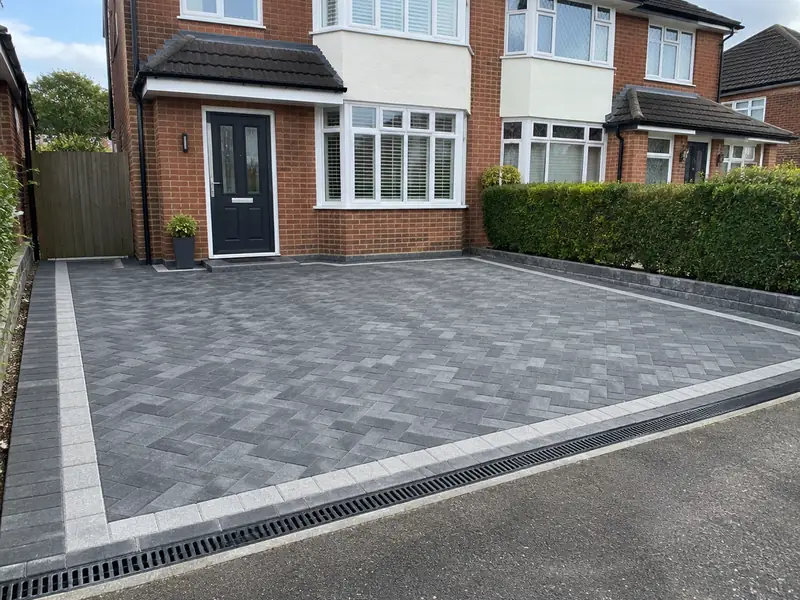
A new driveway is a hard-wearing surface for parking, such as block paving, resin bound gravel, tarmac or gravel, laid on an excavated and compacted sub-base with edging and drainage designed to carry vehicle loads and handle rainwater.
Thinking about a new driveway in Oxford? We take charge of the whole project, co-ordinating every trade involved, and one person keeps you updated. Guide prices for the South East sit at £4,500–£10,000 including VAT, and a typical job takes 3–7 days on site. Your own figure depends on what the survey finds and the specification you settle on.
- Guide price
- £4,500–£10,000 inc VAT
- Time on site
- 3–7 days on site
- Postcodes
- OX1, OX2, OX3 and OX4
- Planning rules
- England
- Local area
- Oxfordshire
- Survey
- Free, with a written quote
Driveways prices in Oxford
What will a new driveway cost in Oxford? Our guide range is £4,500–£10,000 including VAT. That figure is adjusted for the South East, about 12% above the national guide, and is intended for planning a budget. A firm written price for your chosen specification follows a free survey at your home.
| Type of job | What it usually involves | Guide in Oxford |
|---|---|---|
| Gravel or tarmac | A typical 40–50m² drive in gravel on a grid, or tarmac with block edging. | £2,200–£5,600 |
| Block paving or resin bound | A typical 40–50m² drive with sub-base, edging and drainage. | £4,500–£10,000 |
| Large or premium driveway | Larger drives, natural stone, walls, steps or a new dropped kerb. | £9,000–£18,000 |
Expect these to shape the final quote:
- Driveway area and the depth of excavation needed
- Surface: gravel, tarmac, block paving, resin or stone
- Drainage, soakaways and changes in level
- Access for machinery and removal of spoil
Scope of the work
- Survey of levels, drainage, manholes and access
- Weed membrane and compacted MOT Type 1 sub-base
- Drainage channels or soakaway where needed
- Manhole covers raised or replaced to new levels
- New surface laid, compacted and finished
- Site cleared and waste removed
Homes in Oxfordshire
West Oxfordshire's Cotswold villages are built of honey-coloured limestone, while Banbury and the north use orange ironstone. Oxford has Victorian terraces in Jericho and East Oxford and Gothic brick villas in North Oxford. Didcot, Bicester and Witney have grown with large new estates around older market-town centres.
Stone cottages often need lime pointing and conservation-sensitive windows. Victorian terraces suit loft conversions and side-return extensions, and newer estate homes commonly take garage conversions and garden landscaping.
Whatever era your Oxford home dates from, we plan a new driveway around how it is actually built rather than a one-size-fits-all specification.
Planning and building rules in Oxford
The notes below cover England, which is where Oxford sits. Rules change and every property is different, so we speak to the council before pricing your job.
In England, a new or replacement front-garden surface over 5 m² needs planning permission unless it is permeable or drains to a lawn or border within your property. A new dropped kerb needs consent from the council’s highways team, and access onto a classified road may need planning permission.
Building Regulations do not usually apply to driveways, but drainage must not discharge onto the road or a neighbour’s land.
Rules change and every property is different, so we check the planning history and constraints for your address before we quote.
From survey to handover
Free site survey
It starts with a survey at the property, free of charge. We check condition, access and services, ask how you want the finished result to look, and answer any questions you have about a new driveway.
Quote in writing
We turn the survey notes into a written quote. The price is fixed for the specification we agree, and the document sets out materials, scope and payment stages in plain language.
Dates and permissions
With the quote agreed, we book the work in and handle preparation: permissions where needed, building control notifications, material orders and access arrangements for your Oxford property.
Finish and handover
During the work we protect the areas around it and tidy up at the end of each day. Once complete, we check the finish, remove our materials and hand over paperwork such as building control sign-off where it applies.
How we work
Common questions
How do you stop a driveway flooding?
A driveway stays dry when rainwater can drain away rather than pooling or running towards the house. Permeable surfaces such as resin bound gravel or permeable block paving let water soak through to the ground. Non-permeable surfaces need falls directing water to a channel drain, soakaway or garden border. We check levels and drainage during the survey and design the falls accordingly.
Can I stay at home during the work?
In most cases, yes. Most people can live at home throughout, and we plan the work to keep disruption down by protecting floors, agreeing working hours and keeping access routes clear. Bigger jobs affecting kitchens, bathrooms or heating may mean a short spell with reduced facilities, and we talk this through with you at the survey.
Which driveway surface is easiest to maintain?
Resin bound gravel is one of the easiest surfaces to maintain, because it is smooth, porous and resists weeds, needing only an occasional sweep and wash. Block paving needs re-sanding joints and occasional weed control. Tarmac needs little upkeep but can soften in heat. Gravel needs raking and topping up. We explain the upkeep of each surface before you choose.
Do I need permission for a dropped kerb?
A dropped kerb lets vehicles cross the pavement onto your drive, and creating or widening one needs consent from your local highways authority. They usually check visibility, the distance from junctions and trees, and whether there is enough space to park off the road. Many councils carry out the kerb work themselves or use approved contractors. We can help with the application.
Which postcodes in Oxford do you cover?
We cover OX1, OX2, OX3 and OX4, along with the rest of Oxfordshire. If your postcode is not listed, get in touch anyway: our coverage is UK-wide, and we can usually arrange a survey wherever you live. Enter your postcode in the guide-price tool or contact form and we will confirm.
Nearby towns
Our coverage in Oxford includes OX1, OX2, OX3 and OX4. We also travel to Abingdon, Didcot and Witney, so neighbouring addresses are looked after on exactly the same terms as those in town.