
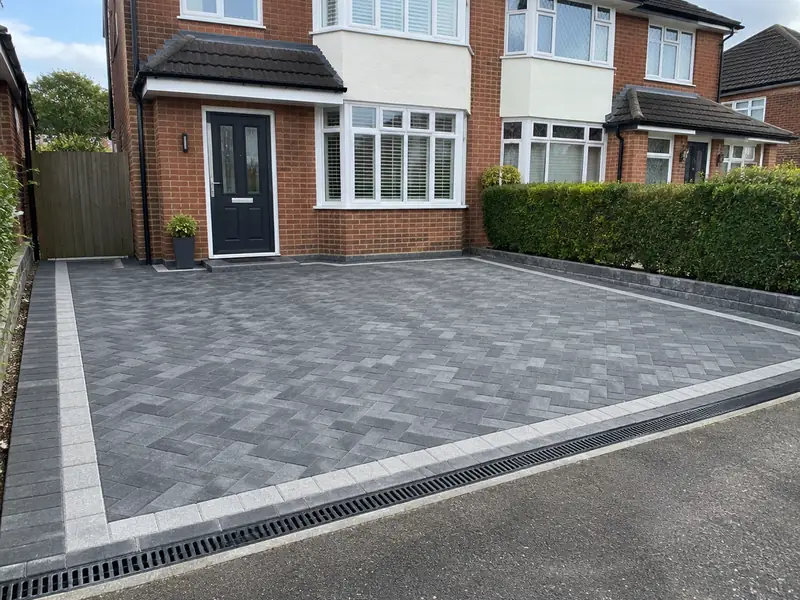
A new driveway is a hard-wearing surface for parking, such as block paving, resin bound gravel, tarmac or gravel, laid on an excavated and compacted sub-base with edging and drainage designed to carry vehicle loads and handle rainwater.
In Lancashire, we price a new driveway against our guide for the North West, £3,800–£8,600 including VAT, then adjust it once we have surveyed your home. We work across Preston, Burnley, Blackburn and Blackpool and the rest of the county or region. Planning and building control requirements follow the rules for England, and we look into your property's position before a written quote is sent.
- Guide price
- £3,800–£8,600 inc VAT
- Time on site
- 3–7 days on site
- Planning rules
- England
- Price level
- About 5% below the national guide
- Towns listed
- 19
- Survey
- Free, with a written quote
Driveways prices in Lancashire
To help you plan, we show what a new driveway typically costs in Lancashire instead of holding figures back for a sales call. The range is £3,800–£8,600 with VAT, using rates in the North West that are about 5% below the national guide. A free survey then fixes your actual price.
| Type of job | What it usually involves | Guide in Lancashire |
|---|---|---|
| Gravel or tarmac | A typical 40–50m² drive in gravel on a grid, or tarmac with block edging. | £1,900–£4,800 |
| Block paving or resin bound | A typical 40–50m² drive with sub-base, edging and drainage. | £3,800–£8,600 |
| Large or premium driveway | Larger drives, natural stone, walls, steps or a new dropped kerb. | £7,600–£15,000 |
The main things that change the figure:
- Surface: gravel, tarmac, block paving, resin or stone
- Drainage, soakaways and changes in level
- Edging, steps, walls and manhole adjustments
- Access for machinery and removal of spoil
Scope of the work
- Survey of levels, drainage, manholes and access
- Excavation and removal of the old surface and soil
- Drainage channels or soakaway where needed
- Manhole covers raised or replaced to new levels
- New surface laid, compacted and finished
- Site cleared and waste removed
Housing across Lancashire
East Lancashire mill towns such as Burnley, Blackburn and Accrington have long rows of stone and brick terraces, while Preston is mostly red brick. Lancaster uses sandstone for its Georgian centre, Blackpool and the Fylde coast have guest-house terraces and many bungalows, and interwar and newer estates surround most towns.
Mill-town terraces commonly suit attic conversions, kitchen extensions and repointing. Bungalows on the coast often take loft rooms and porches, and stone properties may need lime pointing and roof repairs.
Westerly winds and high rainfall are the norm, with gales on the Fylde coast and wetter, colder conditions on the Pennine side.
Planning and building rules in Lancashire
Lancashire is in England, so the planning and building rules set out below are the ones that apply. We confirm the details with the council before we quote.
In England, a new or replacement front-garden surface over 5 m² needs planning permission unless it is permeable or drains to a lawn or border within your property. A new dropped kerb needs consent from the council’s highways team, and access onto a classified road may need planning permission.
Building Regulations do not usually apply to driveways, but drainage must not discharge onto the road or a neighbour’s land.
Rules change and every property is different, so we check the planning history and constraints for your address before we quote.
From survey to handover
Survey and measure
Book a visit and we'll come to you. The survey covers measurements, the state of what's there now and any obvious constraints, so the price that follows is based on your actual home, not an average.
Price and scope agreed
We put everything into a written, fixed-price quote: the specification, what's excluded, staged payments and the expected time on site. Take whatever time you need to decide; there's no pressure to commit.
Dates and permissions
Before anyone starts, we confirm the programme in writing, check whether consents are required and arrange deliveries. If a skip or scaffolding on the road needs a permit, we apply for it.
Build and hand over
Our trades complete a new driveway while your point of contact keeps you updated. When everything is finished, we clear the site, take away waste and go through the result with you before handover.
How we work
Frequently asked questions
Do I need planning permission for a driveway?
Whether a driveway needs planning permission depends on its size, surface and drainage, your home's location, whether it is listed or in a conservation area, and which UK nation you are in. In England, a new or replacement front driveway over 5m² needs permission unless it uses a permeable surface or drains to a lawn or border. We check the rules and design to suit.
Do you cover Preston, Burnley and Blackburn?
Yes. As well as Lancashire, we cover Preston, Burnley and Blackburn and the rest of Lancashire. Our coverage is UK-wide, so the process is the same wherever you are: a free site survey, a quote in writing that fixes the price for the agreed scope, and one point of contact while the work is planned and carried out.
How long does it take to lay a driveway?
Laying a typical driveway takes around three to seven days, depending on size, surface and ground conditions. Excavation and sub-base usually take the first few days, then edging, drainage and the surface. Resin needs dry weather and time to cure, and you will usually need to keep cars off for a short period afterwards. We confirm timings and access arrangements with your quote.
What happens at the survey?
We visit your home at a time that suits you, look at the area involved, take measurements and check access, condition and any services that might be affected. We talk through what you want from a new driveway, explain the options and answer questions. There is no charge and no obligation; afterwards we send a written quote.
Which driveway surface is easiest to maintain?
Resin bound gravel is one of the easiest surfaces to maintain, because it is smooth, porous and resists weeds, needing only an occasional sweep and wash. Block paving needs re-sanding joints and occasional weed control. Tarmac needs little upkeep but can soften in heat. Gravel needs raking and topping up. We explain the upkeep of each surface before you choose.
Towns in Lancashire
Homes in all of the following Lancashire towns can get a written quote for a new driveway. Open a town page to see prices and the postcodes we cover.